
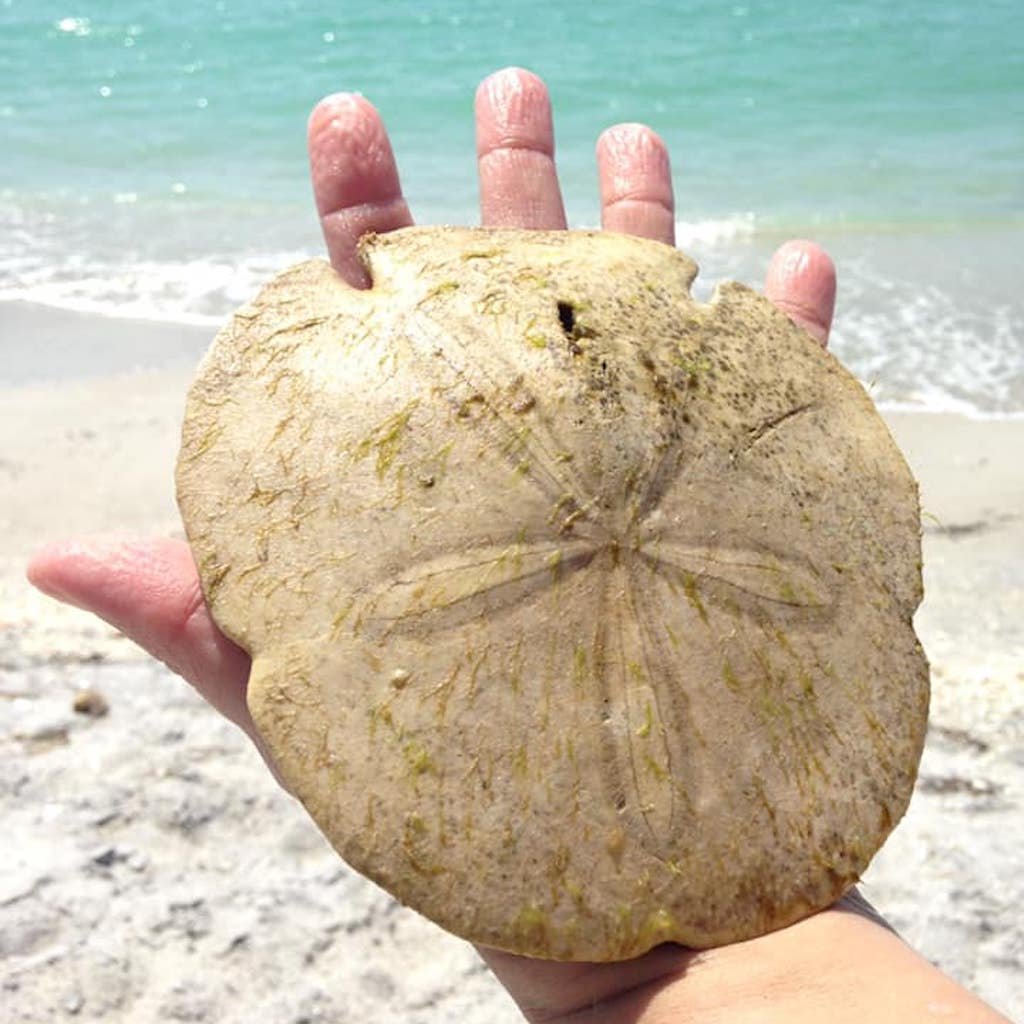
Where to find sand dollars near Naples
Sand dollars love sandy, shallow flats — exactly the kind of low-tide bottom that surrounds the barrier islands off Naples and Marco. You’ll find them on the exposed flats and sandbars at Keewaydin Island, around Kice and Shell Island, and on the hidden sandbars deep in the Ten Thousand Islands. As with all shelling here, the boat-only beaches produce best because they aren’t picked over. The species you’ll find is the keyhole sand dollar (Mellita quinquiesperforata), named for the five long slots in its disc.
When to look
Low tide is everything. When the water pulls back and exposes the flats, whole sand dollars turn up that were underwater an hour earlier. Our trips are timed to the day’s best low, so you’re walking the flats at exactly the right moment. (See our guide to the best time to shell for more on tides and seasons.)
Live vs. empty: what you can keep
This matters: a live sand dollar is a living animal, and you should never take one. In Collier County (Naples and Marco Island) it’s the rule, not just etiquette — only empty shells may be collected. Here’s how to tell them apart:
| Feature | Live (leave it) | Empty “test” (safe to keep) |
|---|---|---|
| Color | Brown, gray-green or purplish | White or bleached gray |
| Surface | Fuzzy and velvety with tiny spines | Smooth and hard, no fuzz |
| Movement | Spines and tube feet move | No movement at all |
| What to do | Gently return it to the water | Keep it — it’s the empty skeleton |
When in doubt, set it down gently in the water — your captain will happily help you tell the difference.
How to clean and keep your sand dollars
Empty sand dollars are fragile, so handle them gently. Then:
- Rinse off sand and salt in fresh water.
- Whiten by soaking briefly in a mild water-and-bleach solution (skip for very delicate ones).
- Air-dry completely in the sun.
- Strengthen a brittle one with a coat of white glue thinned 50/50 with water before display.
From the Helm: Checking a borderline sand dollar at the last of Kice’s falling tide
The tricky call isn’t the obvious ones — a sun-bleached, paper-white sand dollar or an unmistakably live brown one are easy to sort from arm’s length. It’s the ones in between, still a little gray, that make a guest crouch at the swash line off Kice and ask us to look. That in-between color usually means a shell that died recently enough that it hasn’t fully bleached out yet, and color alone won’t settle it.
For a borderline one, we’ll give it a gentle nudge along the underside with a fingertip rather than relying on color. A living sand dollar’s tiny spines still flex and shift under that touch, even faintly; one that’s already gone stays completely still no matter how you turn it. It’s a small test, takes about two seconds, and it settles cases that color and texture alone leave you guessing about.
We check these calls during the last hour of a falling tide rather than earlier in the ebb, because that’s the window when the most ground is exposed without the flat drying out completely. Wait past that turn and the tide starts pushing back in over the same sand, covering what was just walkable; get there too early and you’re wading through water that hasn’t drained off the flat yet.
A brisk wind out of the west can ripple sand right over a flat one, which is when we’ll slow the whole search down and start feeling with our feet as much as looking with our eyes. A sand dollar buried under a thin skim of windblown sand still makes a firm, coin-like press underfoot that loose sand alone doesn’t, and that’s often how we find the first one of the morning, before anyone’s eyes have adjusted to picking shapes out of the glare off the flat.
When Kice isn’t clearing fast enough on a given morning, we’ll shift to a smaller pocket flat closer to the pass, since the current there tends to drain it a little sooner. It’s a smaller stretch of sand and won’t have the volume, but a guest who’s watched the tide clock the whole ride over usually appreciates getting bare feet on exposed sand sooner rather than later.
We’re always upfront that finds vary from one morning to the next, and a flat that was loaded last week can be quiet the next visit. What doesn’t vary is the rule: empty shells only, every time, no exceptions for a nice one. If you want the wider identification picture before you go, our seashell guide covers more than sand dollars alone, and you can put the technique to use on one of our shelling tours.