
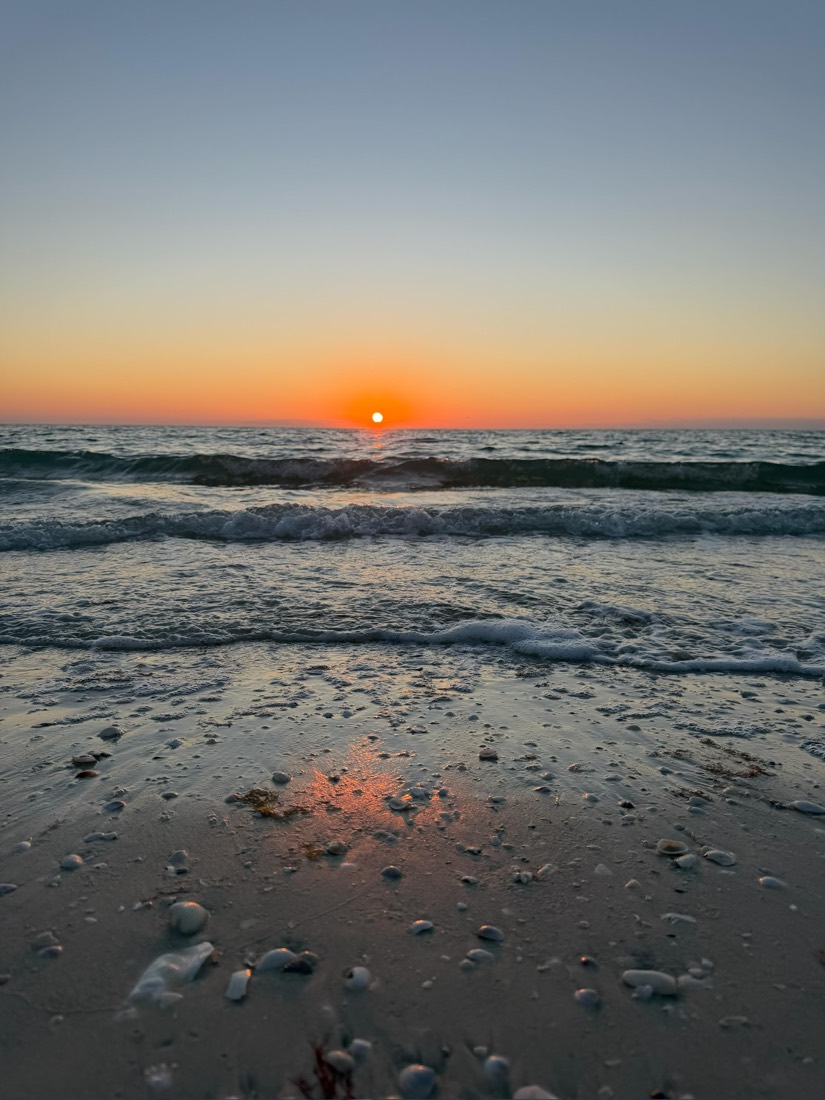
It’s all about low tide
Shells live and move in the shallows. When the tide pulls back, it exposes more beach and more of the sandbars and flats where shells collect — so the lower the tide, the more treasure on display. That’s why our captains plan every shelling trip around the day’s best low-tide window rather than the season. Get the tide right and almost any day is a good shelling day.
One thing the locals know: the very lowest tides cluster around the new and full moon (the “spring tides”) every month, year-round. What shifts with the season is the time of day the low lands — mornings in winter, evenings in summer.
| Season | Best low tides | Conditions | Crowds |
|---|---|---|---|
| Winter (Dec–Mar) | Around sunrise; year’s strongest lows | Cool and dry; cold fronts push fresh shells ashore | Busiest (peak season) |
| Spring (Apr–May) | Morning, shifting later | Warming up, pleasant and calm | Thinning after spring break |
| Summer (Jun–Aug) | Around sunset | Hot; warm water; brief afternoon storms | Quietest, best value |
| Fall (Sep–Nov) | Evening, shifting earlier | Warm and quiet; we watch the tropics | Low until the snowbirds return |
Winter: the year’s biggest morning lows
December through March brings Southwest Florida’s strongest low tides, usually around sunrise. These extra-low mornings bare the most beach of the year, and the cooler, drier weather makes for perfect beach conditions — it’s peak season for visiting shellers for good reason.
Summer: glassy evening lows
May through September flips the schedule, with the best lows arriving in the evening. That means gorgeous golden-hour shelling as the sun sinks into the Gulf — warm water, calm conditions and far fewer people. Pair it with a sunset and it’s hard to beat.
After a front or storm
Some of the best shelling of all comes right after a winter cold front or a good blow. Wind and waves stir up the bottom and push fresh shells — and sometimes the deeper-water rarities like the junonia — onto the beach. If you’ve just had a windy day or two, get out there.
Best time of day
Follow the tide first, but if you have a choice, early morning is hard to beat: the light is soft, the beach is freshly washed, and you’re ahead of any other footprints. On the boat-only islands we visit, though, you’re often the only ones there regardless. Your captain will book you into the day’s best window — see our guide to the best shelling beaches for where that window pays off most.
From the Helm: Running Coon Key Pass on a falling winter tide
Running Coon Key Pass on a falling winter tide
Before we ever put a hand on the throttle, we check two things at the dock: the tide chart and the wind arrow on the forecast. A falling tide alone doesn’t tell us where to point the bow — the wind does that. A north wind behind a front stacks water against the bars on the Gulf side and drains the back bays fast, so on mornings like that we run for the flat off Coon Key Pass instead of anywhere more exposed. It’s a call we make in the parking lot with coffee still in hand, not something planned a week out.
Once we’re anchored on that flat, the newly exposed sand tells its own story within the first ten minutes. A fresh wrack line builds along the last high-water mark, dark with shell hash, and that’s where we point guests first — not the open, sun-bleached stretch that already got picked over on yesterday’s low. A shell that came off the bar this morning still feels cool and slightly gritty in your palm, hinge often still closed, compared to the bleached, lightweight pieces that have tumbled around for a season. That weight difference is the tell we teach at the rail before anyone’s feet hit sand.
When the wind swings onshore instead and that Coon Key flat turns to soup, we don’t force it. We’ll run south to tuck behind the lee of Panther Key, where the same falling tide still uncovers a workable edge without chop rolling shells back under before you can bend for them. It’s a shorter walk and a smaller bar, so we’ll spread the group out more and slow the whole stop down. Guests rarely notice we changed the plan — they just notice the bar is calm enough to actually see what they’re picking up.
We hand out mesh citrus bags instead of buckets, on purpose. A bucket fills with water and sand and turns every find into a guessing game by the third stop; a mesh bag drains on the walk back to the boat and lets you feel what you’ve actually got. It also reinforces the habit we care about most — empty shells only, nothing alive rides home in the bag. If a guest picks up something with a foot still tucked inside, we’ll ask them to set it back exactly where it sat and keep moving down the line.
None of this replaces checking the actual tide table for your dates — that’s still the honest starting point. But the window on paper is only half the plan; the other half is which bar we run once we’re on the water, and that call shifts depending on which way the wind is leaning that morning. If you want to see how that on-the-fly routing plays out, it’s built into every shelling tour we run, and the wider shelling beaches guide is a good place to compare bars before you go.