
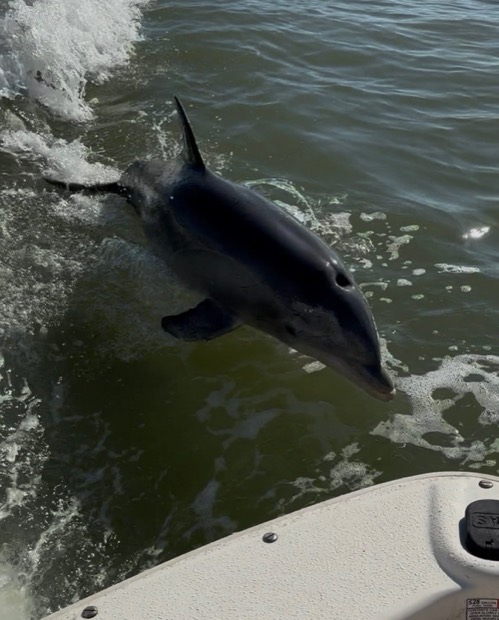
🐬 At a glance
- Typical lifespan
- 20-40 years in the wild; some individuals reach their 50s
- Species
- Common bottlenose dolphin (Tursiops truncatus)
- Sex difference
- Females often outlive males, sometimes by a decade or more
- How to tell an elder
- A deeply notched, scarred dorsal fin from decades on the water
- Where you’ll see them
- Gordon Pass, Marco Island passes & the Ten Thousand Islands, year-round
- Sighting note
- Wild — never guaranteed, but our captains read the water daily
How Long Do Bottlenose Dolphins Live in the Wild?
Ask ten marine biologists and you’ll get roughly the same range: wild bottlenose dolphins commonly live 20 to 40 years. That’s a healthy, well-fed dolphin working productive water like the passes around Marco Island and Naples, not a dolphin in a marginal habitat or one that’s picked up an injury early. The upper end of that range isn’t rare, either — researchers who’ve spent decades photographing individual dorsal fins along the Gulf coast have documented plenty of animals well into their 30s and 40s, and the oldest individuals, almost always females, can push into their 50s. Compare that to a dolphin’s cousin in a marine park, where a controlled diet and veterinary care sometimes extend life further, and you start to appreciate how tough — and how well-adapted — a wild Gulf dolphin has to be to rack up four decades in open water.
Do Male and Female Dolphins Live the Same Number of Years?
Not quite. Across most studied populations, female bottlenose dolphins tend to outlive males, sometimes by a decade or more. Part of that gap comes down to biology — males take more physical risks establishing rank within loose alliances and competing for mates, and that wear shows up over a lifetime. Females, meanwhile, spend years raising a single calf at a time (nursing alone can run three to six years), a slower, steadier pace that seems to pay off in longevity. It’s the same pattern you’ll see in a lot of long-lived, social mammals: the sex that invests more in offspring and less in physical competition tends to log more birthdays. None of this is a hard rule for every dolphin you’ll ever see off Goodland or Naples — individual dolphins vary as much as people do — but it’s the trend researchers keep finding.
How Our Captains Tell an Older Dolphin From a Calf
You don’t need a research permit to guess at a dolphin’s age — you just need to know what to look for on the dorsal fin. A calf sticks close to its mother’s side, often surfacing in near-perfect sync with her, and its fin is smooth, unmarked, still growing into its adult shape. A juvenile starts to range farther, breaches more for what looks a lot like fun, and begins picking up the first small nicks that come with a more independent life. By the time a dolphin is a true adult, its fin usually carries a signature: notches from tussles with other dolphins, scrapes from oyster bars, sometimes the pale scarring of an old propeller strike or shark bite it survived. The oldest, most weathered fins — deeply notched, sometimes missing a chunk near the tip — belong to dolphins that have been reading these same tides for longer than most of our guests have been alive. Our captains watch for these fins the way you’d recognize a neighbor’s truck; they’re not naming individual animals or claiming a fixed local population, but a distinctive fin does tend to reappear in the same stretch of water trip after trip.
| Life Stage | Approximate Age | What to Look For |
|---|---|---|
| Calf | 0-3 years | Swims tight against mother’s side; fin smooth and unmarked |
| Juvenile | 3-10 years | Ranges farther, breaches often; first small nicks appear |
| Young adult | 10-20 years | Independent and breeding age; fin shows light scarring |
| Mature adult | 20-40 years | Deep notches and scars built up from decades on the water |
| Elder | 40+ years (uncommon, mostly females) | Heavily weathered fin; calm, deliberate movement |
Are You Watching the Same Dolphins Every Trip?
Bottlenose dolphins are homebodies, in their way. Most individuals settle into a home range they’ll work for years, sometimes decades, rather than roaming the whole Gulf. For the passes, oyster bars and mangrove edges around Marco Island and the Ten Thousand Islands, that means many of the dolphins your captain points out are genuinely local — not migratory visitors passing through once and gone. It’s a big reason bottlenose dolphins here are sighted year-round rather than seasonally, unlike a lot of the marine life we talk about on the water. We won’t tell you it’s the exact same pod every single charter, and we’re not going to put a number on how many dolphins call this stretch of coast home — that’s not something even researchers claim with precision. What we can say is that a 40-year-old dolphin working Gordon Pass this month was very likely doing the same thing ten, twenty, even thirty years ago, long before Sand Dollar ever launched a boat.
What Shortens a Wild Dolphin’s Life Out Here?
A long life in open water isn’t guaranteed, and it’s worth understanding what actually threatens it. Boat strikes are the most preventable risk — which is exactly why licensed operators keep their distance and never chase or crowd a pod, and why we ask every guest to do the same from a kayak or paddleboard. Entanglement in discarded fishing line and hooks is another real hazard, one more reason our fishing charters and every angler out here should reel in gear rather than leave it trailing. Red tide and other harmful algal blooms can hit dolphins directly and, just as often, thin out the fish they depend on. Cold snaps matter too — the same winter fronts that push dolphins and other marine life into the more sheltered water around Rookery Bay and Goodland can stress an already vulnerable animal. None of this is meant to scare you off the water; it’s the opposite. Understanding what a wild dolphin is up against is exactly what makes spotting a fin with thirty or forty years of history behind it feel like the privilege it is.
What It Means for Your Naples or Marco Island Boat Tour
None of this changes how a sighting works day to day: dolphins are wild animals, and we never guarantee a sighting on any single trip. What decades of home-range behavior does mean is that dolphin sightings out of Marco Island, Goodland and Naples run year-round rather than clustering into one short season, since these animals aren’t migrating in and out on a calendar. It also means the encounter you get isn’t random background wildlife — it’s very possibly the same individual, or the same small group, that our captains have been watching work these waters for years. If dolphins are the main reason you’re getting on a boat, a dedicated dolphin tour built around the passes and backwater edges where they feed gives you better odds than a general sightseeing run, though on the Ten Thousand Islands almost any trip — from a sunset cruise to a shelling run out to Kice Island — turns up a fin or two along the way. For more Gulf-wildlife questions like this one, browse our full Travel Guide.