
🐬 At a glance
- Gulf whale species
- Rice’s whale (Balaenoptera ricei), critically endangered, fewer than 100 left
- Where it lives
- De Soto Canyon, deep water off the Florida Panhandle
- Chance near Naples
- Essentially none — wrong depth, wrong stretch of Gulf
- What you’ll see instead
- Bottlenose dolphins year-round; West Indian manatees in winter
- Best trip for wildlife
- A dolphin tour through the passes and backwaters
Are There Whales in the Gulf of Mexico Near Naples?
Technically, yes — the Gulf of Mexico does have whales. Practically, for anyone booking a boat tour out of Naples or Marco Island, the honest answer is no. The handful of whale species that use the Gulf stick almost entirely to deep, cold water dozens of miles offshore, well beyond the range of any day-tour boat running out of Naples, Marco Island or Goodland. That’s a very different picture from whale-watching towns like Provincetown or San Diego, where boats motor a short hop offshore into a known feeding ground. There is no whale-watching industry here, and it isn’t because operators are keeping something quiet — it’s because the water our boats run through simply isn’t whale habitat.
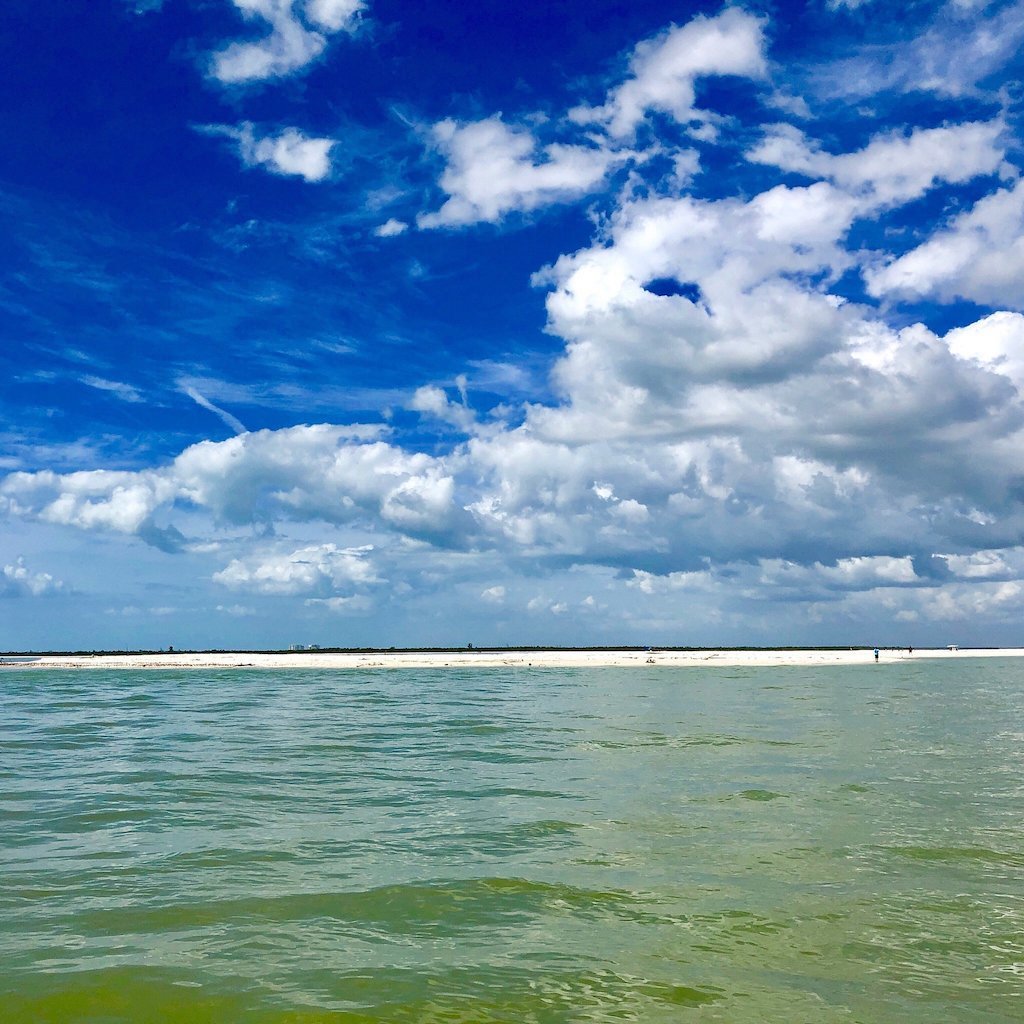
The waters around Naples and Marco Island are shallow, warm and inshore: passes, bays, mangrove-lined backwaters and the skinny cuts of the Ten Thousand Islands, most of it only a few feet to maybe twenty feet deep. Whales that use the Gulf need hundreds of feet of water and the kind of deep-canyon upwelling that concentrates the squid and small fish they feed on, conditions found nowhere close to shore on this stretch of coast. So while it’s a fair question to type into Google before a trip — and a smart one, since plenty of visitors assume any ocean has whale-watching somewhere nearby — the straightforward answer for a Naples-area boat tour is that whales simply aren’t part of the wildlife you should expect to see. What you will find, covered in our travel guide, is a coastline built for a very different kind of wildlife encounter.
Meet Rice’s Whale, the Gulf’s Only Resident Whale
If the Gulf of Mexico has one whale to know about, it’s Rice’s whale (Balaenoptera ricei), a baleen whale that was only recognized as its own distinct species in 2021 — before that, scientists had lumped it in with the Bryde’s whale found in other oceans. It’s also one of the most endangered whales on Earth, with a population that researchers put at well under 100 individuals, all of them living nowhere else in the world but the Gulf of Mexico. That makes it a genuinely remarkable animal and a real point of Florida pride — it just isn’t one you’ll ever see from a Naples boat.
Rice’s whales concentrate in a specific slice of deep water known as the De Soto Canyon, off the Florida Panhandle in the northeastern Gulf, where the seafloor drops to roughly 100 to 400 feet and colder, nutrient-rich water wells up from below. That habitat sits hundreds of miles from Naples and Marco Island, in water depths and current patterns nothing like the shallow, sun-warmed passes our boats explore. Because the entire known population sticks so tightly to that one deep-water zone, Rice’s whale is essentially a Panhandle story, not a Southwest Florida one — a fascinating piece of Gulf trivia to share with your kids, not something to scan the horizon for on your trip.
Why Whale-Watching Isn’t a Thing in Naples or Marco Island
Every boat-tour destination is shaped by what actually lives in its water, and ours is shaped by shallow, brackish, mangrove-rich habitat rather than open ocean. The passes, bays and backwaters that make the barrier islands and Ten Thousand Islands so good for shelling, birding and dolphin-watching are the exact opposite of what a deep-diving whale needs. A boat that stayed in water shallow enough to be interesting to a whale would be running aground long before it found one. That’s the honest tradeoff: the same skinny, protected water that keeps our trips calm, family-friendly and full of close-up wildlife is precisely why whales never enter the picture.
It also explains why you won’t find a single whale-watching operator anywhere along this stretch of the Southwest Florida coast, from Naples down through Marco Island and Goodland. Any legitimate whale sighting in the Gulf happens far offshore, in water most private boats never travel to, let alone a passenger tour running a few hours out of a local marina. If a captain ever tells you a Naples day trip is a good bet for whales, that’s worth being skeptical of — it isn’t how this coastline works, and being straight with you about that is part of what we think makes for a good tour operator in the first place.
What You’ll Actually See: Dolphins and Manatees
The good news is that the marine mammals actually living in these waters put on their own show, and you don’t need a whale to have a genuinely wild trip. Bottlenose dolphins live in the passes, bays and nearshore Gulf around Naples and Marco Island year-round, and our captains usually spot them working a pass, riding a bow wake or feeding along a grass flat on most trips — never a guarantee, since they’re wild animals coming and going on their own schedule, but a common sight rather than a rare one. Our bottlenose dolphin guide covers how to tell a dolphin from the rays and rolling fish that sometimes get mistaken for one, and a dolphin tour is the trip built specifically around finding them.
Manatees are the other marine mammal worth knowing about, though they’re seasonal rather than year-round. When Gulf water temperatures drop below about 68°F, typically November through March, manatees move into warmer pockets of water in and around Rookery Bay and the backwaters, usually scattered singly or in small groups rather than gathered into the big herds you’d see at a spring-fed sanctuary like Crystal River. Our West Indian manatee guide has the full picture on where and when they show up locally. Between dolphins on nearly every trip and manatees in the cooler months, the marine-mammal wildlife around Naples is genuinely rewarding — it’s just dolphins and manatees doing the work whales get credit for elsewhere, and our wildlife guide rounds out everything else you might spot along the way.
| Animal | Where It Lives | Typical Depth | Chance Near Naples |
|---|---|---|---|
| Rice’s whale | De Soto Canyon, off the Florida Panhandle | ~100–400 ft | Essentially none — hundreds of miles away |
| Other Gulf whales (sperm whale, rare vagrants) | Deep, open Gulf far offshore | 650+ ft | Extremely rare, well beyond tour range |
| Bottlenose dolphin | Passes, bays & nearshore Gulf | A few feet to ~30 ft | Common on most trips, year-round |
| West Indian manatee | Warm backwaters & Rookery Bay | A few feet, shallow | Seasonal, Nov–Mar below ~68°F |