
Calm, close-in water
Inshore means you stay in the protected bays, passes and flats near shore — not out in the open Gulf. That means a smooth, short ride, calm water and no seasickness worries, which is why it’s so family-friendly. See our inshore charters.
What the fishing is like
Steady and varied. You’ll target snook, redfish and trout around structure and on the flats, with frequent bites that keep things fun. It’s active, hands-on fishing rather than sitting and waiting — great for keeping kids and beginners engaged.
What the guide does
Almost everything technical: the guide provides and rigs all the gear, finds the fish using the tide, baits hooks, coaches your technique, nets the catch and handles the photos. You just fish. (Your license is covered too — see do you need a license?.)
From the Helm: What we watch for on a falling tide near Coon Key Pass
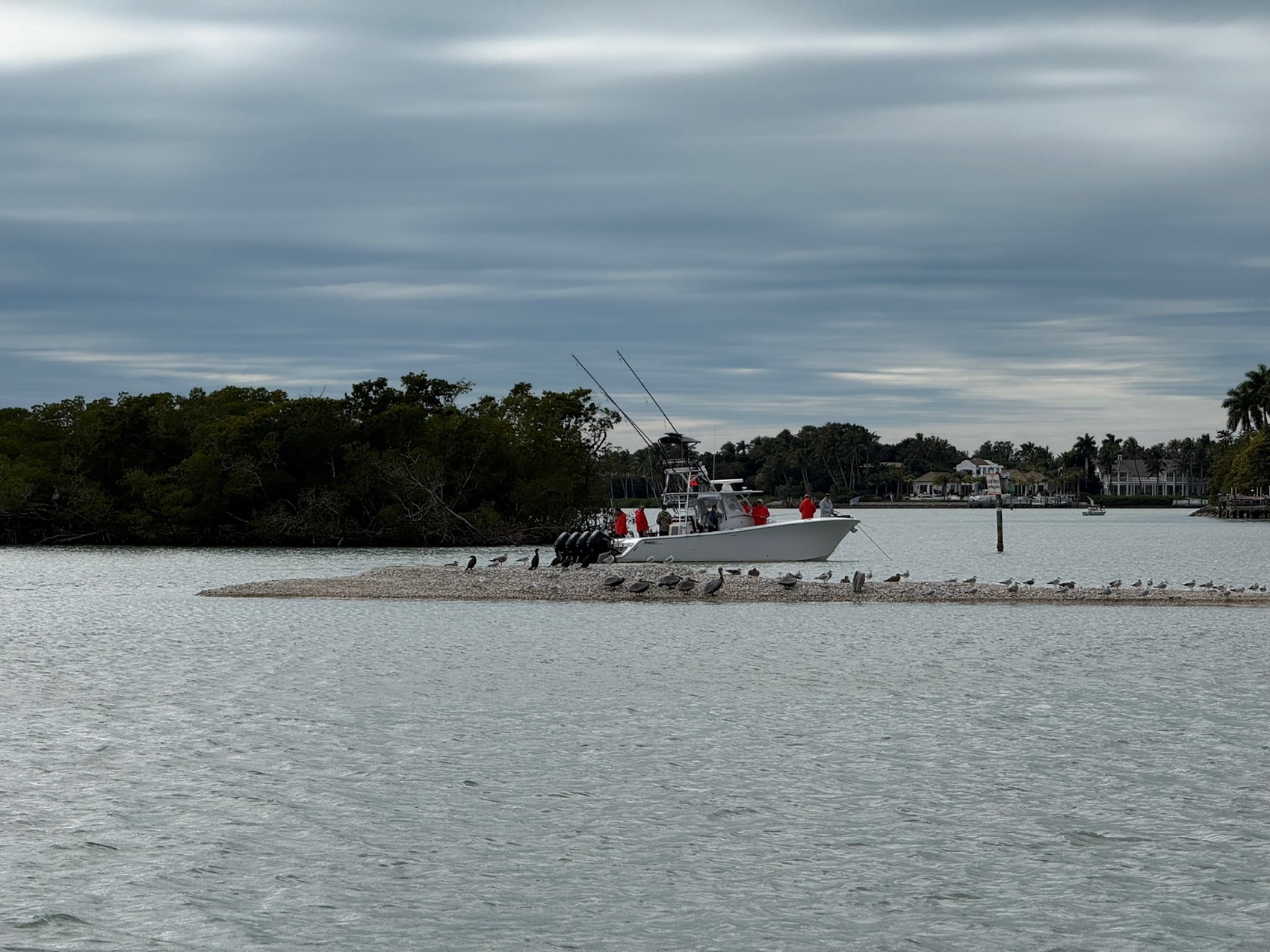
Before any rod comes out of the rocket launcher, our captains are already reading the morning: which way the wind sits, whether the tide is still falling or about to turn, and how the water looks along the mangrove edge. Near a spot like Coon Key Pass, a falling tide pulls bait off the flats and stacks it against the current seam, and that seam — not the prettiest shoreline, not the deepest hole — is usually where we tie off first. Guests rarely ask about tide stage at the dock, but it quietly decides more of the morning than the rods do.
Wind direction matters just as much. A brisk east wind pushes us toward protected lees behind the mangrove islands, while a calmer, glassy morning lets us work the open flats where fish spook easier and a slow approach pays off. We’ll idle the last hundred yards on the trolling motor rather than run the outboard in tight, because the noise off a hard idle carries further underwater than most guests expect, and a spooked flat can cost us the first twenty minutes of the trip.
Our go-to rig for that kind of moving water is a live shrimp under a popping cork rather than a jig, because the cork’s pop mimics a feeding fish and pulls attention from a distance in off-color water. We’ll swap to a jighead worked slow along an oyster bar if the current’s too strong for the cork to sit still, since a bait dragging sideways past structure looks wrong to a snook or redfish holding tight to it. That switch, made quietly mid-trip, is the kind of adjustment a guide makes without ever mentioning it unless you ask.
The question we hear most before lines even go in isn’t about fish size, it’s some version of “are we actually going to catch something?” Our honest answer is that this water holds fish most mornings, but nothing out here is a sure thing — what we can promise is a spot chosen for a reason, gear rigged to match the conditions, and a captain adjusting on the fly rather than anchoring in one place and hoping.
For families, the moment that tends to land hardest isn’t the first fish, it’s the first time a kid feels a rod bend on its own without anyone else touching it. We’ll usually hand the net job to whoever’s aboard and old enough to want it, because scooping the fish yourself sticks with people longer than watching a mate do it. Everything that isn’t going in the cooler for a quick photo goes back over the side, which most families ask about before we even bring it up.
That mix of calm water and quiet adjustments is a big part of why we run so many first fishing charters through this stretch of coast instead of pushing everyone offshore. If you want the wider picture of where these backwater seams sit relative to the passes and islands we run past, our destinations guide lays out the water we’re talking about.