
🐬 At a glance
- Federal law
- Marine Mammal Protection Act (1972) — feeding, touching or harassing wild dolphins is illegal
- Who enforces it
- NOAA Fisheries, backed by Florida wildlife officers on the water
- Penalty
- Civil and criminal fines per violation — applies to boaters, waders and beachgoers alike
- Bow-riding
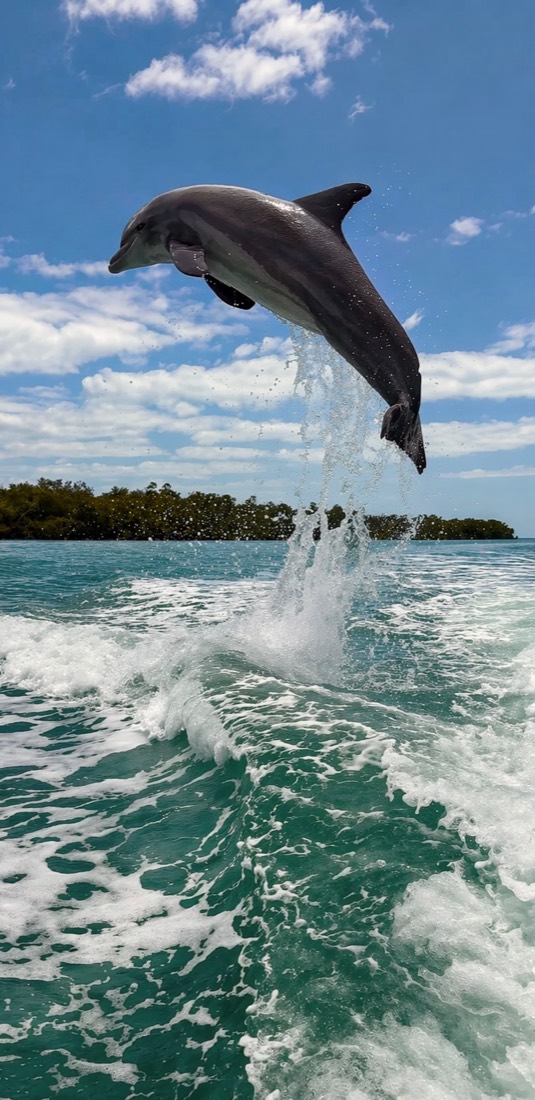
- Legal — only when the dolphin chooses to ride your wake, unbaited and uninvited
- Where we see them
- Marco River, Big Marco Pass & the Ten Thousand Islands, year-round
Is It Actually Illegal to Feed a Dolphin in Florida?
Yes, plainly. The Marine Mammal Protection Act of 1972 makes it a federal offense to feed, touch or attempt to feed any wild dolphin in U.S. waters, and that includes the water off Marco Island, Naples and every pass through the Ten Thousand Islands. The law doesn't care whether you're a first-time visitor tossing a shrimp off the back of a pontoon or someone who swears they've been "feeding the same dolphin for years" — if that bottlenose dolphin didn't come from a permitted research or rescue facility, feeding it is against the law, full stop.
The Marine Mammal Protection Act also covers touching, and "harassment," which is broader than most people expect — it includes chasing a dolphin with your boat, cutting off its path, circling it, or swimming toward it uninvited. NOAA Fisheries enforces the law nationally, and Florida wildlife officers back it up on the water. Whether you're on a charter, a rental pontoon, or paddling a kayak through Big Marco Pass, the same rule applies to everyone on the water, no exceptions for locals, longtime visitors, or anyone who thinks a single shrimp doesn’t really count.
Why the Law Exists: What Feeding Actually Does to a Dolphin
This isn't a rule for the sake of a rule. A dolphin that gets fed learns, fast, that boats mean food, and that lesson doesn't come off. Once it starts, it tends to stick for the rest of that dolphin's life. Fed dolphins start hanging closer to hulls and propellers, begging around docks and cleaning stations, and losing the wariness that normally keeps them clear of moving boats. Boat strikes are one of the known threats to Gulf bottlenose dolphins, and a dolphin conditioned to approach every boat it sees is putting itself directly in that path.
It gets worse across generations. A mother dolphin that begs teaches her calf to beg too, so one well-meaning tourist with a bag of bait can shape the behavior of an entire family line for years. Fed dolphins also lose some of their natural foraging edge, and a boat that feeds them is effectively training a wild animal to depend on people who won't always be there to feed it responsibly — or at all. It's exactly the same logic behind our manatee etiquette guide: the kindest thing you can do for a marine mammal is leave it wild.
| Interaction | Legal? | Why |
|---|---|---|
| Watching from a respectful distance | Legal | Passive observation doesn't disturb natural behavior |
| Dolphin bow-rides your wake, unprompted | Legal | The dolphin initiates it; no bait or chase involved |
| Tossing bait, chum or fish scraps to a dolphin | Illegal | Feeding teaches dolphins to beg near hulls and props |
| Touching or petting a dolphin | Illegal | Stresses the animal and risks disease transfer both ways |
| Chasing, circling or cutting off a dolphin's path | Illegal | Counts as harassment under the Marine Mammal Protection Act |
| Swimming toward or trying to touch a wild dolphin | Illegal | Close, uninvited approach is harassment even without contact |
How Our Captains Watch Dolphins the Right Way
We love dolphins as much as anyone stepping onto the boat for the first time, which is exactly why we never bait, chum or slow-troll toward one. When dolphins show interest in the boat, our captains hold a steady course and speed and let the dolphin decide whether to come play in the bow wake. That's the difference between an encounter and a set-up — the dolphin is choosing us, not the other way around. It also means some trips see dolphins up close for twenty minutes and others just get a distant fin, and we're honest about that either way.
If you want to build a whole trip around it, our dolphin tours run the passes and flats where sightings are most consistent, always at a respectful distance and without a single piece of bait in the water. Our dolphins and boats guide goes deeper into reading dolphin behavior and boat etiquette if you want the full picture before you go, and it's part of the same wildlife guide we ask every guest to skim before a trip.
The Marco River Dolphins That Bow-Ride on Their Own Terms
Run the Marco River toward Big Marco Pass on almost any given morning and there's a good chance a bottlenose dolphin or two peels off to surf your wake, unprompted. Bottlenose dolphins live in these waters year-round, working the passes, oyster bars and grass flats of the Ten Thousand Islands for mullet and pinfish, and the ones that bow-ride here do it because they enjoy it — not because anyone trained them to. Our captains simply hold their line and let it happen, whether that's on a dedicated dolphin trip or just the boat ride out to a shelling beach.
That's the encounter we want you to have: a dolphin choosing to ride alongside a boat that never once slowed down, sped up, or reached over the rail to make it happen. It's a better story anyway — "the dolphin came to us" beats "we chased it down" every time, and it's the only version where the dolphin is still doing exactly what it wants to be doing tomorrow.
What to Do If You See an Injured or Stranded Dolphin
If you spot a dolphin that looks entangled, injured, unusually thin, or beached, the move is the same every time: keep your distance, don't attempt to free or touch it yourself, and call it in. Florida's Fish and Wildlife Conservation Commission runs a Wildlife Alert line, and NOAA Fisheries maintains a marine mammal stranding hotline — both route trained responders to the animal quickly. Trying to help on your own, even with good intentions, can injure the dolphin further or put you at risk, since a stressed marine mammal can thrash unpredictably even while hurt.
The same goes for manatees, sea turtles and other protected species you might spot from the boat around Rookery Bay or the back bays — report, don't approach. Our crews carry the reporting numbers on every trip, from a sunset cruise to a private charter, because we're out on this water every day and take that responsibility seriously. Browse more honest answers like this one back in our Travel Guide.