
🐬 At a glance
- The honest answer
- Safe when run responsibly; harmful when run carelessly
- Federal guidance
- Stay ~50 yards from wild dolphins; never chase
- What harms them
- Chasing, crowding, feeding, separating moms & calves
- How we run
- Idle/neutral near animals; let them come to the boat
- The bonus
- Curious dolphins often bow-ride on their own terms
The real concern — and where it comes from
The worry is legitimate. Boats that chase pods, crowd them, or feed them genuinely do harm: chasing burns the dolphins' energy and can split mothers from their calves, and feeding teaches them to beg around boats and docks where props and fishing line injure them. Bottlenose dolphins live in these waters year-round — we're careful never to claim some named, counted "resident pod," but they're out here every day, raising calves and hunting the passes. They deserve to do all that without a boat hounding them. So the question isn't really "are dolphin tours bad?" It's "is this captain behaving?"
How a responsible captain runs the boat
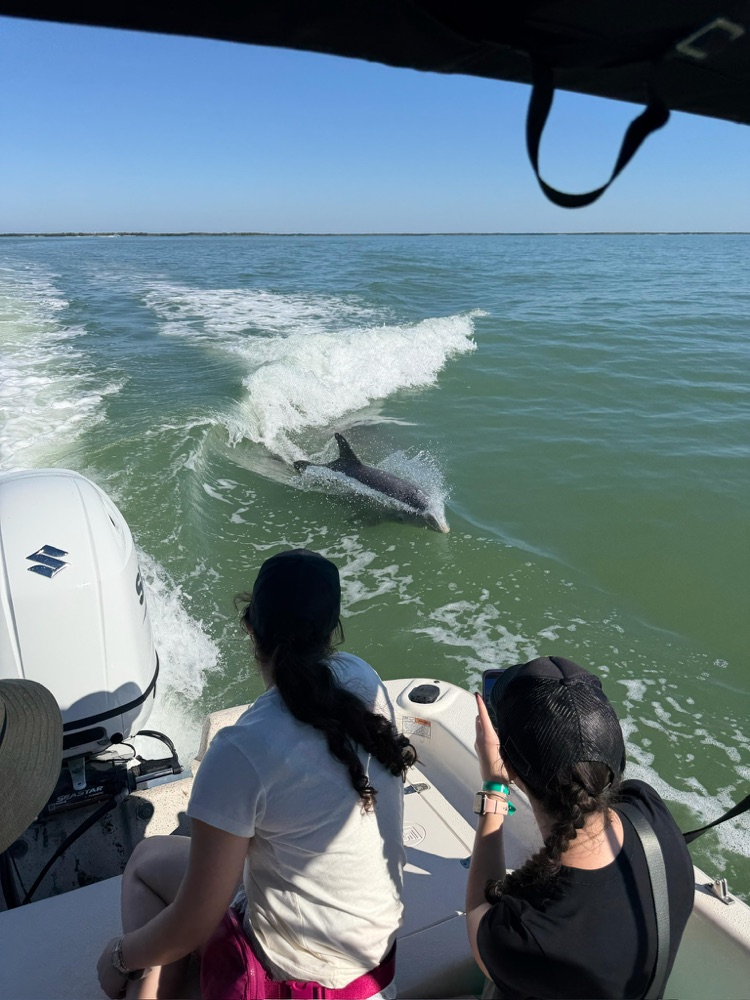
Here's the difference in practice. When we spot dolphins, we don't gun it toward them. We ease off the throttle, often drop into neutral, and let the boat settle. If the dolphins are curious — and they very often are — they'll come to us, surfing the bow wake or rolling alongside on their own terms. We never feed them, never box them in, and always keep a clear path so they can leave whenever they want. It's the same conservation mindset we bring to manatees and nesting birds, spelled out in our full wildlife viewing etiquette.
The 50-yard rule and why it works
Federal guidance asks boaters to stay about 50 yards from wild dolphins and to avoid pursuing them. Far from ruining the experience, keeping that respectful distance is what produces the best encounters: relaxed dolphins behave naturally, feed, play and — when they feel like it — choose to approach the boat. A stressed, chased pod just flees. So good etiquette and a great tour are the same thing. Want to see it done right? Come ride a dolphin & wildlife tour with a captain who reads this water for a living and puts the animals first.
From the Helm: Positioning downwind off Capri Pass so dolphins approach us
Before we ever close the gap on a pod, the captain is reading wind and current, not just distance. Off Capri Pass, where dolphins often work the tide line, we’ll swing the boat so we’re idling downwind of the animals rather than upwind — our engine noise and exhaust carry on the breeze just like anything else, and a pod that’s bothered by it will simply move off before you’ve gotten a good look. Setting up on the correct side of the wind matters more to a good sighting than raw horsepower ever will, and it’s a habit we run through on every approach, not just the ones where dolphins are already obviously close by.
One thing we watch for that most guests never notice on their own is the fluke print — a smooth, glassy disc of flattened water left on the surface right after a dolphin’s tail stroke pushes it down and forward. It looks almost like a footprint stamped on otherwise choppy water, and it tells us direction and depth of travel even when the animal itself is underwater and out of sight. Spotting one of these lets the captain ease the boat into position ahead of where the pod is actually heading, instead of guessing at it.
Once we’re in range, the throttle comes back to neutral and stays there. We won’t goose the engine to reposition even a little once dolphins are close, because a sudden burst of noise right next to a resting or feeding pod is exactly the kind of disturbance that sends them under and gone. If the current is drifting us the wrong way, we’d rather lose the moment and let the boat glide off naturally than force a better angle with the throttle.
When dolphins do choose to come alongside — and it’s always their choice, never something we can summon — guests at the bow will feel the hull thump faintly as a dolphin rides just under the wake, close enough to see an eye track upward. We ask everyone to keep hands inside the rail at that point; it’s tempting to reach, and it’s the one moment guests most want to touch, which is exactly the moment we remind them not to. A captain who’s watching that closely from the helm usually calls it before the first guest even notices the dolphin has slid in.
The honest tradeoff is this: some days the wind’s wrong, the current’s wrong, or the pod simply isn’t interested, and we come home having only glimpsed a fin at distance. That’s the cost of doing it responsibly. If you want to understand more of what a pod actually does once feeding starts nearby, our page on dolphin feeding behavior covers it, and our dolphin tours are built around exactly this kind of patient approach.