📖 At a glance
- Tiki boat
- Slow & social, thatched-roof shade, floating-bar vibe, stays close in
- Pontoon / tritoon
- Faster, more range, optional bimini shade, covers real distance
- Best for
- Tiki: celebrations & sunsets. Pontoon: sandbars, shelling & sightseeing
- Group size
- Both seat crowds comfortably; confirm capacity when you book
- BYOB
- Common on relaxed shared cruises — always per the captain's rules
The vibe: floating bar vs. open cruiser
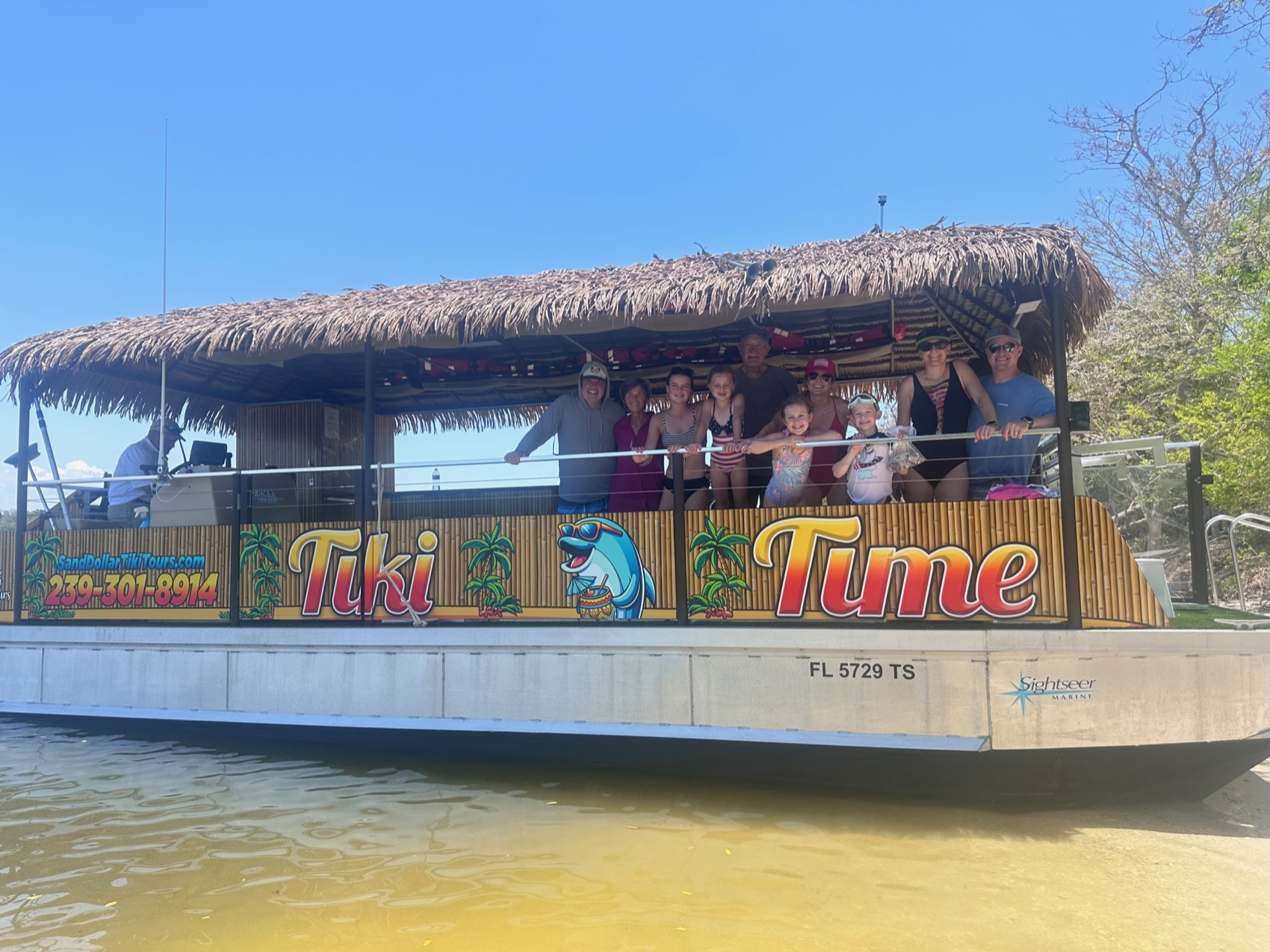
A tiki boat is unmistakable — a round deck under a palm-thatch roof, bar stools around the rail, and a top speed that basically says “relax.” It's the boat where the cruise is the destination. You idle out into Naples Bay or the back of Marco, the music's on, and nobody's in a hurry. That slow pace is the whole point: more time to talk, toast, and watch the water go by.
A pontoon (or its three-hulled cousin, the tritoon) is the open cruiser. Big flat deck, comfy seating, plenty of legroom — but with a real engine under it, so it actually goes. That's the trade: a pontoon trades the built-in bar fantasy for the ability to get you somewhere good and back before sunset.
Speed and range: how far do you want to get?
This is the deciding question for most folks. A tiki boat keeps you close to the dock — that's a feature, not a flaw, when you just want to float and sip. But if your dream day involves running out to a sandbar, hopping over to Keewaydin Island to hunt shells, or pushing into the Ten Thousand Islands looking for dolphins, the tiki's leisurely speed will eat your whole afternoon getting there.
A pontoon covers that ground easily. You can stitch together a sandbar stop, a shelling beach, and a dolphin loop in one trip because the boat actually moves between them. If your group's idea of a great day is “see and do a bunch of stuff,” the pontoon wins. If it's “sit, sip, and not move much,” the tiki wins.
Shade, comfort, and BYOB
Florida sun is no joke, so shade matters. The tiki's thatched roof gives you constant overhead cover — you're shaded the entire cruise without thinking about it. Pontoons usually have a bimini top you can put up or down, so you choose sun or shade depending on the moment. Both keep you comfortable; the tiki just makes the choice for you.
On the relaxed, shared cruises both styles tend to allow you to bring your own drinks — always within whatever your captain lays out for the day. We'll give you the simple rules (no glass, pack a cooler, bring water) before you board so the day stays easy and everyone's looked after.
| What you want | Tiki boat | Pontoon / tritoon |
|---|---|---|
| Pace | Slow & social | Quicker, gets places |
| Range | Close to the dock | Sandbars, islands & passes |
| Shade | Full thatched roof | Adjustable bimini |
| Best for | Celebrations & sunsets | Shelling, dolphins & sightseeing |
| Headline feeling | Floating tiki bar | Open-air day cruiser |
So which should you book?
Match the boat to the mood. Planning a birthday, a bachelorette, or a golden-hour sunset cruise where the whole crew just wants to be together and the engine barely matters? Book the tiki. Want to actually explore — shell an undeveloped island, idle up to a dolphin, anchor on a sandbar — and have stories beyond “we floated”? Book the pontoon. Still torn? Tell us your group size and your dream day, and our captains will point you at the right one. There's no wrong answer here — just the right boat for your kind of fun.
From the Helm: why a tiki cruise here still rides the same tritoon hull as our open boats
When a tiki charter lands on the schedule, the decision our dispatch makes isn’t really about the roofline. It’s about the hull sitting under it. Picture a tiki boat and you probably picture something flimsy — a raft with a bar bolted on. Ours aren’t that. We build our tiki cruises on the same full tritoon platform as our open boats: three tubes, real freeboard, a hull meant to handle a real chop. The thatch roof, the rail-height bar and the lounge cushions are the costume. What actually decides how your afternoon feels once the wind picks up is the three tubes underneath.
That distinction earns its keep the moment a stiff southwest breeze fills in by early afternoon, which it often does out here. A short, close chop can stack up fast across the open reaches near Gordon Pass — no trouble for a cruiser built to punch through it, a lot less fun under a canopy full of guests standing at the rail with a drink. On those afternoons we’ll keep a tiki charter working inside the calmer water of Naples Bay instead of pushing it out past the pass, trading a few extra miles of scenery for a flatter, more sociable ride.
We make that routing call early, usually before anyone’s even boarded, because renegotiating a route after the group has settled onto the bar rail with a drink poured is a much worse conversation than adjusting the plan at the dock. Most guests never clock the difference in mileage. What they notice is that the deck stays level enough to stand and lean on the rail without bracing a foot against the roll, and that nobody’s holding a cup with two hands to keep it from sloshing.
A pontoon built strictly for lake duty doesn’t get that same latitude, and it’s worth knowing before you book either style. Two tubes track beautifully on flat water but roll more the instant a chop builds, which is exactly why we lean on the tritoon platform for any run that crosses open water. If you’re weighing a tiki cruise against a straight sunset cruise, ask what hull sits under each option you’re shown — on our boats the answer is always the sturdier one, whichever roofline ends up over your head.
We can’t promise which exact vessel or which specific route you’ll draw on a given afternoon, since wind, tide and guest count all factor into how we build that day’s schedule. What we can promise is that the choice never comes down to whatever happens to be sitting open at the dock. The hull gets matched to the water you’re actually running, and the roofline gets matched to the mood you came for.