
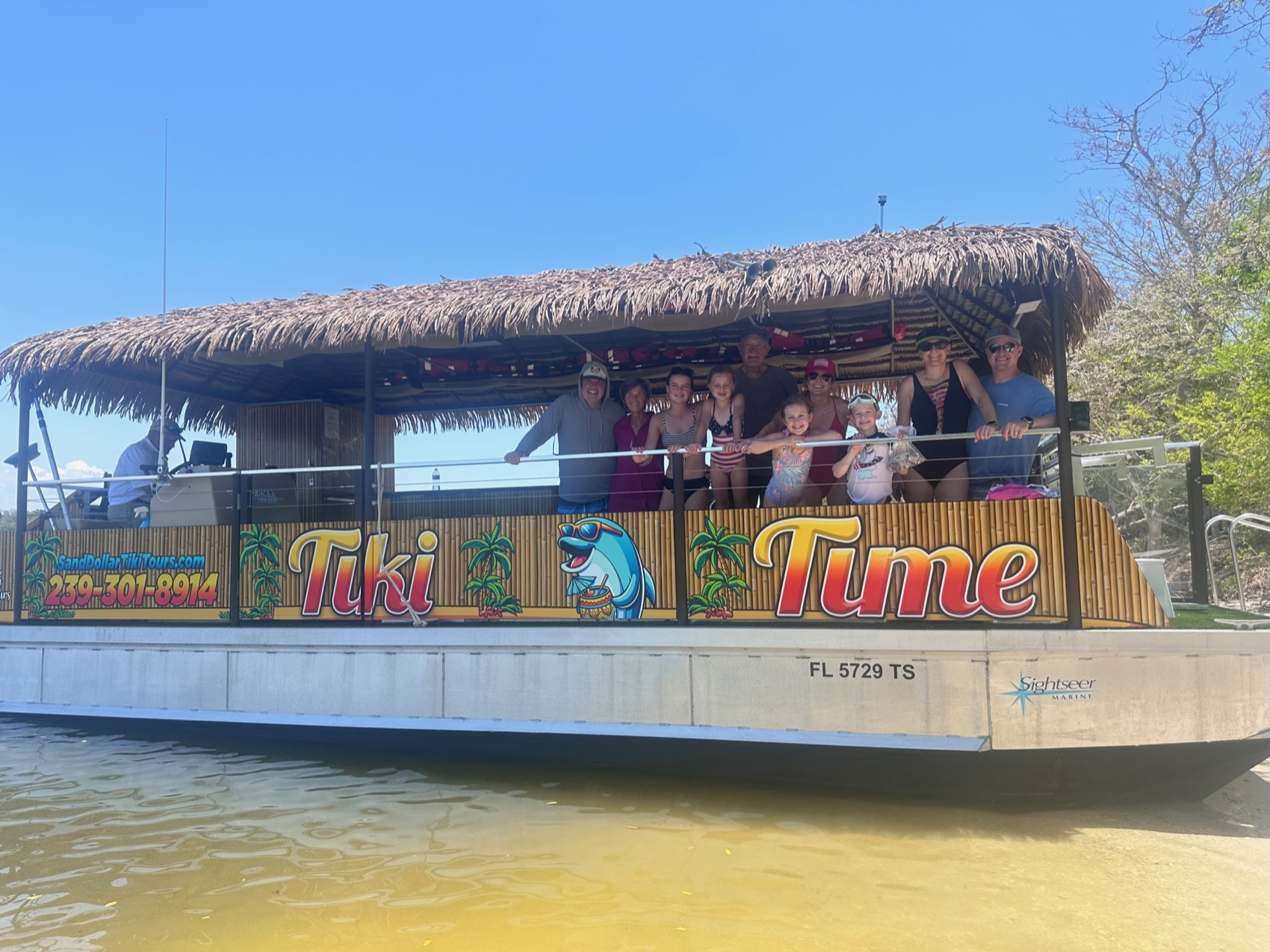
What a tiki boat is
A tiki boat is a small, slow-cruising pontoon-style boat built to look and feel like a floating tiki hut — complete with a real thatched roof for shade, comfortable wrap-around seating, and (on ours) color-changing LED lights for after dark. It’s captained, so you just relax and enjoy the ride. Ours cruises the calm water of Naples Bay and holds up to 26.
Who it’s for
Everyone, honestly. Our tiki was designed for multigenerational families — it has 39½-inch safety rails all the way around and full shade — so it’s as good for a kid’s birthday as for a grown-up celebration. It’s always booked privately, so it’s just your group. See our Naples tiki boat tours.
What you do on it
Cruise, relax, and soak up the scenery. You bring your own food, drinks and playlist; the captain handles the driving and can mix in dolphin watching, a sandbar swim stop, or a sunset. It’s less about getting somewhere and more about enjoying the time on the water.
From the Helm: Why a Flat Pontoon Hull Stays Inside Naples Bay’s Calm Water
The reaction is almost always the same. Guests are standing on the dock, phones out, and then the tiki boat comes around the bend with its thatched roof catching the light and somebody laughs out loud — it just looks like it shouldn’t work, and then it’s right in front of them. Our captains time that arrival on purpose, easing off the throttle early so the boat glides in slow instead of roaring up to the dock. First impressions on a tiki trip happen before anyone’s even stepped aboard.
A tiki boat rides flatter and slower than a standard tour boat, and that’s by design, not limitation. The flat-bottom, pontoon-style hull is what lets a thatched structure sit up top without the boat rocking uncomfortably in a light chop, and it’s why we keep tiki runs inside the calmer water of Naples Bay rather than pushing out toward open Gulf swell. Guests moving around, standing at the rail, dancing a little — none of that works on a hull built to cut through waves instead of sit steady on flat water.
Once we’re underway, most groups settle into the wraparound bench, drinks in hand, somebody inevitably standing at the rail for a photo of the skyline sliding past. Our captains keep the pace unhurried enough that conversation carries over the motor, and the thatched roof throws a wide band of shade that guests notice within the first five minutes — it’s the detail people mention afterward more than almost anything else. The whole trip has a porch-hangout feel that a faster, open boat just doesn’t give you.
We run tiki trips for everything from a quiet afternoon to a full bachelorette party, and the read our captains do early is simple: is this group here to relax or to celebrate loudly? That shapes how much we lean into music and stops versus a slower, quieter loop. If you’re weighing a tiki trip against a more traditional layout, our pontoon versus tiki boat breakdown is worth a look before you decide which fits your group.
Because the helm sits right at deck level instead of tucked up on a flybridge, guests end up chatting with the captain more on a tiki trip than on almost any other tour we run. It’s an open layout — someone leans over to ask what a passing bird is, or asks the captain to swing wide around a manatee, and the answer comes back in real time instead of over a loudspeaker. That closeness is part of why families and first-time boaters tend to relax fastest on this one.
On a breezier afternoon, a tiki boat’s height up top means our captains will tuck the route into the lee of the shoreline rather than crossing open stretches of the bay broadside to the wind. It’s a small adjustment guests rarely notice, but it’s the difference between a smooth glide and a boat that wants to weathervane every time the wind gusts.