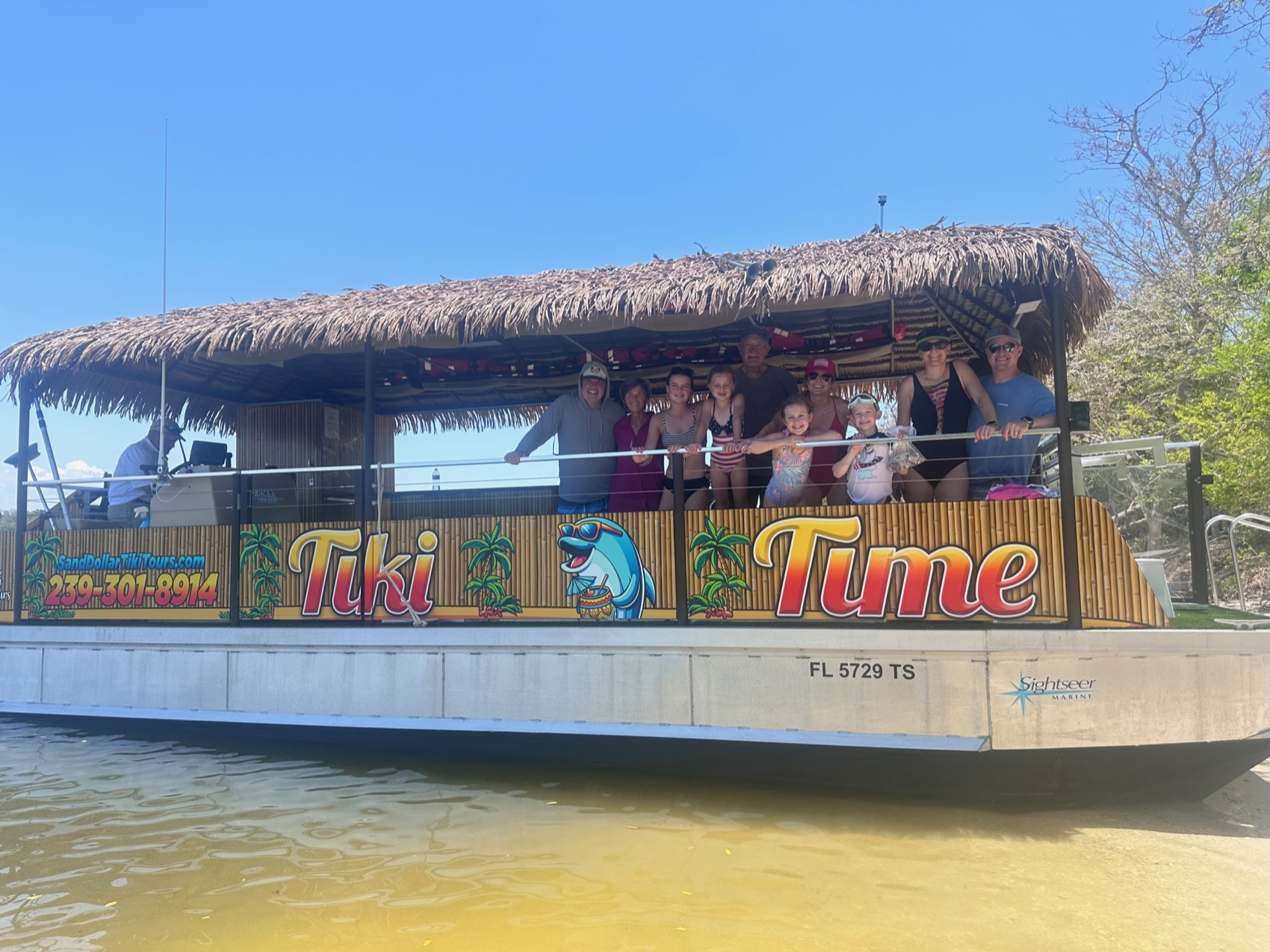
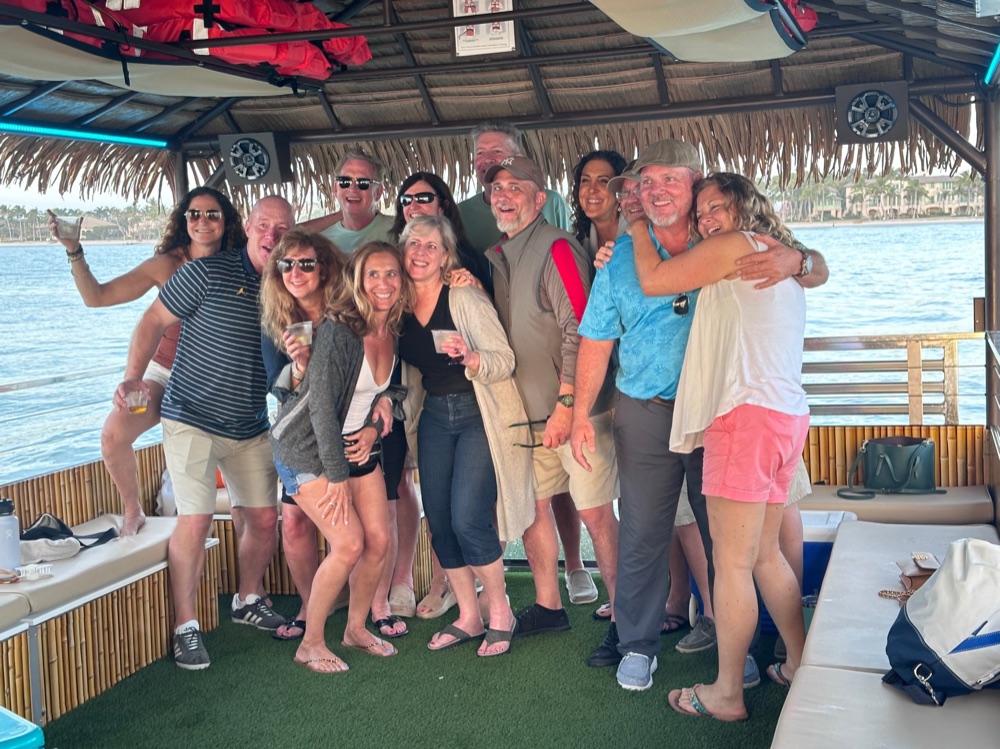
Head out of Naples Bay on the tiki boat and the scenery shifts fast — open water and marina traffic give way within minutes to mangrove shoreline, and by the time we’re running the fringe toward Rookery Bay, the loudest thing around is usually a startled heron lifting off a prop root. That’s the stretch where your captain slows the boat to a near-idle, not because the water demands it, but because that’s where the birds and the fish activity tend to show up first.
A falling tide toward the low exposes the oyster bars and mud flats tucked along that shoreline, and that’s often when wading birds stack up to feed — egrets, herons, sometimes an osprey working the same flat from above. We time the family-friendly runs toward that tide stage when the schedule allows, since a boat full of kids gets a lot more out of watching an osprey dive than out of flat, empty water with nothing moving on it.
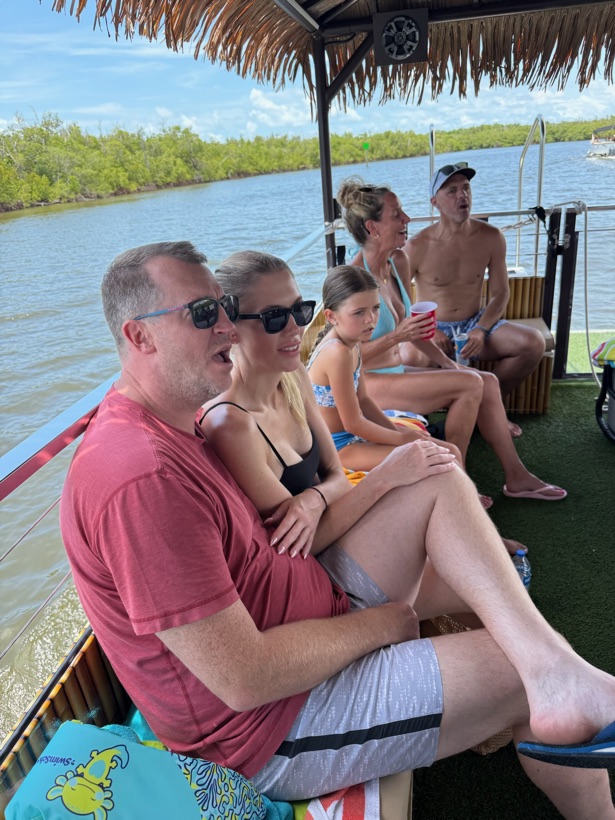
Cut the engine back far enough and you can hear the mangroves themselves — the low tick of fiddler crabs in the roots, water lapping at the tideline, sometimes a mullet jumping somewhere off the bow. It’s a quieter kind of tiki cruise than the open-Gulf sunset runs, and it tends to be the stretch where even restless kids go still for a minute, elbows on the rail, waiting to see what moves next along the mangroves.
That same stretch fishes differently by season, too — a winter cold front tends to push more wading birds onto the exposed flats as bait goes sluggish in the cooler water, while a summer afternoon run trades some of those birds for more surface fish activity, mullet schools scattering as something bigger works them from underneath. We don’t promise either one on a given trip, but it’s part of why your captain checks recent conditions before picking which stretch of mangrove to slow down for first.
On busier weekend afternoons, when bay traffic near the marina picks up, we’ll flip the order and run the quiet mangrove stretch first, before the wakes and boat noise build, then loop back through the bay once things settle. It’s a small adjustment, but it means the wildlife-watching part of the trip — the part families usually remember most — happens while the water’s still calm enough to actually spot something moving.
If dolphins are more the draw than birds and oyster bars, our dolphin tours run at a similar unhurried pace, just built around sightings instead of shoreline. And if you want to know what else might turn up along that mangrove edge before you book, our wildlife guide covers the birds, rays and other regulars we watch for on this same stretch of water.