
☀️ At a glance
- Air temp
- Highs ~73°F, mornings in the 50s–60s
- Water temp
- Cool, low-to-mid 60s°F — bring a layer
- Sunset
- Around 6:00pm early month, creeping later
- Best for
- Shelling after cold fronts; manatee chances; calm seas
- Crowds
- Peak snowbird season — book ahead
What January feels like on the water
This is dry season at its finest. Day after day of high pressure means low humidity, blue skies, and seas that lie down flat once a front has passed. The pattern goes like this: a cold front blows through with a day of wind and chop, then the wind clocks around, the Gulf calms, and you get a stretch of postcard mornings. We watch that cycle closely and run our shelling tours right into the calm window behind each front, because that is when the islands are restocked and the ride out is smooth.
Pack smart for a Florida winter morning. The sun is warm by midday but a 7am run across Gordon Pass with a north breeze will bite, so layer up — you will be peeling that jacket off by 10. The trade-off for the cool air is some of the clearest water all year and almost no bugs.
Manatees, dolphins, and winter birds
January is your manatee month. When the Gulf drops below about 68°F, manatees move into the warmer, sheltered backwaters — you will not find Crystal-River-style herds down here, but they spread through the creeks and basins of Rookery Bay, and a slow idle through the right cove on a cold week can turn one up. We never promise a manatee, but the odds are at their best now.
Bottlenose dolphins are here year-round and active in the cool water, often working bait along the passes. Winter is also prime time for wading birds and wintering shorebirds, so a dolphin and wildlife tour stacks up well this month. Bring binoculars and a warm layer and you will not be bored.
Which tour to book in January
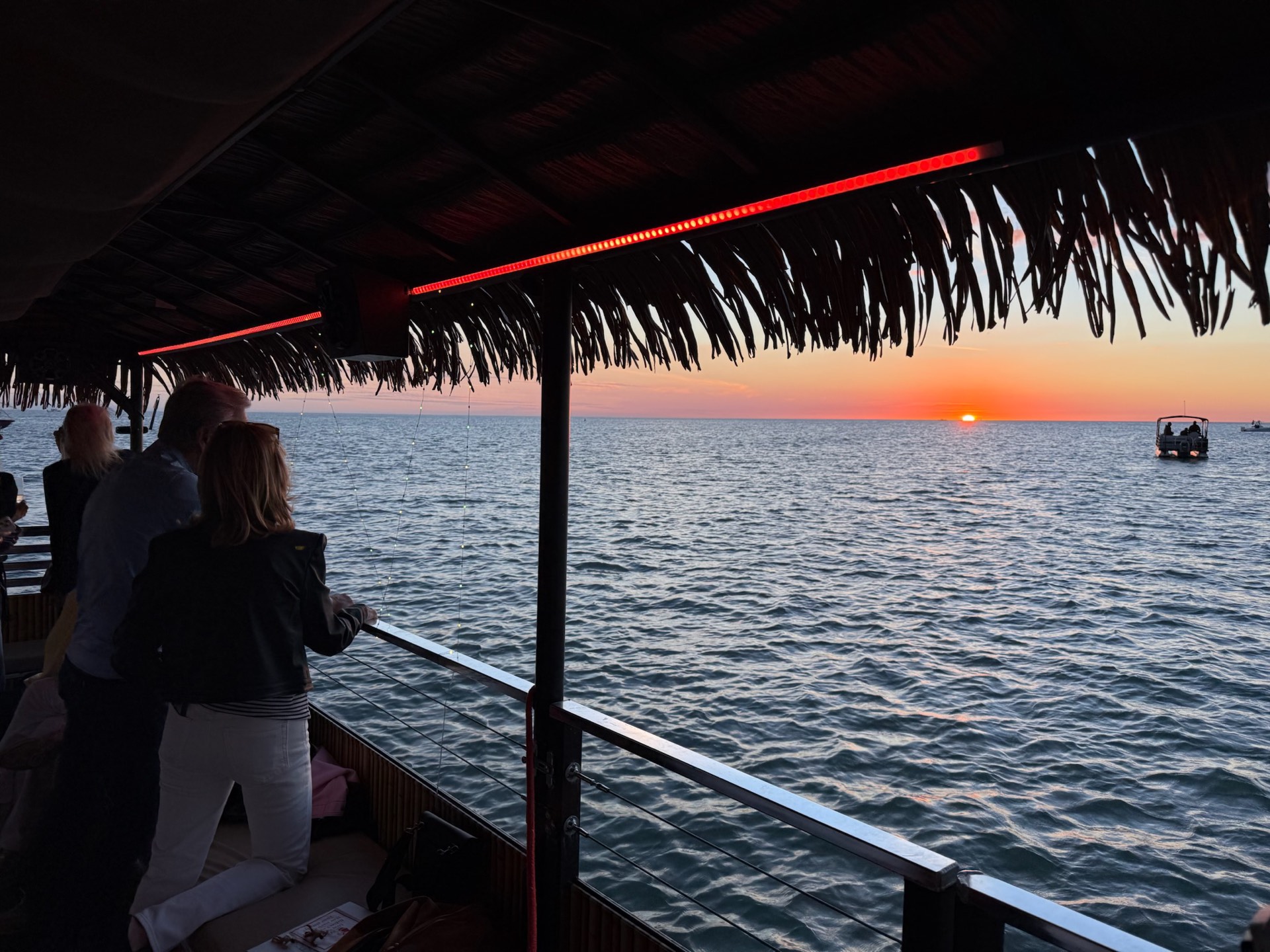
If you only do one thing, make it a shelling run to the islands the tide just refilled — Keewaydin and Kice after a front are about as good as Gulf-coast shelling gets. Sunset cruises are gorgeous and crisp this month; just bring a blanket, because 6pm in January gets cool fast once the sun drops.
| Tour | Why January | Best window |
|---|---|---|
| Shelling tour | Cold fronts pile fresh shells | Low tide, day after a front |
| Dolphin & wildlife | Best manatee odds of the year | Cold snaps, sheltered backwaters |
| Sunset cruise | Crisp, clear winter skies | ~6:00pm — bring a layer |
Whatever you pick, reserve early. January fills up faster than any month, and the calm-day mornings behind a front go first. See the full lineup on our tours page and grab your spot.
From the Helm: January's Panther Key wrack line: working the morning after a front
January mornings start with our captains checking two numbers before anything else: how hard the last front pushed through, and how low that morning’s low tide actually drops. A brisk cold front a day or two earlier, paired with a good negative low, is the combination that turns a beach like Panther Key from a pleasant stretch of sand into a real wrack line — that ragged band of shell debris the falling tide leaves behind at the last high-water mark. Miss either ingredient and the same beach can look nearly picked clean by comparison, no matter how good the map makes it look.
Our captains hand guests a mesh bag at the rail before anyone steps off, along with a fast rule of thumb: pick up what’s dead and dry, leave anything still living. A fresh find off that wrack line still carries a faint sheen and feels slightly heavier in the hand than something that’s been tumbling and bleaching in the surf for months — usually the one someone holds up first and asks our crew to identify. A chalky, sun-bleached one found ten feet away might be the same species, just further along in its own long trip to the beach, and we’ll say so if asked rather than let a guest assume it’s something rarer.
Wind direction decides which island gets the morning more than anything else. A north wind after a front tends to push more debris onto the Gulf-facing beaches, so our captains favor whichever boat-only island sits with the better lee that day rather than running the same spot on autopilot. It’s a call made at the dock over coffee, sometimes revised again once we’re within sight of the beach and can actually see how the wrack line is running that morning. Guests rarely notice the decision happening at all — they just notice we picked well.
None of this guarantees a junonia or anything rare — those still turn up mostly after real storms, not routine winter fronts, and our captains are quick to say so rather than let anyone walk the beach with the wrong expectations. What January does deliver reliably is volume: more shells, more variety, a wrack line worth walking slowly instead of picking through a thin scatter. That’s a meaningfully different morning than the same island would give you in August.
If shell hunting is the actual point of your trip rather than a stop along the way, January is the month our captains would pick for you personally, and our shelling tours are built around this exact cold-front-and-low-tide combination. Just remember Collier County’s rule travels with you off any boat-only island: empty shells only, every time.