
☀️ At a glance
- Best window
- The day or two after a cold front passes
- What does it
- Onshore wind & churned surf pile shells ashore
- Prime season
- December–March on the SW FL Gulf
- Storm bonus
- Deep-water junonia can wash up after big blows
- Best combo
- Post-front morning + low tide
Why a cold front fills the beach
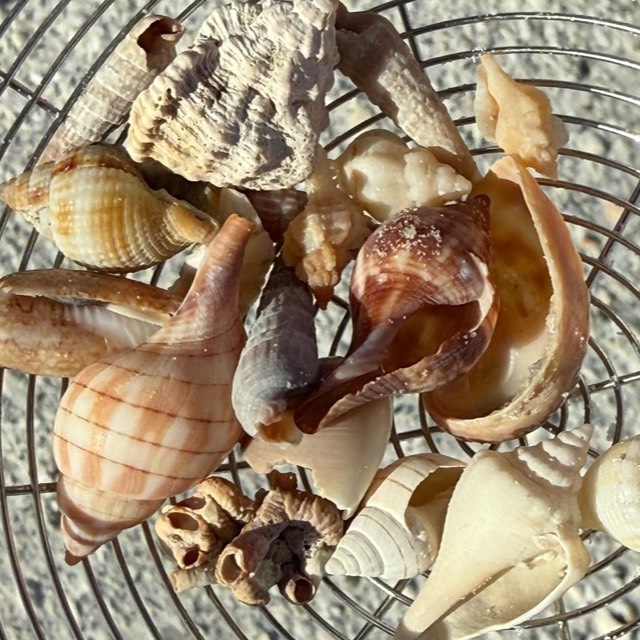
For most of the year, the Gulf near Marco and Naples is calm and the shells stay settled offshore. Then a winter cold front sweeps down, the wind clocks around and blows hard onshore, and the surf turns churned and restless. That energy lifts shells off the underwater bars and carries them in, dumping fresh piles right at the wrack line. By morning, the beach you walked a week ago looks completely different — loaded. It's the same reason our captains watch the forecast: a front is a signal to run to the islands the next day.
Why December through March is prime
Winter is cold-front season in SW Florida, and that's no coincidence with it being the most productive stretch of the year for shell hunting. One front after another keeps churning and restocking the beaches through the cooler months, so December, January, February and March consistently deliver the best hauls of the year. It's also the most comfortable time to be out — crisp mornings, fewer crowds, gentle light. If you're planning a trip around finding shells, this is the window. Our tide-timing guide helps you nail the daily piece.
| Conditions | What's happening | Shelling |
|---|---|---|
| Day after a cold front | Onshore wind has piled fresh shells | Best of the year |
| Calm, settled weather | Shells stay offshore | Steady but quieter |
| After a strong storm | Heavy churn; deep species can wash up | Excellent — junonia chance |
| Mid-summer calm | Light wind, hot | Slower; go early |
The storm-only prize: junonia
Here's the part that makes shellers set an alarm after a big blow. The junonia — the cream-and-chocolate-spotted holy grail — lives in deep water, roughly 100 to 425 feet down, and almost never reaches the beach. The exception is a powerful storm, which can churn one up from the depths and toss it ashore. Nobody can promise you'll find one; that's exactly what makes it the story of a lifetime. But the only realistic shot is walking a fresh beach right after rough weather, which is precisely when we head out.
How to time your post-front trip
Put it all together and the plan is clear: watch for a front, then get out the next morning, ideally at low tide, on a beach that just took the wind head-on. The boat-only islands like Keewaydin and Kice are the move because they catch the full onshore push and no one has walked them yet that day. Reading that combination — front, wind direction, tide, island — is the whole craft, and it's what a guided shelling tour is built to handle for you.
From the Helm: Reading the Overnight Wind Swing Before We Run the Wrack Line After a Front
The morning after a front blows through, our first move isn’t loading the cooler — it’s checking which way the wind swung overnight. A front that clocks around to the northwest overnight, then eases and swings back onshore by sunrise, is the one that piles shells thickest, because that shift stacks material against the beach instead of just stirring the bottom offshore. We watch the marine forecast the night before and again at first light, and that reading decides which pass we run to first, not a fixed schedule. A front that stalls offshore and never really swings back onshore usually means we adjust the whole morning down a notch, because the beach won’t have restocked the way a textbook post-front pile suggests it should.
Because a good post-front morning can turn into more shells than pockets or a single mesh bag can hold, we load extra gear before we ever leave the dock: a stack of mesh bags, one collapsible bucket per family, and a small hand rake for guests who want to work the wrack line instead of just the open sand. The rake stays optional — most people do fine on hands and knees — but it saves backs on a morning when the pile runs long. We also keep a couple of extra long-sleeve layers aboard, since a front cold enough to fill the beach is usually cold enough that guests who dressed for a normal Gulf morning end up borrowing one before we’re back at the dock.
We give the same brief before anyone steps off: walk the fresh wrack line first, the darker ribbon of debris the last high tide left behind, before working the open flat behind it. That line holds what the storm actually delivered overnight; the flat behind it is mostly what previous tides missed. And it’s the same brief every post-front morning — empty shells only, no exceptions, even when a live conch is sitting right on top of the pile looking abandoned.
The mistake we correct most is guests walking straight past that wrack line because it looks messy and picking through open sand instead, where the pickings are almost always thinner. We walk the first stretch with people, kicking gently through the debris rather than scanning it from standing height, because half of what a front delivers rides just under the surface of that fresh pile, not sitting on top of it.
If the wind never settles and the pass stays too rough to run safely, we don’t force it — we shift the morning to a protected backwater stretch and save the exposed outside bars for the next calm window, even if that means a smaller haul. Pair the front with the right stage of tide and the payoff compounds; our tide primer covers how we time that piece, and a spot on one of our shelling tours gets you there while the wrack line is still fresh.