
⚓ At a glance
- Shutter speed
- 1/1000s or faster for dolphins & wildlife; 1/125-1/250s handheld is plenty for a sunset
- Camera mode
- Burst (continuous drive) — fires several frames a second so you catch the split-second surface
- Bracing
- Soft knees, elbows tucked in, forearms on the rail — never a white-knuckle grip on the moving hull
- Glare fix
- A circular polarizer, or simply keep the sun behind you
- Gear protection
- Dry bag or rain sleeve between shots; wipe salt spray with a dry microfiber cloth
- Best local light
- Golden hour over Cape Romano and any dolphin riding the bow wake
What Camera Settings Freeze a Moving Boat?
A boat never actually holds still, even at idle — you’re absorbing swell, wake and prop vibration through your feet and into every frame you shoot, and the subject in front of you, a surfacing dolphin or a diving pelican, is moving too. The fix starts with shutter speed. For wildlife that breaks the surface and disappears in a blink, set your shutter to 1/1000s or faster; anything slower and a dolphin’s fin turns into a gray smear. For a sunset or a landscape shot where nothing in the frame is moving fast, you can drop back to around 1/125–1/250s handheld and still come home sharp, since at that point it’s mostly your own motion you’re fighting, not the subject’s. It’s one of the most common practical questions we get, right alongside the rest of our on-the-water know-how.
Pair that shutter speed with burst mode — sometimes called continuous drive — on whatever camera or phone you’re shooting with. A dolphin surfaces for a fraction of a second, and firing a rapid string of frames instead of one careful shot is how you actually land the one where the fin, the water and the light all line up. On a phone, hold the shutter button down (or the volume button, on most models) to fire a burst instead of tapping once, and lock focus and exposure on the water ahead of the boat before the animal even appears.
How Do You Brace Yourself on a Moving Boat?
Gripping the rail white-knuckled doesn’t steady a camera — it just transmits every bit of the boat’s vibration straight into your hands. Instead, treat your knees like shock absorbers the way you would on a paddleboard: soften them, let your legs take the roll of the swell, and keep your upper body and elbows relatively still and tucked in against your ribs. Brace your forearms or the camera strap against the gunwale or rail rather than pressing your whole body against it, and shoot in the brief pause at the top or bottom of a swell rather than mid-roll. Our captains run shallow-draft boats through the calmer mangrove-lined channels of the Ten Thousand Islands whenever the route allows, which helps, but there’s still wind chop and wake to work around, especially if another boat passes close. If conditions are lively, brace low and wide with your feet shoulder-width apart instead of standing tall, and never lean your camera arm on anything that’s still moving relative to you, like a swaying canopy post.
How Do You Fight Glare Off the Gulf?
Open water throws back a hard, flat glare, especially over the sand flats around Marco Island in the middle of the day, and it’ll wash out color and hide anything below the surface. A circular polarizing filter is the single best fix — twist it while looking through the viewfinder or screen and watch the glare cut and the blues deepen in real time. Don’t have a filter? Position yourself so the sun sits behind you or off to one side rather than shooting straight into it, unless you’re deliberately silhouetting a sunset. Polarized sunglasses help you compose more accurately too, since they show you roughly the same glare reduction your camera will eventually capture, which makes it a lot easier to judge a shot before you take it.
Timing Dolphin Surfaces and the Cape Romano Sunset
Whether you’re out on one of our dolphin tours or timing the light on a sunset cruise, these are the two shots almost everyone wants and almost nobody times right on the first try. Dolphins here often ride a boat’s bow wake, which works in your favor if you know where to point the camera before they show up. Pre-focus on the water just off the bow, keep some open space in the frame instead of zooming in tight, and hold down that burst mode as soon as you see a wake pattern change or a shadow rise. They surface, breathe and vanish in well under a second, so the shot you want is almost always the one you didn’t consciously time — it’s the burst that saves it.
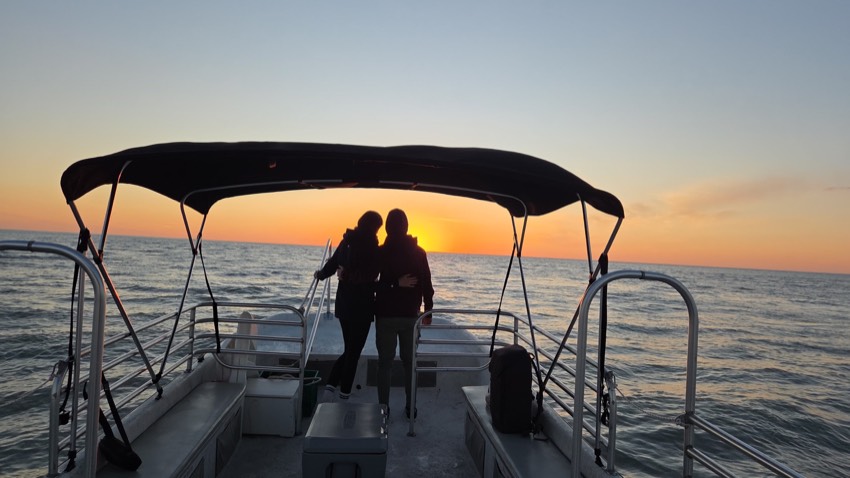
The other signature shot out here is the light over Cape Romano at the end of the day, where the toppled dome-house ruins sit half-submerged against a sky that goes deep gold and pink. Meter for the sky rather than the boat deck so you don’t blow out the color, brace against the rail the way described above, and keep shooting through the whole color show, since the best light often comes a few minutes after the sun actually drops below the horizon. If chasing wildlife shots specifically, herons, ospreys, roseate spoonbills, is more your focus than dolphins and sunsets, our bird photography guide covers the longer lenses and perch-timing tricks that go beyond general boat technique.
How Do You Protect Your Camera From Salt Spray?
Salt spray finds its way onto every piece of gear on an open boat, and it’s corrosive to lens coatings and electronics if you let it sit and dry. Keep your camera in a dry bag or a rain sleeve whenever you’re not actively shooting, and screen a clear or UV filter over the actual lens glass, since it’s a lot cheaper to replace a filter than a lens element if it gets scratched or pitted. When spray does land on the front element, wipe it with a dry microfiber cloth rather than letting it dry into a salt film, and avoid swapping lenses out on an open deck where spray and wind can both get inside the camera body. The same logic applies to your phone; see our guide to keeping your phone dry on the water for the specific dry-bag and case tricks that work best on a boat that’s underway.
| Subject | Shutter speed | Drive mode | Quick tip |
|---|---|---|---|
| Surfacing dolphin | 1/1000s or faster | Burst / continuous | Pre-focus on the bow wake and fire before the fin breaks |
| Sunset over Cape Romano | 1/125-1/250s handheld | Single shot is fine | Meter for the sky, brace on the rail as color builds |
| Passing wildlife or birds | 1/1000s or faster | Burst, continuous autofocus | Pre-focus on the horizon line before it appears |
| Candid shots on deck | 1/250s | Single shot or auto | Sun behind you, watch for spray on the lens |