
⚓ At a glance
- Best defense
- Dose with meds or ginger the night before and the morning of — non-drowsy formulas only
- Food
- Something light and bland an hour or two before departure; skip heavy, greasy or boozy breakfasts
- Where to sit
- Low and centered on the boat, away from the cabin
- Where to look
- A fixed point on the horizon or the passing shoreline — never a phone or camera screen
- Local edge
- Our back-bay routes through the Ten Thousand Islands stay in protected water most of the trip
- If it hits
- Tell your captain early — a course change or a tuck behind an island usually settles it
The Prevention Protocol: Start the Night Before
Seasickness prevention is a timing game, not a same-day scramble. Non-drowsy motion-sickness medications like meclizine (sold as Bonine) or non-drowsy Dramamine work best when they’re already in your system before you ever step on the dock, so take your first dose the night before your tour and a second dose the morning of, with breakfast. If you’d rather go the natural route, ginger works the same way — capsules, chews or a strong ginger tea — taken on the same night-before-and-morning-of schedule. Acupressure wristbands are a low-risk add-on some guests swear by; they won’t hurt to wear alongside either option, and stacking a wristband with meds or ginger is fine if you tend to be extra sensitive. If you know from experience that you’re especially prone to motion sickness, ask your doctor about a prescription scopolamine patch, applied behind the ear several hours before departure — it’s the strongest option, but it needs a prescription and some planning ahead, so it’s not a same-morning fix. Whatever you choose, try it on a normal day first so you know how your body reacts — some non-drowsy formulas still make certain people a little sleepy, and you’d rather find that out on the couch than on the boat.
What to Eat Before You Board (and What to Skip)
An empty stomach and a queasy stomach are both bad ideas out on the water, so aim for something light and bland an hour or two before we leave the dock — toast, crackers, oatmeal, a banana. Skip the greasy diner breakfast, heavy dairy and anything spicy; they sit poorly once the boat starts moving. Alcohol the night before or the morning of works against you too, since it dehydrates you and lowers your tolerance for motion — save the celebratory drink for after we’re back at the dock. Keep sipping water throughout the trip rather than gulping soda or coffee, both of which can leave you more dehydrated and more prone to feeling off. If you’re heading out on one of our longer private charters, pack a few plain crackers or pretzels for later — a little something in your stomach partway through the trip is often more helpful than white-knuckling it on empty.
Where to Sit and What to Look At Once You’re Underway
Once you’re aboard, seating and sightlines matter almost as much as anything you took beforehand. Sit low and centered — toward the middle of the boat, near the waterline — where you feel the least pitch and roll, rather than up in the bow where every wave amplifies. Face forward if you can, and pick a fixed point to focus on: the horizon line, a distant island, the shoreline sliding by. That steady visual reference helps your inner ear and your eyes agree on what’s actually moving, which is the root of most motion sickness. What you want to avoid is looking down — a phone screen, a camera viewfinder, a book — because that’s exactly the mismatch that triggers queasiness for most people. Stay out on deck in the fresh air rather than ducking into the cabin, which tends to trap heat, engine fumes and that closed-in feeling that makes symptoms worse. Closing your eyes or putting your head down might feel like relief for a moment, but it usually backfires — your inner ear still senses the motion even with your eyes shut, so it’s better to keep them open and locked on that horizon line.
Why Our Ten Thousand Islands Routes Stay Calm
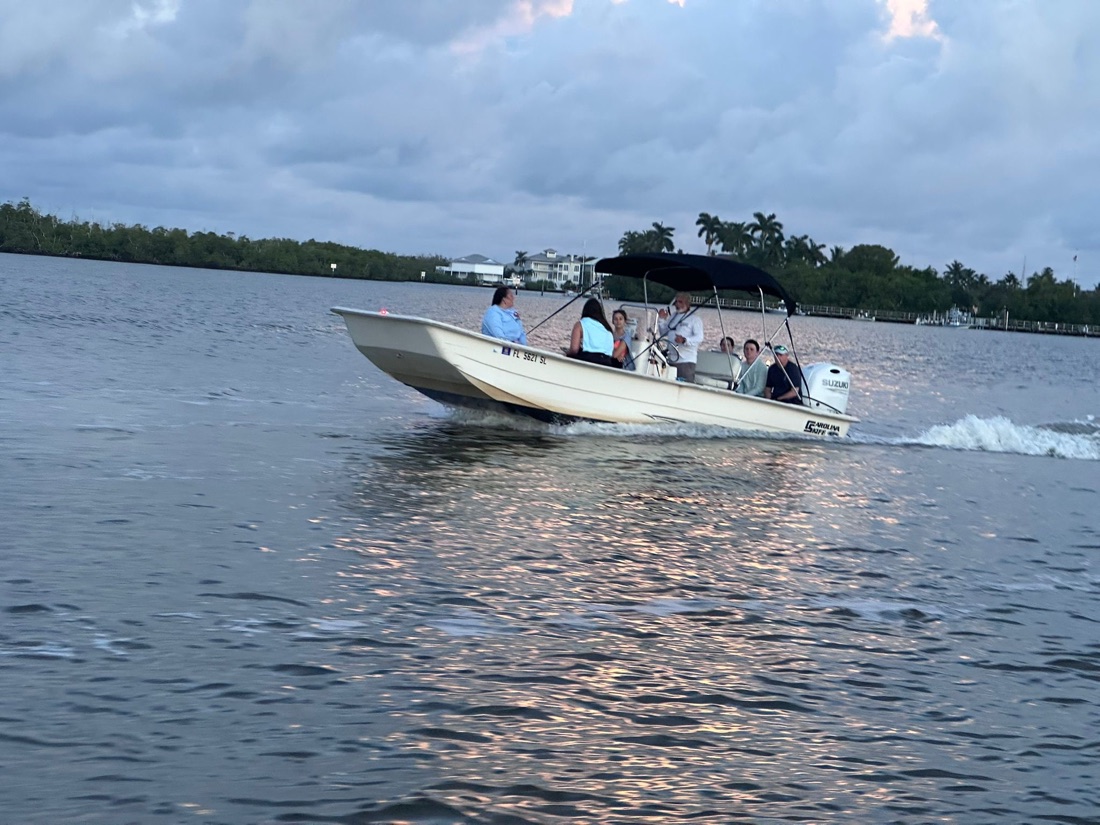
Here’s the part that actually matters most for most of our guests: the water itself. Our dolphin tours, sunset cruises and shelling runs spend the majority of their time winding through the protected back bays and mangrove channels of the Ten Thousand Islands, not out on open Gulf swell. That’s water most people would call flat, even on a breezy day. Any open-water stretch on our routes is short, and our USCG-licensed captains know this water well enough to adjust on the fly — slowing down, changing heading, or tucking in behind an island to smooth things out the moment a guest says something. That local knowledge is exactly why genuine seasickness is uncommon on our boats, even for guests who’ve gotten queasy on other trips.
Some people are simply more prone to motion sickness than others, and it has nothing to do with toughness. Inner-ear sensitivity, a history of migraines, and never having spent much time on a boat before all raise the odds, and kids often feel it more than adults because their sense of balance is still developing. First-timers and anyone who’s had a rough experience on a previous trip should lean on every piece of this protocol rather than skipping steps. If you’re bringing kids along, check with their pediatrician before giving them any motion-sickness medication and follow the dosing on the label closely — most are formulated for adults. Pregnant guests should talk to their doctor before taking anything too; ginger in food or tea form is generally considered the gentlest option, but every pregnancy is different. None of this is a reason to skip the trip — it’s just worth knowing ahead of time so you can plan accordingly.
Feel It Coming On? Tell Your Captain Early
If you start to feel off despite doing everything right, don’t wait it out quietly — say something to your captain or mate right away. The earlier we know, the more options we have: a quick heading change, a slower pace, moving you to a calmer seat, or ducking behind the nearest island until it passes. Waiting until you’re already sick narrows those options considerably. It’s a normal thing to mention, not an inconvenience — our crews deal with it often enough that there’s no awkwardness in speaking up early, and most guests who say something early feel fine again within a few minutes once we’ve adjusted. If you want more of the reassurance side of this — how common it really is and what our guests typically experience — our seasickness FAQ covers that in more detail. For everything else about getting ready for your day on the water, our full On the Water guide is the place to start, including what to actually wear on a boat tour and how to handle sun protection so you’re comfortable well beyond just your stomach.
| Method | When to Start | Drowsiness | Best For |
|---|---|---|---|
| Non-drowsy OTC (meclizine/Bonine, non-drowsy Dramamine) | Night before + morning of | Low | Most guests wanting an easy, reliable option |
| Ginger (capsules, chews, tea) | Night before + morning of | None | Guests who prefer a natural remedy |
| Acupressure wristbands | Put on before boarding | None | Low-risk add-on alongside meds or ginger |
| Prescription scopolamine patch | Several hours before departure (doctor-prescribed) | Moderate | Guests who know they’re highly prone to motion sickness |