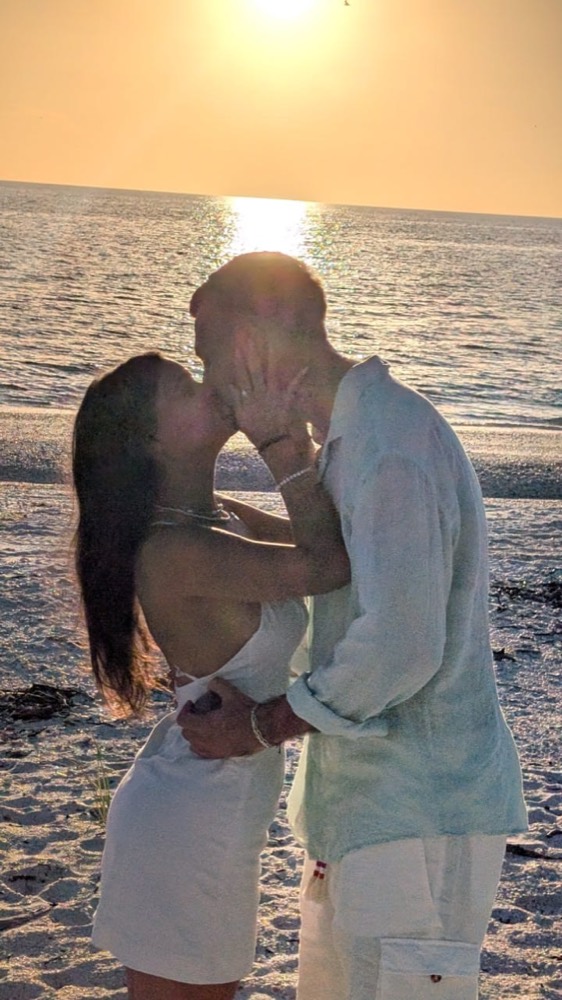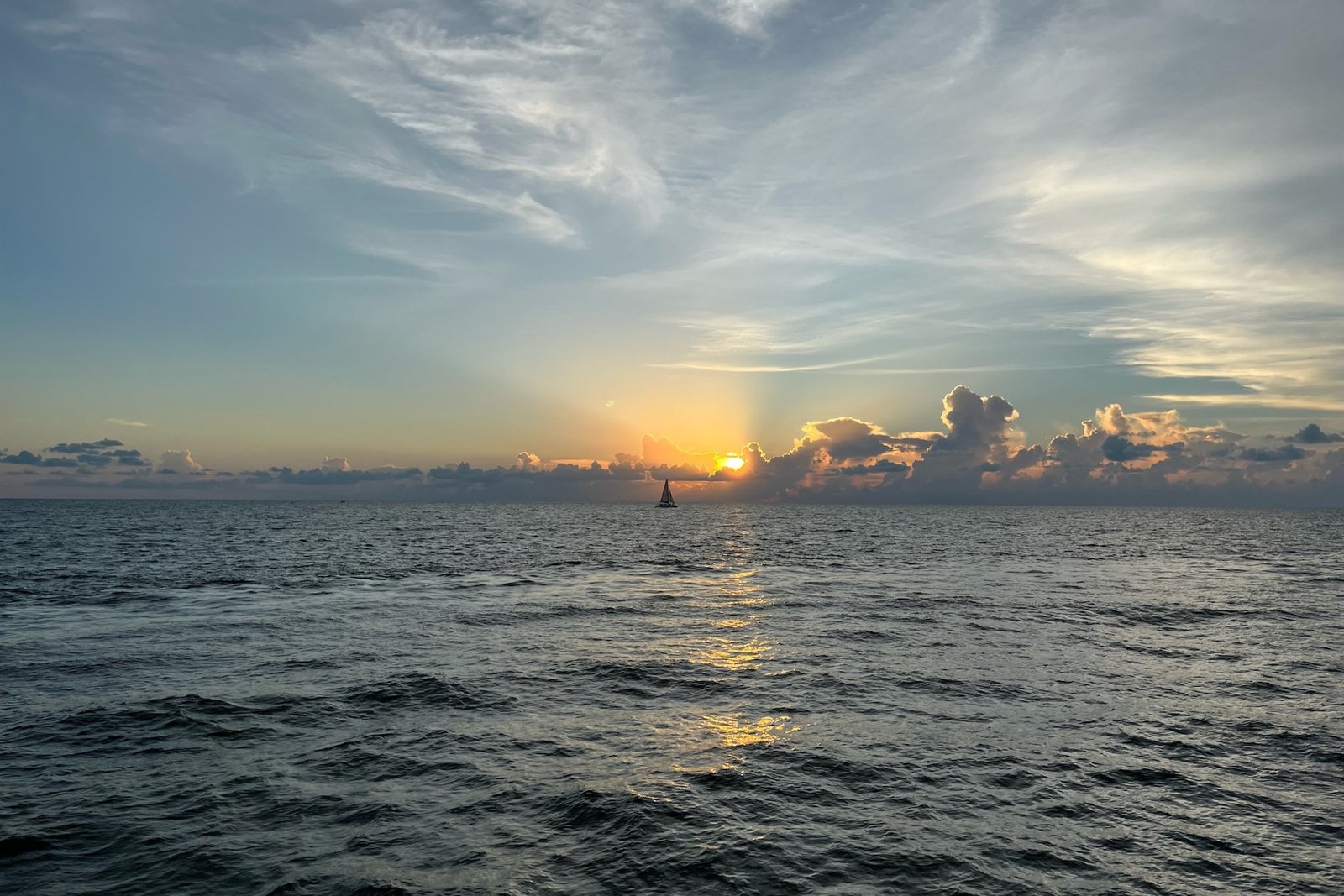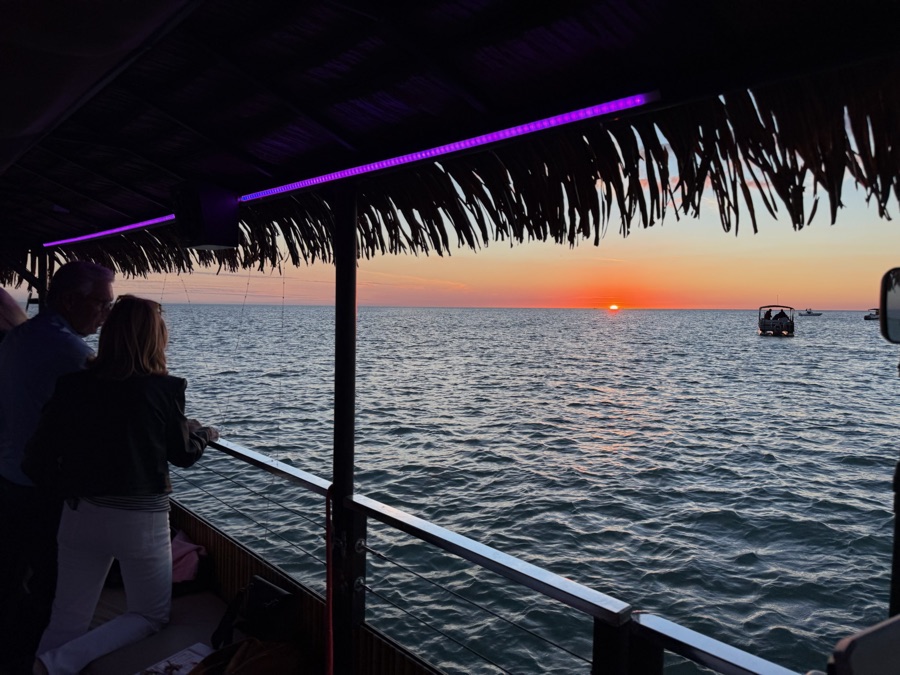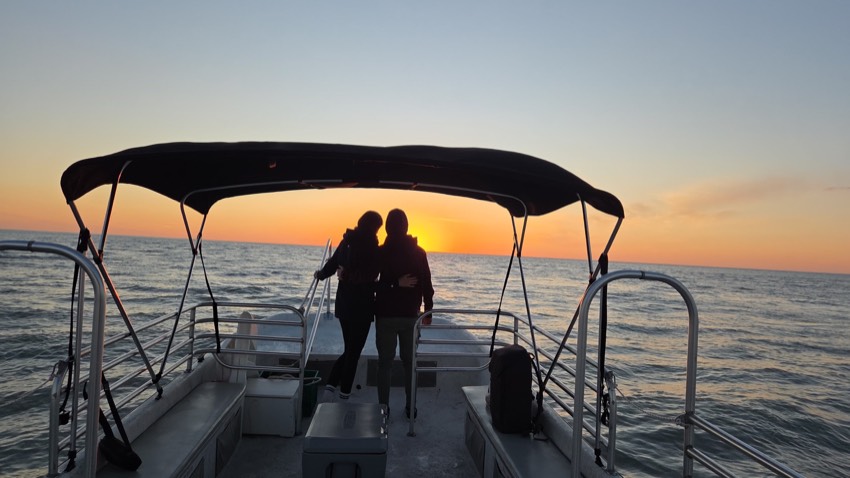
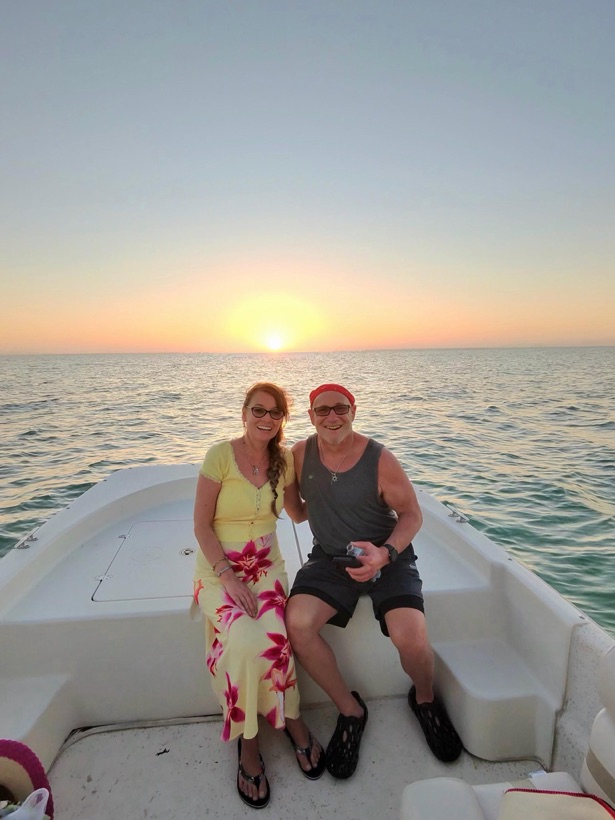
You’ll feel it before you notice why: somewhere past the last channel marker, your captain eases off the throttle and the wake behind you goes flat and quiet. That’s not an accident. On a couples run we time that pull-back to the last stretch of light, swinging the bow around so you’re facing west with nothing between you and the horizon but water. We tend to idle down early rather than late — better to arrive at the color than chase it — and let the boat drift the last few minutes instead of holding a line.
Before you ever step aboard, we’ve already rebuilt the boat around two people instead of a crowd. The forward bench cushions get pulled up and turned to face inward, so you’re seated across from each other instead of side by side watching the wake. We clear the casting deck of the rod holders and coolers a fishing or family trip would need, and we leave the bow open enough that you can stand at the rail together without stepping around gear. Small adjustments, but they change how the whole hour feels.
When the wind’s up out of the west and the open Gulf gets choppy for a slow drift, we’ll tuck instead into the calm behind Dollar Bay, a hush of water most of our other trips never visit. It’s shallow, sheltered, and quiet enough to cut the engine and hear the tide moving through the mangrove roots. We don’t announce it as a backup plan — we just quietly reroute, because the point was never the exact spot. It was giving you calm water and each other’s company without a chop rocking the moment.
We also slow the whole trip down in ways you might not clock in the moment. A family charter might make five stops in two hours; on a sunset cruise built for two, we’ll often hold at just one or two, giving you the full arc of color instead of rushing to the next photo op. If dolphins show up along the way, we’ll idle and watch rather than press on to stay ahead of schedule — there’s rarely anywhere else we need to be.
Somewhere in that first stretch aboard, your captain is already reading who’s settled in close at the bow and who’s still finding their footing on a moving boat. That read decides the pace of the whole afternoon — whether we ease straight into the quiet water behind Dollar Bay or swing past a stretch of undeveloped island beach first, so you get a few extra minutes of scenery before the engine goes quiet. It’s a small decision, but it’s the one that makes a two-hour cruise feel built around you instead of run on a set route.