
| Season | Weather & water | Wildlife | Crowds |
|---|---|---|---|
| Winter (Dec–Feb) | Warm, dry, calmest seas | Manatees gather; great shelling | Busiest and priciest |
| Spring (Mar–May) | Gorgeous; water warming up | Active birds & dolphins | Thinning after spring break |
| Summer (Jun–Aug) | Hot; warm water; mornings best | Dolphins everywhere | Quietest, best value |
| Fall (Sep–Nov) | Warm and quiet; watch the tropics | Stone crab opens Oct 15 | Low until late fall |
Winter (December–February): peak season & manatees
This is high season for a reason — warm, dry, sunny days, low humidity and gentle water. It’s the most reliable stretch for calm seas, and the cooler Gulf brings manatees into sheltered warm-water spots, making them easier to find. Winter cold fronts also stir up the Gulf and wash fresh shells onto the beaches, so shelling is excellent. The trade-off: it’s the busiest and priciest time, so book ahead.
Spring (March–May): the sweet spot
Many locals call spring the best all-around season. The weather is gorgeous, the water is warming up for swimming, wildlife is active (nesting birds and spoonbills), and after the spring-break weeks the crowds thin out. Great for shelling, dolphins, and beach days alike — a fantastic time for families.
Summer (June–August): warm water & afternoon storms
Summer is hot and humid, with the warmest Gulf water of the year — perfect for swimming and sandbar hangs. The classic pattern is sunny mornings and brief afternoon thunderstorms, so morning trips are smart. It’s also the quietest, most affordable season, and dolphins are out in force. Just keep an eye on the forecast and book earlier in the day.
Fall (September–November): quiet water & stone crab
Early fall is our quietest stretch — warm water, few crowds and great value. By late October the snowbirds return, the weather turns idyllic, and stone crab season opens (Oct 15), a delicious local milestone. November is one of the prettiest months to be on the water. (Hurricane season technically runs through November, so we watch the tropics, but most days are beautiful.)
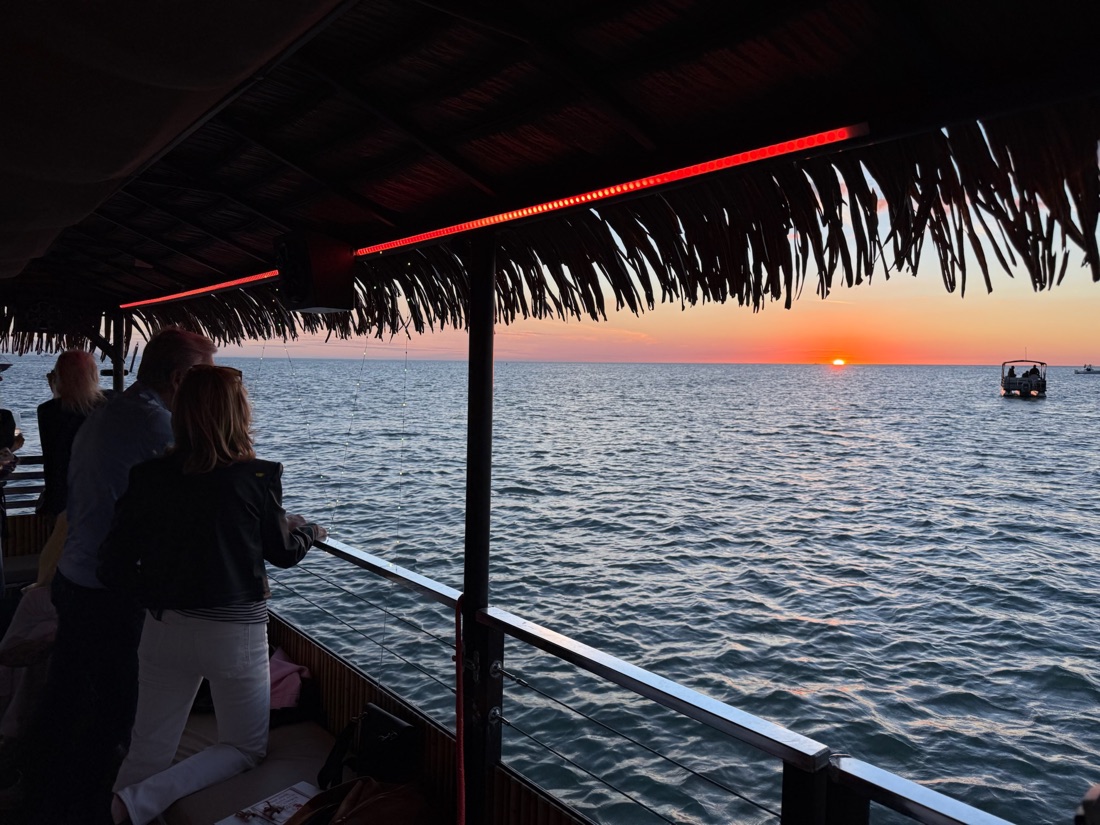
Bottom line: winter for calm seas and manatees, spring for the all-around sweet spot, summer for warm swimming water and value (go in the morning), fall for quiet water and stone crab. Any month, a sunset cruise is a sure thing. See what’s running and live times on the tours page.
From the Helm: Why summer charters swing into the Ten Thousand Islands backcountry before open Gulf
Guests booking a summer trip almost always ask if we’re worried about storms, and the honest answer is that we plan around them before the boat leaves the dock, not after clouds show up. Summer mornings here tend to start clear and build heat and moisture through the day until a sea-breeze storm rolls through by early afternoon, so we push departure times earlier and route the front half of the trip into the sheltered creeks and bays of the Ten Thousand Islands backcountry, saving any open-Gulf running for while the morning air is still calm and settled, before the breeze and the buildup have a chance to stack up against each other.
Winter mornings ask something different of us. A cold front can leave a low fog sitting over the water right at first light, thick enough that we’ll idle out of the marina slower than usual and lean on radar and local knowledge of the channel markers until it burns off, usually within the first half hour or so. Guests booked on an early winter charter sometimes wonder why we’re moving cautiously at first; it’s simply that visibility, not temperature, is what actually governs how fast we can safely run that morning.
Spring and fall give us the most room to just run the plan as booked, since the wind tends to lie down and the afternoon storm risk hasn’t built up yet the way it does by mid-summer. That’s usually when we’ll stretch a route a little farther than average if the group’s up for it — out to a more distant sandbar or a longer stretch of open water — simply because conditions make it easy to say yes instead of needing to hold something back in reserve for whatever the afternoon might bring.
The question we hear most at the dock, across every season, is really just some version of will we still have a good time if the weather looks iffy. Almost always, yes — we’ve got backup routes for wind out of every direction and a sheltered stretch of water for nearly any front, which is a big part of why a seasonal itinerary guide can tell you what to expect but not exactly which line we’ll run that day.
What doesn’t change season to season is the order of operations dockside: check the wind and radar first, pick the route, then decide timing around that instead of the other way around. It’s a habit built from enough mornings watching a forecast shift mid-trip that we’d rather adjust the plan than promise something the sky won’t deliver. A private charter gives the most room to bend that plan around your group specifically, whatever the month.