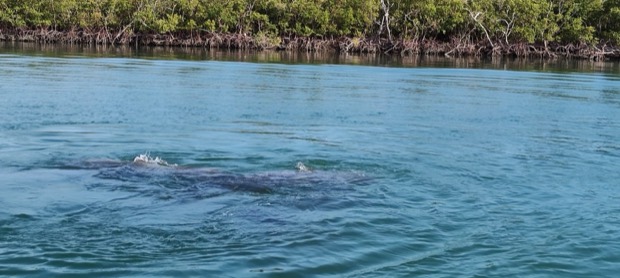
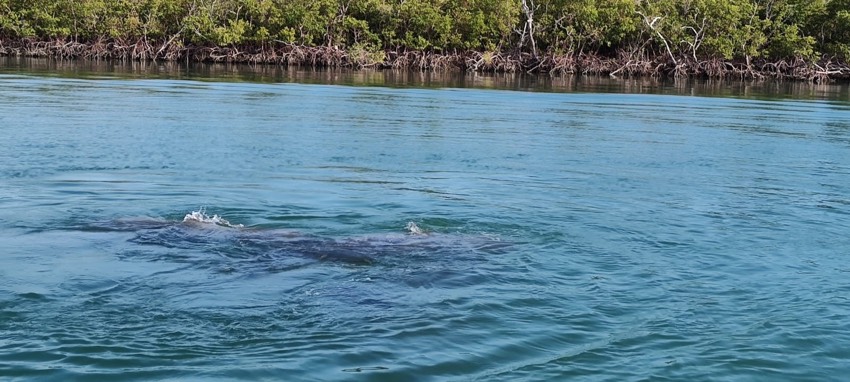
The read your captain does before a manatee trip has less to do with the calendar than with the thermometer. When a real cold front drops overnight lows and the open bay water cools off, manatees push into the warmer, current-sheltered canals around the Isles of Capri and similar backwater cuts, and that’s where we go looking. On a mild stretch with no front behind it, we’ll work the open flats and creek mouths instead, since the animals have less reason to bunch up anywhere in particular that day, and they’re usually spread thinner and harder to predict.
Once we’re in the right canal, the whole approach slows down. We idle in well ahead of where we expect to see anything, then cut the engine and coast the rest of the way in on whatever momentum’s left — manatees are slow, unbothered animals most of the time, but a prop turning nearby is the one thing that reliably moves them off, so a dead-quiet approach is the difference between a good look and a wake full of retreating backs.
Guests at the rail get a quiet briefing before we go engine-off: voices down, hands in the boat, no reaching for the water. It’s not a rule for our sake — it’s so the animal stays relaxed and surfaces naturally close by instead of diving the second it senses people leaning over the side. Patience usually pays off better than positioning here, and most groups figure that out within the first few quiet minutes on the water.
If a canal comes up empty, the fallback is simple: we drift out to the mouth where it meets open water and wait a few minutes rather than motoring canal to canal, since the noise of repeated starts and stops does more to push manatees off than a single quiet engine cutoff ever would. Stillness is the tool that actually works here, more than any particular stretch of canal.
What you’re looking for on the surface is subtler than a dolphin’s fin — just a snout and two nostrils breaking the water in a slow, unhurried roll, sometimes a paddle-shaped tail swirl right after. We’ll point out the swirl first, since it’s usually easier to spot than the animal itself in tannin-stained backwater, especially with the sun low and the surface glassed over.
These trips run alongside our regular Marco Island dolphin tours, and if you’re trying to time a visit around the cold-water season, our manatee season guide lays out how that window shifts year to year and what else tends to be around at the same time.