
🎣 At a glance
- Scientific name
- Pomatomus saltatrix
- Looks like
- Blue-green back, silver sides, forked tail, sharp teeth
- Where & when
- Passes & nearshore off Naples; cooler months
- Best lures
- Fast-moving spoons & plugs; use a bite-guard leader
- Rules
- Regulated — your captain handles licensing & limits
How to identify a bluefish
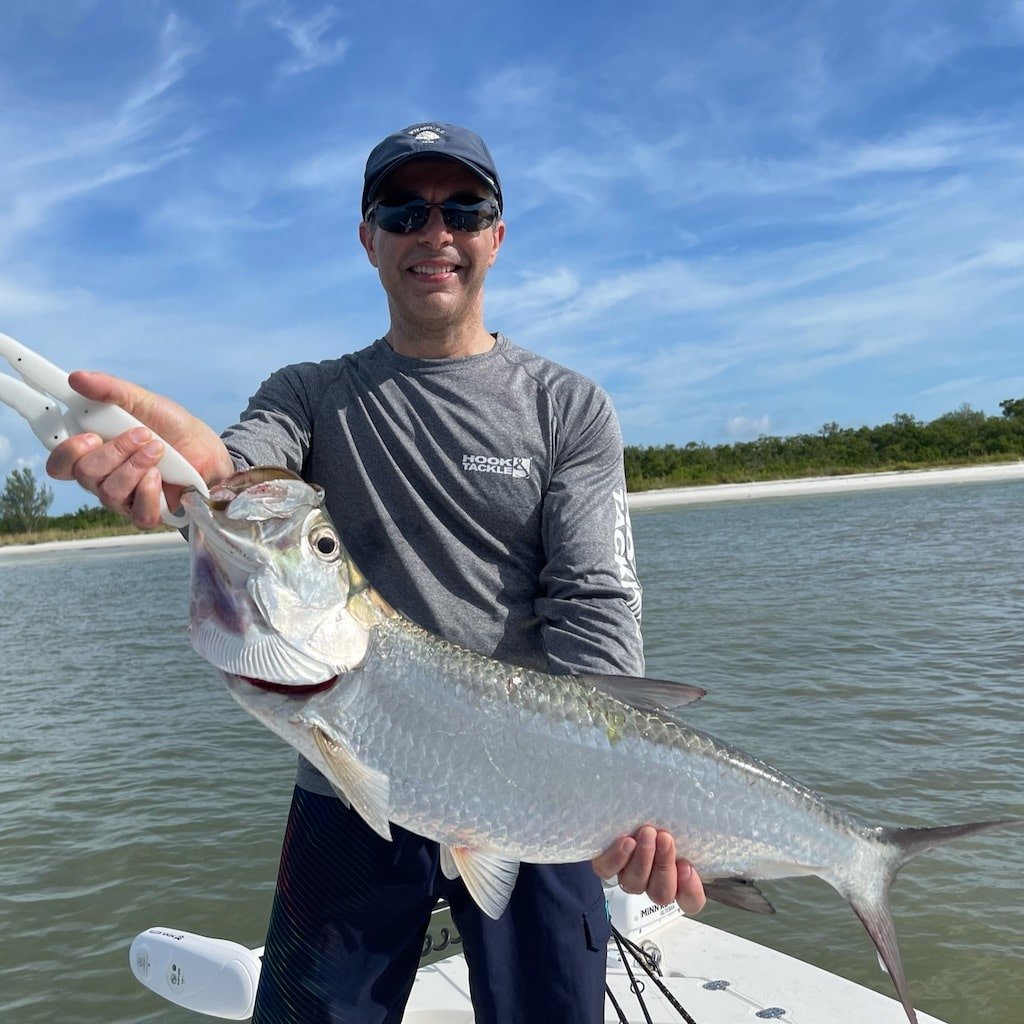
Bluefish are built like little brawlers: a blue-green back fading to silver sides, a broad forked tail, and a jaw full of small, sharp, business-like teeth. Those teeth are the dead giveaway — no other common schooler in our passes bites like a bluefish, and you'll respect them the first time you unhook one. When a school is feeding, the surface erupts into a froth of slashing fish and scattering bait, a sight you won't forget. They run smaller and larger by the school, but pound for pound every one of them fights like it's furious.
Where to find them
Bluefish are a cool-season treat for us. As the water cools and bait pours through the inlets, they stack up in the passes and along the nearshore beaches, ambushing the schools. The passes around Naples and Marco are classic spots — the same moving-water funnels we fish on a Gordon Pass trip — where current concentrates the bait and the predators line up to feed. When the blues are blitzing, you'll often find Spanish mackerel and jack crevalle crashing the same bait, which makes for chaotic, fast, grin-inducing fishing. Watching for diving birds and busting water is half the fun — it's a big part of why a cool-season inshore trip stays exciting.
How we catch them
Bluefish want speed and flash. We throw fast-moving spoons, plugs, and jigs and rip them back through the school, and the strikes are jolting — they hit a lure like they're mad at it. The one must-do is a bite-guard: a length of heavier leader or wire, because those teeth will shear off a light line in a heartbeat and cost you the fish. They're regulated, so your captain manages the rules, but in terms of sheer non-stop action a feeding school of blues is one of the wildest things we get into all winter. If you like fast casting and savage strikes, this is your bite — book a Naples fishing charter when the fronts are rolling.
| Sign | What it means |
|---|---|
| Diving birds | Bait being driven up — blues below |
| Frothing surface | School actively feeding |
| Scattering bait | Predators slashing through |
| Cut-off lines | Reminder to use a bite-guard leader |
When the water's cool and the passes light up, bluefish put on a show worth chasing — come cast into the chaos with us.
From the Helm: Casting into a bluefish blitz at the mouth of a moving pass
You’ll usually feel it before you fully see it: the rod tip juts, then doubles clean over as a bluefish crashes a lure two feet off the boat, and someone at the rail lets out a word that isn’t quite a sentence. We point the bow at the edge of a bait pod pushed tight against a pass mouth on a hard-moving tide, since that’s where blues corral shad and pilchards into a wall they can’t escape. Once the surface starts boiling white, we shut down and drift into casting range rather than run straight through the school and put it down.
We tie on single-hook lures instead of anything trebled, since a treble in a bluefish’s mouth means a slow, awkward unhooking with a fish full of teeth flopping on deck. A narrow chrome spoon or a soft-plastic on a wire-through jig head gets bit just as often and comes out in seconds. Retrieve speed matters more than the lure itself — we run it fast and erratic, because a blue chasing something that looks like it’s trying to escape commits harder than one working a slow, steady swim back to the boat.
The strike is violent and immediate, no build-up, no soft take to feel out first — just a jolt straight through the rod and into your forearm. Bigger fish, the ones we call choppers, will hit and miss on the first pass and circle back around for a second try, so we tell guests not to reel a missed strike straight in; let it sit a beat and twitch it again. Every bluefish keeps its head shaking through the whole fight, which makes it feel bigger and faster than the fish’s actual size once it’s finally at the boat.
At the rail we handle bluefish with long-nose pliers from the start, never bare fingers near that mouth, and we back the hook out fast so the fish spends as little time out of the water as possible. Bites this good tend to end fast too, so we work the school hard while it’s up — multiple casts, minimal chatter — rather than pausing to admire the first fish while the blitz drifts off. Guests chasing this kind of nonstop action do best aboard one of our fishing charters, timed to catch a pass mouth exactly when the tide’s moving hardest.
If the blitz breaks up before we get within range, we don’t chase the boil across open water — blues move faster than a boat can reposition without spooking them further. Instead we hang back near the same pass mouth and wait for the next push of tide to reload the bait, since the fish tend to circle back to the same structure rather than leave the area entirely. That patience usually pays off within twenty minutes, and it beats burning fuel and daylight chasing a school that’s already sounded.