
🎣 At a glance
- What it is
- Light spinning rods with thin line, the inshore standard
- Why
- Backcountry fish run modest in size but bite all day
- Top catches
- Spotted seatrout, pompano, ladyfish, jacks, snapper
- Best for
- Beginners, kids and anyone who wants steady action
- Licensing
- Your captain's vessel license covers every paying guest
Why our captains fish light
Out in the bays, passes and mangrove edges around Naples and Marco, most of what swims is in the one- to five-pound range. Throw a heavy offshore rod at a 16-inch trout and you'll never even feel it eat. Drop down to a light spinning setup — a soft seven-foot rod, a small reel, thin braided line — and suddenly every bite telegraphs straight up the line to your hand. The fish fight harder relative to their size, the lures cast a mile, and you can fish all day without your arm giving out.
Light gear also lets us present small baits naturally. A live shrimp or a quarter-ounce jig drifts the way the real thing does, and that subtlety is what gets finicky fish to commit. It's the same reason our guides reach for light spinning over heavy bottom gear on nearly every inshore charter we run.
What you'll catch on light tackle
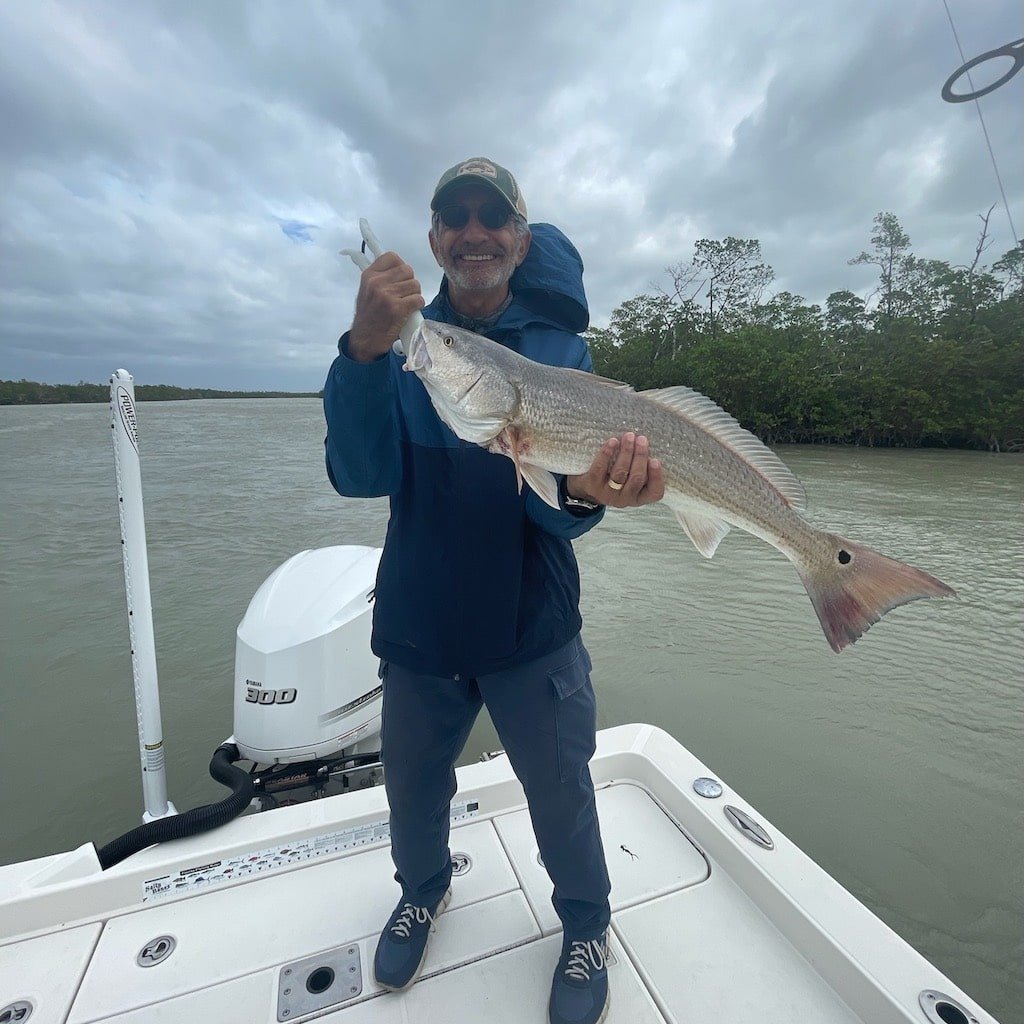
This is where light tackle earns its keep: it produces variety. On a typical drift across the flats you'll tangle with spotted seatrout over the grass, then move to a sandy edge and pick off pompano on a bouncing jig. Hook a ladyfish and you'll get airshow after airshow — pound for pound one of the most acrobatic fish out here. Mix in jack crevalle, mangrove snapper and the occasional surprise, and the cooler of memories fills up fast.
| Fish | Where it hits | Why it's fun on light gear |
|---|---|---|
| Spotted seatrout | Grass flats | Eager, steady numbers all morning |
| Pompano | Sandy edges & passes | Strong, dogged fight for their size |
| Ladyfish | Open bays, moving water | Pure acrobatics — jumps everywhere |
Why it's perfect for first-timers
Light tackle is forgiving. The rods load up slowly so a brand-new angler can feel the fish without ripping the hook out, and the steady action means nobody's standing around waiting. That's why we steer families and first-timers toward it on our family fishing trips and beginner charters. Kids hook up, laugh, and want to do it again before the first one's even in the net. Catch sizes and seasons are regulated, but your captain knows the current rules cold and handles all of it — the vessel license covers every paying guest, so nobody needs to buy their own.
Want to see what a light-tackle morning really looks like? Our inshore fishing guide walks you through a typical trip start to finish.
From the Helm: choosing light tackle for a falling-tide flat behind Rookery Bay
Dawn on the grass flat behind Rookery Bay, and the water’s still slick enough to see trout scatter ahead of the hull before we’ve even cut the engine. This is where light tackle earns its keep — not because the fish are small, but because a soft rod tip and fine-diameter line let you feel every twitch of interest before the take, on water this calm and this shallow. We idle in slow, kill the engine well off the fish, and glide in on momentum alone so nothing spooks off the flat before a line’s even wet.
Whether we rig light for a trip comes down to more than habit. We’re weighing the tide stage — once the grass flat starts thinning out toward dead low, baitfish get squeezed into tighter water and everything hunting them stacks up along the edges — against who’s holding the rod. A first-timer or a kid does better with the forgiving bend of a light spinning outfit than fighting heavier gear that hides a small strike. Water clarity matters too: on a clean, calm flat like this one, light line goes unnoticed by fish that would shy off anything heavier. Wind is the other vote — over about 12 knots, light tackle gets hard to cast well.
When the flat goes quiet — the tide stalls, or the sun climbs high enough to push fish off the grass — we don’t keep casting into empty water. We’ll ease over to a nearby mangrove point where deeper water meets the shallows, since fish that abandon a bright flat commonly hold tight to that kind of edge instead. It’s a five-minute move, not a new plan, and the same light rod that worked the flat handles the point just as well once we adjust where we’re casting, not what we’re casting with.
What surprises most guests is how hard a fish most people would call small can bend a light rod nearly in half. There’s no mystery to it — the whole point of fishing light is transferring every ounce of a fish’s fight straight into your hands instead of absorbing it in stiff gear. A trout that wouldn’t impress anyone on a heavy outfit turns into a real fight on 8- or 10-pound line, and that’s exactly the sensation we’re chasing when we choose light tackle over anything heavier for a morning like this.
We keep a few outfits rigged at different weights before we ever leave the dock, because the right choice depends on that morning’s water, not a fixed rule. If you want to feel what a modest inshore fish actually does on the right gear, this is the version of a fishing charter built around it. Pair a light spinning rod with a live shrimp under a small float and you’ve got the easiest all-day bite we know how to hand a first-timer.