
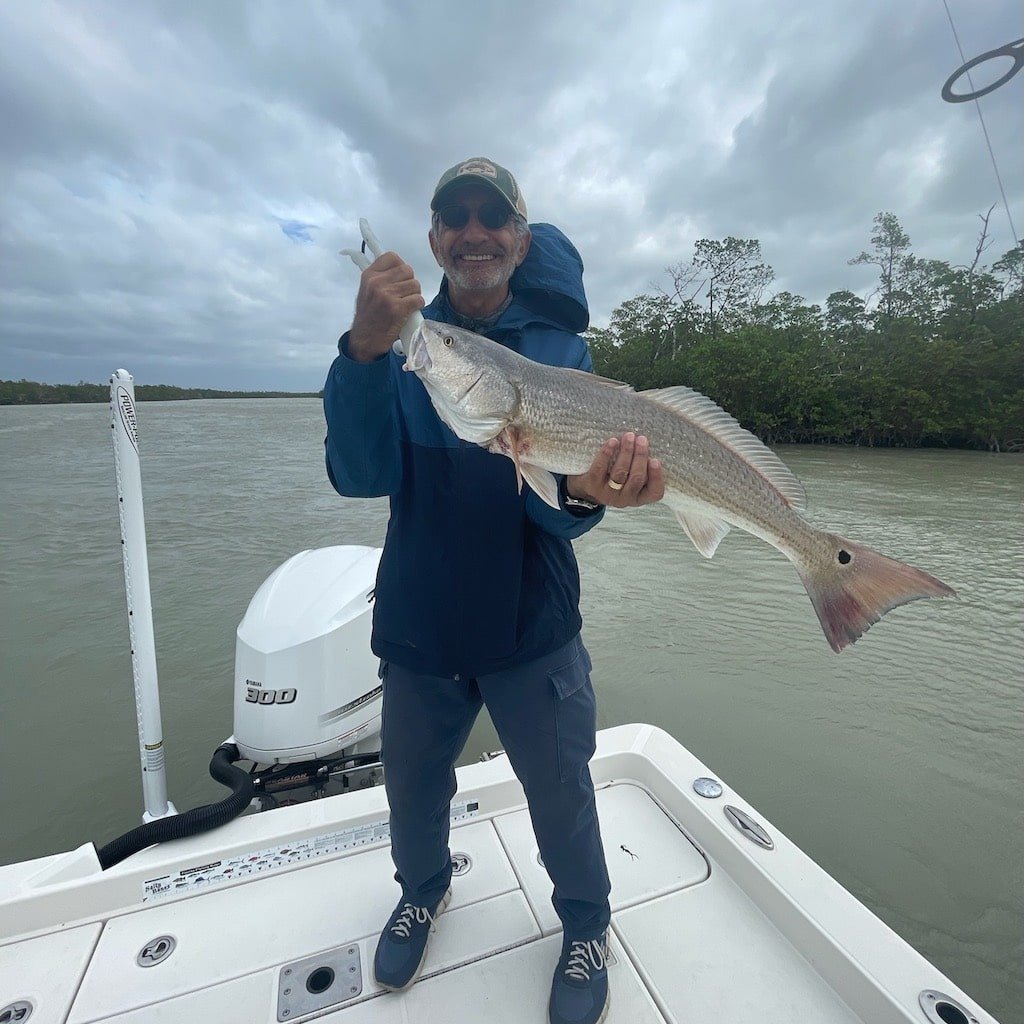
🎣 At a glance
- What it is
- Spotted seatrout (Cynoscion nebulosus), aka speckled trout
- Tell-tale
- Silver body, scattered black spots, two canine fangs
- Where
- Seagrass flats of Naples Bay & the backwater
- When
- A steady bite much of the year; cooler mornings can be electric
- Rule
- Regulated & seasonal — your captain handles licensing and the day's rules
How to identify a spotted seatrout
Spotted seatrout look exactly like their name. The body is sleek and silvery with a soft purple-gold sheen along the back, and it's freckled with distinct black spots that scatter all the way onto the tail — not the single clean spot of a redfish, but a whole sprinkle. Open the mouth and you'll find the surprise: two sharp canine teeth up front, which is why we handle them with a little care.
They're soft-mouthed and soft-bodied, so they tend to come to the boat with less of a brawl than a snook or red — more of a head-shaking wiggle. That gentleness is part of why they're such a great first gamefish.
Where seatrout school in Naples Bay
Seatrout are grass fish. They sit over the seagrass meadows that carpet much of Naples Bay and the surrounding backwater, using the grass for cover and ambushing shrimp and baitfish drifting past. Find a healthy flat in the right depth and you'll often find a school, which means once you locate them the action can come fast.
We hunt the flats where the grass is thick and the water moves a little — potholes, edges, and channel drop-offs hold the bigger fish. It's classic inshore fishing, and because the trout tend to stack up, it's some of the most consistent action we can put a family on.
What it takes, and why kids love them
This is the easy, fun one. A live shrimp under a popping cork is almost unfair: pop the cork, let it sit, and the trout do the rest. Soft-plastic jigs bounced over the grass work great too. The bite is a confident tap, the fight is lively but manageable, and best of all the schools mean another fish is usually right behind the last one — perfect for keeping young anglers locked in.
Spotted seatrout are regulated and seasonal, so we follow the current rules and your captain takes care of licensing, since the charter's vessel license covers everyone aboard. For a day built around easy action, see our family fishing trips or our beginner charters.
| Fish | Spots | Teeth | Habitat |
|---|---|---|---|
| Spotted seatrout | Many, scattered onto tail | Two canine fangs | Seagrass flats |
| Redfish | One (or a few) near tail | None notable | Oyster bars & flats |
| Snook | None — black stripe instead | None notable | Mangroves & passes |
The best gamefish for first-timers
If we're putting a brand-new angler — a five-year-old, a nervous grandparent, anyone — on their first real gamefish, it's almost always a seatrout. They bite willingly, they school so the action keeps coming, and the fight is fun without being a wrestling match. We'll often start a family day on the trout to build confidence, then go hunt a snook or chase tailing reds once everyone's warmed up. Book a charter and we'll read the bay for you.
From the Helm: Grass-flat seatrout on the moving tide at Dollar Bay
Early in the morning we’ll usually start seatrout guests on a topwater plug over the grass at Dollar Bay, because a trout blowing up on a surface bait is one of the more exciting ways to introduce a first-timer to inshore fishing. Once the sun climbs and that topwater bite fades, we switch to a popping cork rigged over a soft-plastic shrimp imitation, or a live shrimp under the same cork — the pop mimics a feeding fish and pulls trout up out of the grass to investigate.
Dollar Bay’s flats hold trout best on a moving tide, whether incoming or falling, because current pushes bait across the grass edges and gives trout a reason to stage along the drop-offs instead of scattering across open flat. We work the drains and potholes — the sandy gaps inside an otherwise solid grass bed — more than the thick grass itself, since trout tend to sit in that open water waiting for bait to get swept past rather than bury into the blades.
The take is aggressive for a fish this size — a hard strike and a quick head-shake near the surface, thanks to the two prominent canine teeth that give this fish its grip on baitfish. We fish light spinning tackle and a short length of fluorocarbon leader, since trout aren’t leader-shy the way redfish can be, which is part of why we like starting kids on this species: forgiving gear, steady action, and a fight that doesn’t demand any finesse to enjoy. Hold one up boat-side and the spots along its back and tail show up almost silver-blue in full sun, fading fast once the fish goes back in the water.
Seatrout bite consistently here across the year, though a bigger fish — what most anglers call a gator trout — tends to show up alone rather than in the schools of smaller fish, so we’ll often keep moving once the average size on a flat starts shrinking. We handle every trout gently at the boat; their mouths tear more easily than a redfish’s, and a fish released quickly swims off far stronger than one held up too long for a photo.
For a family morning where the rods just need to keep bending, we’ll build the whole trip around Dollar Bay and skip the run out to open water entirely. It pairs naturally with a search for tailing redfish on that same falling tide, and it’s the flat we point most first-time anglers toward when they book a charter with young kids aboard. There’s a rhythm to a good trout flat — cast, pop, pause, hookup — that lets even a restless kid stay locked in for a full morning.