
☀️ At a glance
- Dry season
- Nov–Apr — mild, calm, low rain
- Wet season
- May–Oct — hot, humid, afternoon storms
- Coolest water
- Winter, dips below ~68°F (manatee trigger)
- Warmest water
- Summer, mid-80s°F, great for swimming
- Calmest seas
- Mornings, and between winter cold fronts
The dry season, month by month (Nov–Apr)
November kicks off the good stretch: humidity drops, the first cold fronts arrive, and the Gulf starts to settle. December and January are the coolest and driest — crisp mornings in the 50s and 60s, comfortable 70s by day, and water temps sliding below 68°F, which nudges manatees into the warm backwaters. Cold fronts blow through every week or so, kicking up wind and surf for a day or two, then leaving flat, clear water and freshly stocked shelling beaches behind. February through April warm gradually into glorious dry-season weather — arguably the prettiest boating of the year, calm and clear with the water climbing back toward swimmable. The only cost is crowds: this is peak snowbird season, so book ahead.
The wet season, month by month (May–Oct)
May is the warm, mostly-dry shoulder before the rains settle in — often one of the year's underrated months. June through September is full summer: hot, humid, water in the mid-80s, and the daily sea-breeze thunderstorm rhythm of calm mornings and stormy afternoons. It's also sea turtle nesting season and the warmest water for swimming off the boat. October begins the turn — storms taper, humidity eases, and the first hints of fall arrive, though it's still officially hurricane season, so we keep one eye on the tropics. Through all of it, the smart play is the same: go in the morning, when the Gulf is glass and the storms are still hours away.
| Month | Air / feel | Water temp | On-the-water note |
|---|---|---|---|
| Nov | Drying out, mild | Cooling | Season turns calm & clear |
| Dec–Jan | Cool, dry, breezy fronts | Dips below ~68°F | Manatees in; best shelling post-front |
| Feb–Apr | Warming, dry, gorgeous | Climbing | Calmest, prettiest boating |
| May | Warm, mostly dry | Warm | Underrated shoulder month |
| Jun–Sep | Hot, humid, p.m. storms | Mid-80s°F | Go early; turtle nesting |
| Oct | Warm, storms taper | Still warm | Quieting down; watch tropics |
Water temperature and sea state
Two numbers boaters care about most. Water temperature swings from the mid-60s in the depths of winter — cool enough to trigger manatee season once it dips below about 68°F — up to the mid-80s in summer, warm enough that swimming off the boat feels like a bath. Sea state is mostly about wind and time of day. Mornings are almost always the calmest window, year-round. In winter, the Gulf is flat and gorgeous between cold fronts but choppy for a day or two as each one passes. In summer it's glassy at dawn and can turn rough under an afternoon storm. The rule that never fails: when in doubt, go in the morning.
Planning your tour around the month
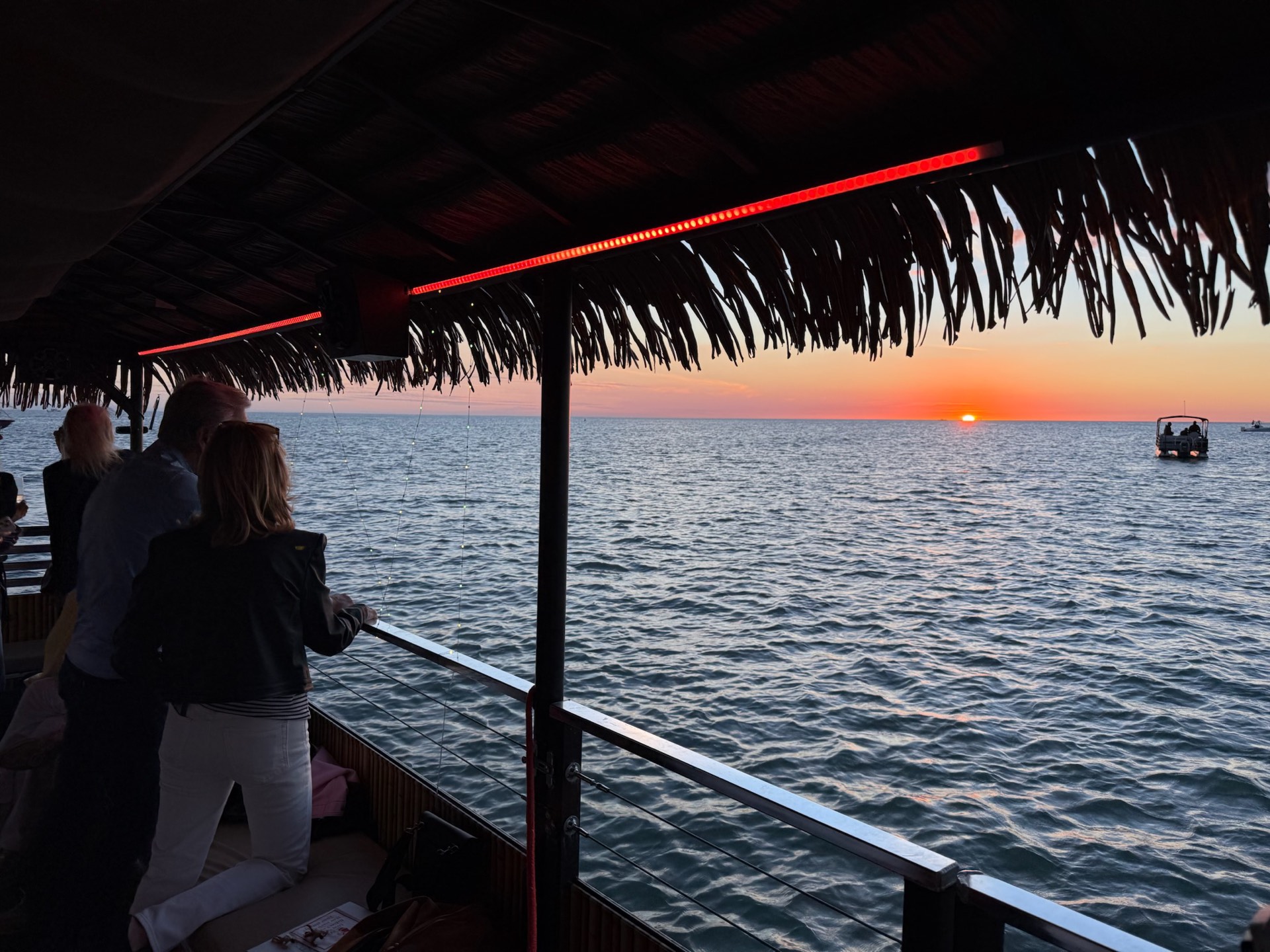
Match the month to the trip. Winter mornings are made for calm-water shelling tours and manatee hunts; summer mornings for warm-water dolphin trips before the storms; and any clear evening, year-round, for a sunset cruise — just check the sunset times by month so you board at the right hour. For the bigger-picture decision of when to come at all, see our best time to visit Marco Island guide.
From the Helm: sequencing a boat day around the summer sea-breeze storm clock
Every trip we run starts with the same ten-minute ritual before most guests are even awake: check the overnight model, step outside and read the wind off the flag, then decide whether today gets an early departure or a late one. In the dry months that call is easy — the wind lies down at dawn and mostly stays that way, so timing bends around the tide more than the sky ever asks of us. In the wet months, the call is really about beating a clock that starts ticking once the sun climbs high, and getting that call wrong costs guests an hour of comfort, not a whole trip.
That clock is the Gulf sea-breeze convergence — cool, moist air pushing inland against the day’s building heat, usually stacking into towering cumulus by early-to-mid afternoon and letting go as a fast, hard downpour that clears within the hour. It’s why summer charters skew toward first light or the back half of the afternoon, after the cell has already dumped and moved off toward the interior. We’re not chasing sunshine so much as chasing the calm gap on either side of the storm, and that gap is usually wider than people expect once they trust it.
We adjust the boat itself for the season, not only the schedule. In the thick of summer we’ll drop the full bimini for a smaller shade panel so guests still get airflow instead of standing under a sail in dead-still, muggy air; in the cooler months we leave the full canvas up and let a light jacket handle the rest. We’ll also swap in extra ice and cooler water aboard once the season turns, small swaps, but they change how the same two-hour cruise actually feels in July versus January.
Sea state follows its own rhythm underneath all of that. Winter fronts bring a day or two of stiffer wind behind them before the water goes glassy again, so we’ll sometimes flex a trip a half-day later to let a front finish blowing through rather than bounce guests around on the leftover swell. Summer mornings, by contrast, are usually the flattest water of the whole day — another reason that early slot fills first once people understand why, and why we’ll steer first-timers there without much prompting.
If it were our own week to plan, we’d let the season pick the shape of the day rather than fight it — early starts and a sunset cruise bookended around the heat in summer, a looser midday schedule the rest of the year. Check the itineraries hub for how other months shift that plan, and we’ll build your morning around whatever the sky is actually doing that week.