
☀️ At a glance
- Season
- May–October on SW Florida Gulf beaches
- Main nester
- Loggerhead (Caretta caretta); some green & Kemp's ridley
- Nesting time
- Overnight; females return to the beach they hatched on
- Hatching
- Peaks late summer, roughly July–October
- Golden rule
- Keep your distance, no lights on nesting beaches, never touch a nest
When sea turtle nesting season happens
Mark your calendar from May 1 through October 31 — that's the window biologists and the local towns watch every year. The big nesting push comes in the warm heart of summer, June and July, when adult female loggerheads return under cover of darkness to the same stretch of Gulf coast where they hatched decades earlier. Each female may nest several times in a season, dropping around a hundred ping-pong-ball eggs into a chamber she digs above the high-tide line. Roughly two months later those eggs hatch, so hatching peaks in late summer and runs into October, with the tiny turtles emerging at night and steering toward the brightest horizon — which, on a healthy beach, is the moonlit Gulf.
What you might see from the water
Let's be honest about expectations: the actual nesting happens at night on the sand, so you won't watch a turtle dig from a tour. What you can see, if the day cooperates, is an adult loggerhead surfacing for air out in the passes and nearshore Gulf as it moves between feeding and nesting beaches. They look like a dark, barnacled dome breaking the surface for a breath, then gone. It's a lucky sighting, never a guarantee — the same honest deal we give you for our dolphin tours. If sea life is what you're after, our captains know which tides and channels concentrate the wildlife, and we'll always tie a turtle sighting into the bigger picture of the loggerhead's life out here.
On the beaches we visit on our shelling tours, you'll often spot the evidence instead of the animal: a marked-off nest with survey tape and stakes, or the wide tractor-tread crawl a female left coming and going. Treat those like the treasures they are — look, photograph from a few feet back, and walk around them.
How to watch turtles the right way
This part matters more than any photo. Nesting and hatching turtles are protected, and a few simple habits keep them safe. The single biggest one is light: hatchlings find the sea by heading toward the brightest, lowest horizon, and a flashlight, phone screen, or beach bonfire can send a whole nest crawling the wrong way to exhaustion. If you're on the islands near dusk, keep lights off and pointed down. Keep your distance from any turtle or marked nest, never dig, and leave the beach the way you found it — filled-in sandcastles and removed gear, because a hatchling can tumble into a hole or snag on a chair.
| Turtle | Role here | When |
|---|---|---|
| Loggerhead | Main beach nester | Nests May–Oct, hatches mid–late summer |
| Green sea turtle | Occasional nester, seen feeding | Warm months |
| Kemp's ridley | Rare; seen offshore | Year-round visitor |
Planning a warm-season trip around it
Nesting season overlaps the summer boating sweet spot, so it pairs naturally with a morning on the water. We point our trips early in summer to beat the afternoon storm timing, which also happens to be the calmest, prettiest part of a Gulf summer day. Run out to the Ten Thousand Islands for shelling, watch for a surfacing turtle in the passes, and you've built a day around the season instead of around the crowds. See how the whole calendar lines up on our best time to visit Marco Island guide.
From the Helm: Sea Turtle Nesting Season: Why We Give Kice Island’s Night Beach a Wide, Quiet Berth
By the first sticky week of May, our captains are already watching the sand differently. We run past the same boat-only stretch on Kice Island most weeks, and that’s usually when we start noticing the wide, dragging track a loggerhead leaves crawling up from the surf line — two flipper grooves and a tail drag down the middle, unmistakable once you’ve seen one. We don’t change our route for it, but we do ease the throttle back passing the open beach, mostly out of habit and respect for whatever’s nesting or hatching just out of sight beyond the dune grass.
Guests aboard a summer charter sometimes catch a different sight entirely: a leathery, football-sized head breaking the surface thirty yards off the bow, taking one slow breath before it disappears again. We call it out quietly rather than gunning toward it — a turtle at the surface is resting or breathing, not performing, and running up on it just pushes it back under before anyone gets a real look. Most days nobody spots one at all, and we say so plainly rather than promise a sighting we can’t guarantee.
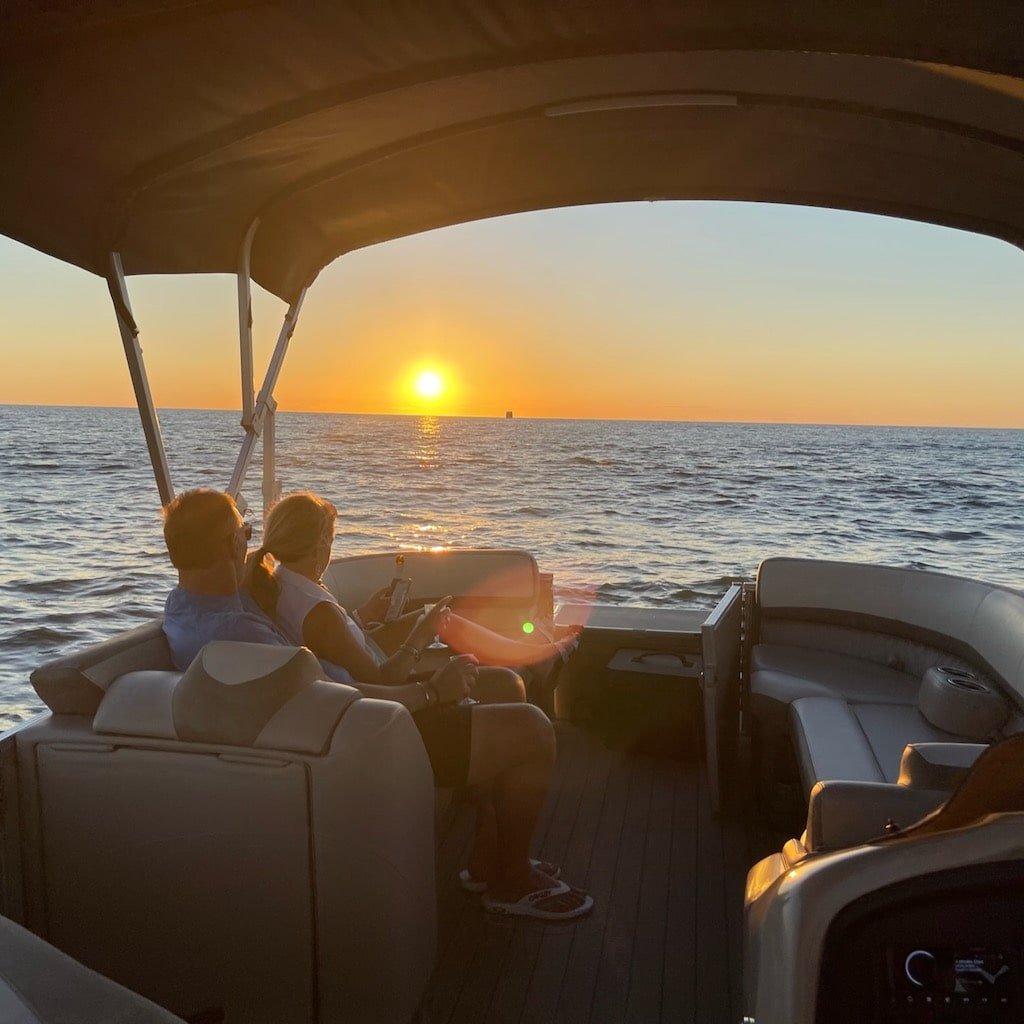
Late summer flips the concern from adults to hatchlings. Once nests start opening in July and August, we’re careful about running lights near any beach at dusk — a stray white beam off a boat can pull a scrambling hatchling toward open water in the wrong direction, so we keep our stern lights low and point spotlights down at the deck instead of out across the sand on an evening tiki or sunset run near nesting beaches.
If a beach we’d normally use for a shelling stop turns up a fresh, staked-off nest, we simply pick a different stretch of sand that day. Kice and its neighboring islands run long enough that we’re rarely short on room, and it costs us nothing to walk guests fifty yards down from a marked clutch instead of past it. It’s the same instinct that keeps every shelling stop on these beaches empty-shells-only — leave what’s alive or protected exactly where you found it.
If nesting season lines up with your trip, we treat it as a bonus layer over whatever tour you’ve already booked, not the plan itself. A shelling run or a sunset cruise past the barrier islands might turn up a fresh crawl track, a basking head offshore, or nothing turtle-related at all — and we’d rather set that expectation honestly at the dock than build a whole itinerary around an animal that keeps its own schedule. Book the trip you actually want, and let the turtles show up as they will.