
🐬 July Dolphin Tours At a Glance
- Best departure
- First tour of the day, typically the early-morning slot — glass-calm water before the sea breeze builds
- Gulf water temp
- Upper 80s°F — warm, active baitfish, dolphins feeding hard
- Weather pattern
- Clear, calm mornings; sea-breeze storms build most afternoons
- Where captains look
- Gordon Pass and the Ten Thousand Islands’ mangrove cuts near Goodland
- Wildlife bonus
- Loggerhead sea turtles nesting May–Oct alongside year-round bottlenose dolphins
- Good to know
- No sighting is ever guaranteed, but our captains read this water daily
Is July Actually Good for a Marco Island Dolphin Tour?
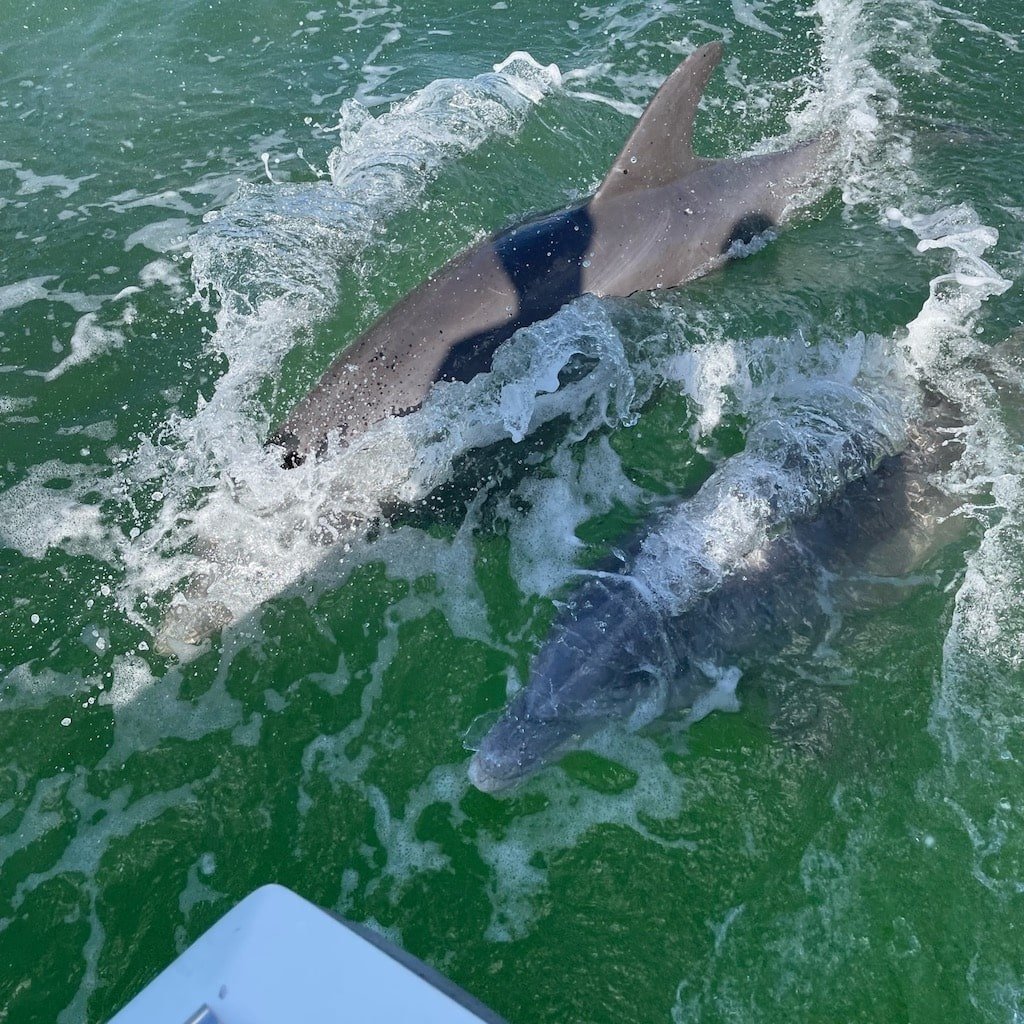
Short version: yes, and it’s not close. Bottlenose dolphins live in these waters year-round, so there’s no single “dolphin season” the way people sometimes assume — but July hands you a real advantage that January doesn’t: warm, bait-rich water that keeps dolphins actively feeding rather than just cruising. Summer heat pushes baitfish into the shallow flats and mangrove cuts of the Ten Thousand Islands, and dolphins follow that food. The result is more working behavior — dolphins herding bait, surfacing to feed, riding pressure waves off mangrove points — instead of a distant fin cutting across open water.
The honest caveat, and the reason this page exists, is that July also sits inside Southwest Florida’s wet season. The mornings are the reward; the afternoons are where you pay for it, with sea-breeze thunderstorms that build with almost daily regularity. None of that makes July a bad month — it makes it a month where timing your departure matters more than any other stretch of the calendar.
Why the First Boat of the Day Wins in July
By July, our captains have already shifted the day’s first departure earlier than any other month, and it’s a decision made ahead of the season, not a scramble once the heat sets in. Running out through Gordon Pass at first light means catching the tide line right where cooler pass water meets the warmer bay — still glass-flat, before the sun has any real strength behind it. Wait even ninety minutes and that same stretch can already be kicking up the first hints of the afternoon sea breeze.
There’s a practical payoff beyond comfort, too. Glass-calm water means your captain can spot a dolphin’s wake or a slick patch of surface disturbance from much farther off than on a chopped-up midday sea, and it means the ride itself is smoother for kids and grandparents alike. If you’re traveling with young children, that early, easy window is exactly what the family dolphin tours are built around — a short, kid-paced cruise timed to the calmest hour of a July day rather than a midday slog through the heat.
Where Our Captains Find Dolphins in July
From the Goodland dock, it’s a short run into the Ten Thousand Islands, a maze of mangrove keys and shallow flats that dolphins work hard all summer. Your captain isn’t just scanning for fins — they’re reading the water for the tells that come before a dolphin ever surfaces: a slick patch where a fish has been worked from underneath, a small shower of bait skipping across the surface, or a wading bird stacking up on a mud bar because something below is pushing prey its way. Those signs usually mean dolphins are close, and a captain who’s watching for them finds dolphins well before most guests would on their own.
Once a fin shows, the move isn’t to chase it. Our captains ease off the throttle and let the boat settle into a slow drift, angling the hull so the wake sits just off the stern — dolphins that want to play will often come find that wake on their own, riding it right alongside the boat for anyone leaning over the rail. These backwater channels shift with the tide more than open Gulf water does, so a cut that’s a clean run at mid-tide can go skinny fast on a falling one, which is exactly the kind of local knowledge a captain who runs this stretch daily brings that a guidebook can’t.
July’s Afternoon Storm Pattern, Honestly
Southwest Florida runs on a predictable summer rhythm in July: clear, calm mornings, building humidity by late morning, and a good chance of a pop-up sea-breeze thunderstorm most afternoons. It’s not an all-day washout — usually it’s an hour or two of buildup and rain that clears by evening — but it does mean the smart plan is to be back at the dock, or well inside protected water, before that window opens. Our captains watch the radar all morning and plan routes and return times around it rather than push a schedule that ignores it.
Past mid-morning, the plan often shifts. Once cumulus clouds start stacking up inland and the wind swings onshore, our captains favor the protected water inside the bay and mangrove cuts over an open Gulf run, trimming the route shorter rather than betting on the weather holding. It’s rarely a dramatic call — usually just turning back a little sooner than a cooler-month trip would — and if conditions genuinely turn, we reschedule rather than run guests into a storm. That honesty is worth more to us than never canceling a trip. For the fuller month-by-month picture of what July brings to every kind of outing, see our July boat tours guide.
What Else You Might See on a July Dolphin Tour
Dolphins are the headliner, but July puts you in the water during Southwest Florida’s loggerhead sea turtle nesting season, which runs May through October. Nesting itself happens after dark on quiet beaches, so you won’t see that part of the story from the boat, but our captains do occasionally spot a loggerhead surfacing for air out in open water during the season. Wading birds are part of the show too — herons, egrets and ospreys working the flats and mangrove edges are common sights on the same run that turns up dolphins, and a working bird is often the tip-off that leads a captain toward feeding dolphins in the first place.
One honest expectation to set: July is not manatee season here. Manatees gather in numbers when Gulf water drops below about 68°F, typically November through March, and they concentrate in the warmer, calmer water around Rookery Bay rather than showing up reliably in the open Ten Thousand Islands in summer. If manatees are the priority, a winter trip is the better bet — July belongs to the dolphins, the bait schools, and the turtles.
Planning Your July Dolphin Tour
Book the earliest slot you can get, especially if you’re traveling with kids — July is peak family-vacation month on Marco Island and Naples both, and morning departures are the first to fill. Every guest wears a Coast Guard-approved life jacket, and the cruise itself typically runs a comfortable hour and a half to two hours, long enough for the magic without asking a toddler to sit still all morning. Pack reef-safe sunscreen and apply it before the dock line even comes off — that first hour of direct summer sun is stronger than most visitors expect this far south. A light hat and a cover-up help too, since bath-warm Gulf air holds heat differently than a winter breeze.
If you want more than dolphins on the itinerary, ask about pairing your trip with a stop at the barrier islands for a swim, or booking a fully private charter so your group sets its own pace instead of sharing the boat. And if dolphins are just one piece of a bigger July trip, the wildlife hub and the full Seasonal Guide break down what every month brings on the water around Marco Island and Naples.
| Window | Water Conditions | Dolphin Activity | Storm Risk | Best For |
|---|---|---|---|---|
| First morning departure | Glass-calm, cool | High — actively feeding on bait schools | Low — hours before storms build | Families, first-timers, photographers |
| Late-morning departure | Building light chop | Moderate — still active but water warming | Moderate — clouds beginning to stack | Flexible schedules, later risers |
| Afternoon / evening | Variable, storms possible | Lower — dolphins less active in peak heat | High — peak sea-breeze storm window | Not recommended without checking radar first |