
☀️ At a glance — September
- Water temp
- Upper 80s, close to bathwater
- Crowds
- Lowest of the year on the water
- Wildlife draw
- Fall mullet run puts dolphins right along the beaches
- Weather risk
- Statistical peak of hurricane season, around Sept. 10
- Best departure
- Morning, ahead of afternoon storm buildup
- Booking approach
- Keep dates flexible — we call the window
Is September Good for a Dolphin Tour?
Ask a local captain and you'll get an honest, slightly lopsided answer: September is one of the best-kept months on the calendar if the weather plays along, and one of the trickiest if it doesn't. The marinas empty out once school starts back up, so you're sharing the water with a fraction of the winter crowd. The Gulf holds onto its late-summer warmth, running close to bathwater off Marco Island's beaches, and the soft haze that sits over the Ten Thousand Islands most mornings makes for a moodier, more atmospheric ride than the postcard-blue skies of February. The catch — and it's a real one — is that September sits at the statistical peak of Atlantic hurricane season, so this is a month where flexibility matters more than it does in January. Book a dolphin tour, but book it loose.
That trade-off is exactly what makes September a sleeper pick instead of a dead month. You won't find yourself boxed in by a half-dozen boats jockeying over the same pod, and the docks and parking lots that fill up by Thanksgiving are still wide open. What you will find is a quieter, more intimate version of the same tour that runs all year — just with more elbow room and a genuine shot at watching the fall bait run happen in real time instead of reading about it after the fact.
The Fall Mullet Run Show
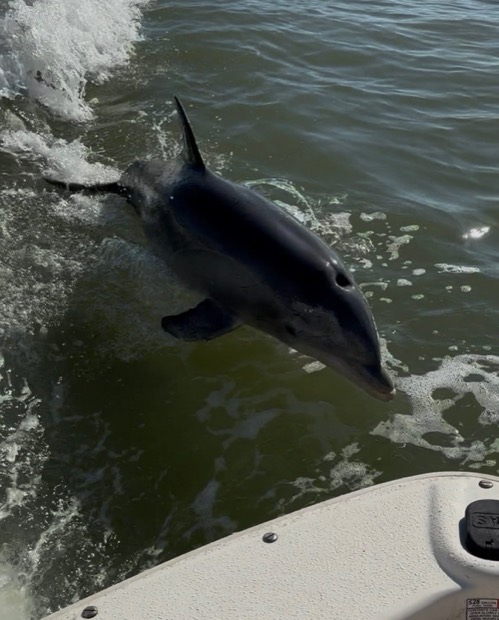
September is also when the fall mullet run gets rolling — the annual migration of silver mullet moving south along the beaches in dense, nervous schools. It's less a single event than a slow-building, weeks-long show, and it's the best reason to book a September dolphin tour over almost any other stretch of the year. Bottlenose dolphins, which work these waters year-round, key in on the bait, herding schools against the sandbars and beaches in the kind of tight, splashy feeding you can watch unfold from the rail. Pelicans and terns pile in from above, diving on the same bait balls, so a good mullet-run morning turns into a wildlife show with dolphins, birds and bait all working the same stretch of shoreline at once.
You'll often find the action along the outer beaches near Keewaydin Island and down toward Cape Romano, where the barrier islands funnel migrating bait into fairly predictable travel lanes. Gordon Pass and the inlets around Marco Island can get in on it too, especially on an outgoing tide pulling bait past the pass mouth. None of it is scripted — the run moves with the bait, the weather and the tide — but a captain who's watched it for years has a good sense of where to start looking on any given morning.
Our captains read the bait activity the same way they read tide charts, running to wherever the mullet are stacking up that day instead of sitting on a fixed spot. If you want the deeper mechanics of the run itself — where it starts, how long it lasts, and what else follows it up the food chain — the mullet run guide breaks down the whole migration.
Hurricane Season: What to Expect
September 10 is the textbook statistical peak of the Atlantic hurricane season, and there's no glossing over it: this is the month a tropical system is most likely to put a wrinkle in your trip. Most September days out here are perfectly normal — sun, a stiff sea breeze, maybe a build-up of afternoon clouds — but this is also the stretch when we're watching the tropics the closest and talking to guests the most about timing. If a system is tracking anywhere near the Gulf, we'll tell you well before your trip, not the morning of.
In a typical September, most days on the calendar come and go with nothing more dramatic than a passing shower. But because the season's statistical odds are stacked into this exact window, it's the one stretch of the year where we'll ask guests visiting for just a day or two to keep a backup date in mind, even when the forecast looks clean the day you book.
The practical move is to build slack into your plans. If you're visiting for a week, don't put your only dolphin tour on day one — give yourself a couple of possible days so a rescheduled window still works. We run a flexible booking policy for exactly this reason, and our captains would always rather move your trip a day than take you out into conditions that make for a rough, dolphin-free ride anyway.
Best Time of Day to Go
Morning departures are the move in September. Like most of Southwest Florida's warm season, the pattern tends to run clear or lightly clouded early, with afternoon heat building into thunderstorms that roll through by mid-to-late afternoon. Book a morning trip and you're usually working around that buildup entirely, with flatter water, better light for photos, and dolphins that tend to be more active feeding before the day heats up. It also means less chop for the ride out to wherever the mullet are showing that day. The lower morning sun tends to flatten the glare on the water, too, which makes it easier to spot a dorsal fin cutting the surface from a distance — something that gets tougher once the sun sits straight overhead by midday.
What Else You'll See
Dolphins are the headline, but September's backdrop is worth the trip on its own. The Ten Thousand Islands still carry that end-of-summer green, ospreys work the channels, and it's a good month for spotting nesting-season stragglers — loggerhead sea turtles nest here from May into October, so late-season activity is still possible around the barrier islands. September also overlaps with the tail end of tarpon season for anglers working these same passes, a strictly catch-and-release fishery, and it's not unusual to see a skiff hooked up near a pass mouth while you're out dolphin watching. Bottlenose dolphins are a year-round presence in these waters generally, not a seasonal visitor, so September's advantage isn't that dolphins show up — it's that the mullet run puts on a more concentrated, closer-to-shore show than you'll usually see the rest of the year. Pair that with the empty marinas and warm water, and you can see why locals quietly consider September a sleeper month rather than one to avoid. If wildlife more broadly is the draw, our wildlife guide rounds up what to expect species by species across the whole calendar.
If you want the full month-by-month rundown for every activity, not just dolphins, the Seasonal Guide is the hub for that, and our September boat tours overview covers what every trip type looks like this month, from shelling to sunset runs.
| Month | Crowds | Mullet Run / Bait Activity | Storm Risk | Gulf Water Temp |
|---|---|---|---|---|
| September | Lowest of the year | Run kicks off — dolphins working bait right along the beaches | Highest (statistical peak) | Upper 80s |
| October | Still quiet, snowbirds haven’t arrived | Run continues, often the most consistent month for it | Declining, but still active | Low-to-mid 80s |
| November | Starting to build | Tapering as water cools | Low, season winding down | Mid-to-upper 70s |
| December | Busy holiday weeks | Occasional stragglers, less consistent | Essentially none | Upper 60s to low 70s |