
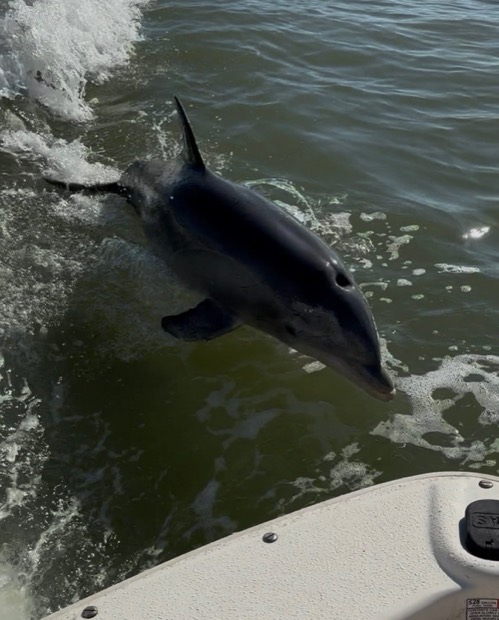
☀️ At a glance: dolphin tours in March
- Wind
- Sustained 15-20 mph most afternoons — March is Southwest Florida’s windiest month
- Where captains run
- Rookery Bay backwaters, the Marco River & Big Marco Pass when the Gulf is choppy
- Dolphin activity
- Bottlenose dolphins are here year-round; sightings are usual on tours, never guaranteed
- Water temperature
- Low-to-mid 70s Fahrenheit — still cool enough for scattered manatee sightings near Rookery Bay
- Crowd level
- Peak — spring break makes March one of the busiest booking months of the year
- Best time of day
- Morning departures, ahead of the afternoon wind build
Is March a Good Month for Dolphin Tours on Marco Island?
Short answer: yes, and it’s not close. March gets a reputation as the windy month in Southwest Florida, and that reputation is earned — but wind doesn’t push the dolphins out to sea, it just pushes them, and us, into calmer water. Bottlenose dolphins live in these waters year-round, working the passes, flats and backwater creeks around Marco Island and Naples no matter the season. What changes in March is where a smart dolphin tour actually runs. Our captains read the wind direction each morning and choose the route accordingly, which is exactly why local knowledge matters more in March than in almost any calmer month. If you’re scanning the Seasonal Guide trying to decide between months, March holds its own against the glassier days of April and May — you just want a captain who knows where to hide from the chop. March also sits in a genuine sweet spot on the calendar: winter’s early-morning negative low tides are giving way to milder mornings, daylight is stretching back out, and the Gulf hasn’t yet flipped over into summer’s afternoon thunderstorm cycle. That in-between stretch is part of why March books up the way it does — good daylight and still-comfortable water, just with more breeze on the schedule than you’d get in a shoulder month.
Why March Is the Windiest Month of the Year Here
Southwest Florida sits at the tail end of the winter cold-front pattern, and March is usually when the last several fronts push through before the weather breaks over into summer’s afternoon thunderstorm cycle. Each front drags a day or two of sustained 15-20 mph wind behind it, sometimes gusting higher, and because the fronts keep stacking up through the month, March ends up with more windy stretches on the calendar than any other month. It isn’t a storm system — it’s just steady breeze, the kind that chops up open Gulf water and makes a straight run out toward the barrier islands rougher than it needs to be. That’s the whole reason our full March boat tours guide exists: the month rewards a route plan, not a coin flip.
Where Our Captains Run When the Wind Is Up
When the wind is out of the north or northwest — the typical post-frontal pattern in March — our captains tuck into the backwaters of Rookery Bay National Estuarine Research Reserve, running the mangrove-lined creeks where the water stays flat even when the Gulf a mile away is stacking up whitecaps. Dolphins follow the same logic we do: bait gets pushed into the calm water, so they work the creek mouths and channel edges instead of fighting the chop offshore. When the wind swings onshore out of the southwest, the Marco River and Big Marco Pass become the better call — both are shielded by the barrier islands and carry enough tidal flow to keep bait moving through, which is exactly what dolphins are hunting for. Either way, you’re not touring a compromise route in March; you’re touring whichever route is actually working that day, which is the entire value of booking with captains who grew up reading this water instead of running the same loop regardless of conditions. Where you depart from can matter just as much as where you end up. A Marco Island departure puts you closest to the Marco River and Big Marco Pass, while a Goodland departure drops you right at the edge of Rookery Bay’s mangrove maze, often the calmest water anywhere in the Ten Thousand Islands on a blustery March morning. A Naples departure splits the difference, running south into that same backwater system whenever conditions call for it. None of that route planning is something you need to sort out yourself — it’s the first call our captains make before you ever step on the boat.
Spring Break Crowds and Why Booking Early in March Matters
March is also peak spring break season around Marco Island and Naples, and that means it’s one of the busiest booking months of the year for every tour on the water, dolphin trips included. Families plan around school breaks that cluster through the month, and morning departures — the same slots our captains favor for calmer water ahead of the afternoon wind — fill first. If you’ve got specific dates locked in, don’t wait until the week you land to book; the combination of high demand and a wind-dependent route plan means the earlier you reserve, the better your odds of landing the departure time that actually lines up with the day’s conditions. It’s worth pairing your dolphin tour with a look at the broader Seasonal Guide if your dates are flexible — a few days’ difference can change which wind pattern you’re touring in entirely.
What Else to Expect on the Water in March
Gulf water temperatures in March typically sit in the low-to-mid 70s Fahrenheit — comfortable enough that you’ll want sunscreen and a light layer for the ride, not a wetsuit. It’s also still cool enough that manatees are occasionally spotted working the calmer water near Rookery Bay, since they gather in warmer pockets whenever Gulf temperatures dip below roughly 68 degrees; March can go either way depending on how the month’s fronts land. Sea turtle nesting season hasn’t started yet — loggerheads don’t begin nesting our beaches until May — so March stays squarely a dolphin-and-wading-bird month on the water. If shells are part of your trip too, March’s fronts are good news for a companion shelling tour: the same wind that pushes dolphins into the backwaters also stirs fresh shell onto the boat-only islands, empty shells only per Collier County rules. Most guests book the dolphin trip as its own outing, but pairing it with an afternoon on the sand is an easy way to make a windy March day feel like two trips in one. Daylight is also stretching back out by March, so you’re not racing sunset the way you would on a December or January tour, and mornings warm quickly enough that a light jacket for the ride out is usually all you need.
| Wind pattern | Water our captains favor | Why it works for dolphins |
|---|---|---|
| North / northwest (post-frontal) | Rookery Bay backwaters & mangrove creeks | Flat water; bait pushed into creek mouths |
| Southwest / onshore | Marco River & Big Marco Pass | Shielded by barrier islands; strong tidal flow |
| Light or variable (rare March lulls) | Gulf-front edges near the passes | Open-water sightings possible along the channels |
| Sustained 20+ mph | Inshore backwater only | Dolphins push into the same calm cuts we do |