
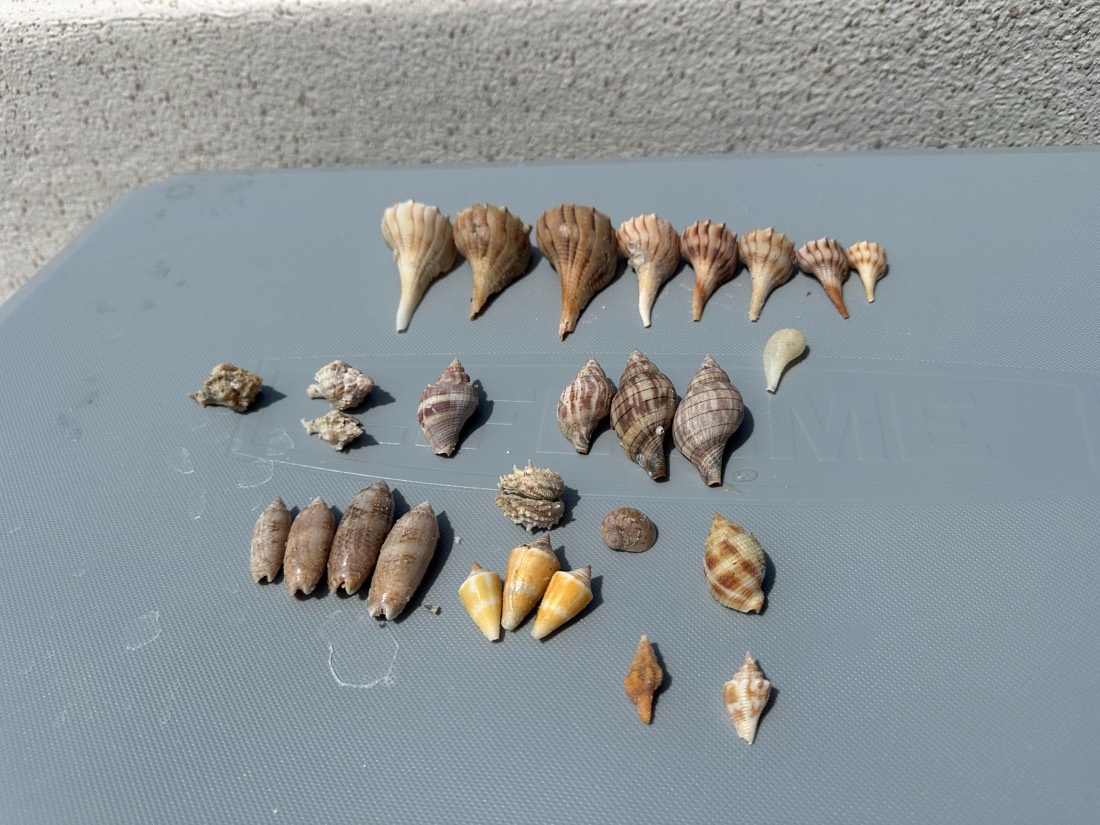
☀️ July Shelling At a Glance
- Best tide window
- Evening minus low tides (check the day’s chart), or our early 9 a.m. family departure
- Gulf water temp
- Upper 80s°F — bathwater warm, no wetsuit, no cold-shock excuses
- Weather pattern
- Sunny, calm mornings; sea-breeze storms build most afternoons
- Crowd level
- Tigertail Beach is July-busy; the boat-only islands stay quiet
- Wildlife bonus
- Nesting loggerheads (May–Oct) and year-round bottlenose dolphins
- Rule
- Empty shells, sand dollars & starfish only — Collier County law
Is July Actually a Good Month for Shelling?
Honestly? Yes, and don’t let anyone tell you shelling has a single “good” month. Shelling around Marco Island and Naples runs year-round — every month just hands you a different script to work with. Winter gives you morning negative low tides and cold-front swells that scour the barrier islands overnight. July flips that script: the low tides that matter most swing into the evening, the mornings are dead calm before the wind picks up, and the water is warm enough that nobody’s complaining about their feet. The shells don’t know what month it is — they wash in on tide and current the same way they always have. What changes in July is how you go get them.
The honest caveat is that July is also Southwest Florida’s hottest, muggiest stretch, and it sits inside the broader hurricane season, so weather calls more of the shots than it does in January. That’s not a reason to skip it — it’s a reason to time it right, which is the whole point of this page.
July’s Tide Script: Evening Lows and Mirror-Calm Mornings
Here’s the mechanic behind it. Around the new and full moons of summer, the Gulf’s lowest tides of the day tend to fall in the late afternoon and evening instead of daybreak — the reverse of what you’ll see in winter. If you’re shelling on your own from a beach you can walk to, that evening minus low (check the day’s tide chart before you head out) is your best shot at exposed sandbars and a wide, shell-stacked waterline. But evenings also mean you’re working after a full day of Gulf heat has baked the sand, so bring more water than you think you need.
The other half of July’s script is the calm before the storm, literally. Mornings on the water here are usually glassy — the wind hasn’t built yet, boat traffic is thin, and visibility into the shallows is at its best. That’s exactly why our captains run the family shelling trip at 9 a.m. in July: it’s early enough to fish that calm window and beat the crowds to the good shoals, without asking a family with young kids to be dockside at sunrise. Pair a calm morning boat ride out to the barrier islands with a look at the evening tide chart for your own beach walk later, and you’ve covered both of July’s windows in one day.
Beat the Heat and the Storms: Why Early Wins in July
Southwest Florida runs on a predictable summer rhythm: clear mornings, building humidity by late morning, and a good chance of a pop-up sea-breeze thunderstorm rolling in most afternoons. It’s not every single day, and it’s rarely an all-day washout — usually it’s an hour or two of buildup and rain that clears out by evening. But it does mean the smart move in July is to be back at the dock, or at least off an exposed sandbar, well before that afternoon window opens. Our captains keep an eye on the radar and plan routes and return times around it, which is the real reason the early trip is the sweet spot this month, not just the calm water.
Heat is the other factor to respect. July puts you into upper-80s water and a heat index that can climb fast by midday, so an early departure also means you’re shelling and swimming in the coolest part of the day instead of standing on open sand at 1 p.m. Pack accordingly — more on that below — and treat the early morning window as the gift it is rather than an inconvenience.
Where to Shell in July: Boat-Only Islands Beat Tigertail
Tigertail Beach is a great walk-up option most of the year, but July is peak family-vacation month on Marco Island, and Tigertail’s lagoon shows it — you’ll be sharing sand with a lot of other people looking for the same shells. The barrier islands that only a boat can reach don’t see that pressure. Keewaydin Island, Kice Island and the shoals around Cape Romano stay comparatively quiet in July because getting there takes a captain who knows the cuts and the sandbars, not just a parking spot. Fewer feet on the sand generally means more shell left to find, especially first thing in the morning before anyone else has walked a stretch of beach. Our shelling tours run to exactly these spots.
If you’re traveling with kids, this is exactly the trip our family shelling tours are built around — a shorter, kid-paced run to the boat-only islands with a captain narrating what you’re finding along the way, timed to that calm morning window instead of a midday slog through the heat.
What an Overnight Squall Leaves Behind at Cape Romano
One of the underrated perks of summer’s storm pattern: wind and chop overnight can churn the shoals and toss fresh shell up onto the sand by sunrise. Our captains keep half an eye on the overnight weather for exactly this reason — a good blow the night before can mean a shoal that looked picked-over the day before is suddenly worth a second look. Cape Romano is a favorite spot to check after a squall, partly for the shelling and partly for the landmark: the famous dome houses out there were toppled by Hurricane Ian in 2022 and now sit as half-submerged ruins in the surf, a striking (and honestly kind of eerie) stop even if you don’t find a single shell that day.
None of this is a guarantee — a stormy night doesn’t promise a shell-covered shoal any more than a calm one guarantees an empty beach. But it’s the kind of local knowledge that separates a captain who reads this water daily from a guidebook, and it’s baked into how we route shelling trips through the barrier islands all summer long.
What to Pack for a July Shelling Trip
July shelling rewards a little prep. Reef-safe sunscreen and a wide-brim hat matter more this month than any other — the sun is directly overhead and there’s little shade on a sandbar. Water shoes are worth it too, both for comfort on shell-strewn sand and because you’ll share the shallows with the local sand dollar, the keyhole urchin, which you’ll want to look at and leave rather than step on. Bring more water than feels necessary, a light long-sleeve or rash guard if you burn easily, and a mesh bag to rinse shells right on the boat instead of hauling wet sand home. Everything you collect should be empty — live shells, sand dollars and starfish are protected in Collier County, so the rule on every trip is simple: if something’s still home, it goes back in the water.
If you’d rather let a captain handle the timing, the tide chart and the storm radar for you, that’s the whole idea behind booking a guided run instead of a solo beach walk — especially in a month where the window to get it right is narrower than it looks. Check the full Seasonal Guide for how June and August compare, or head straight to the shelling tours page to see this month’s departure times.
| Window | Tide Behavior | Weather Risk | Crowd Level | Best For |
|---|---|---|---|---|
| 9 a.m. guided boat trip | Timed to the day’s best window | Low — back before storms build | Low — boat-only islands | Families, first-timers, heat-sensitive guests |
| Evening minus low tide (DIY) | Best exposed sandbars of the day | Moderate — storms usually cleared | Varies by beach | Independent beachcombers on Tigertail or Keewaydin |
| Midday walk-up beach | Tide often mid-range | High — peak heat and storm buildup | High on Tigertail | Not recommended in July |