
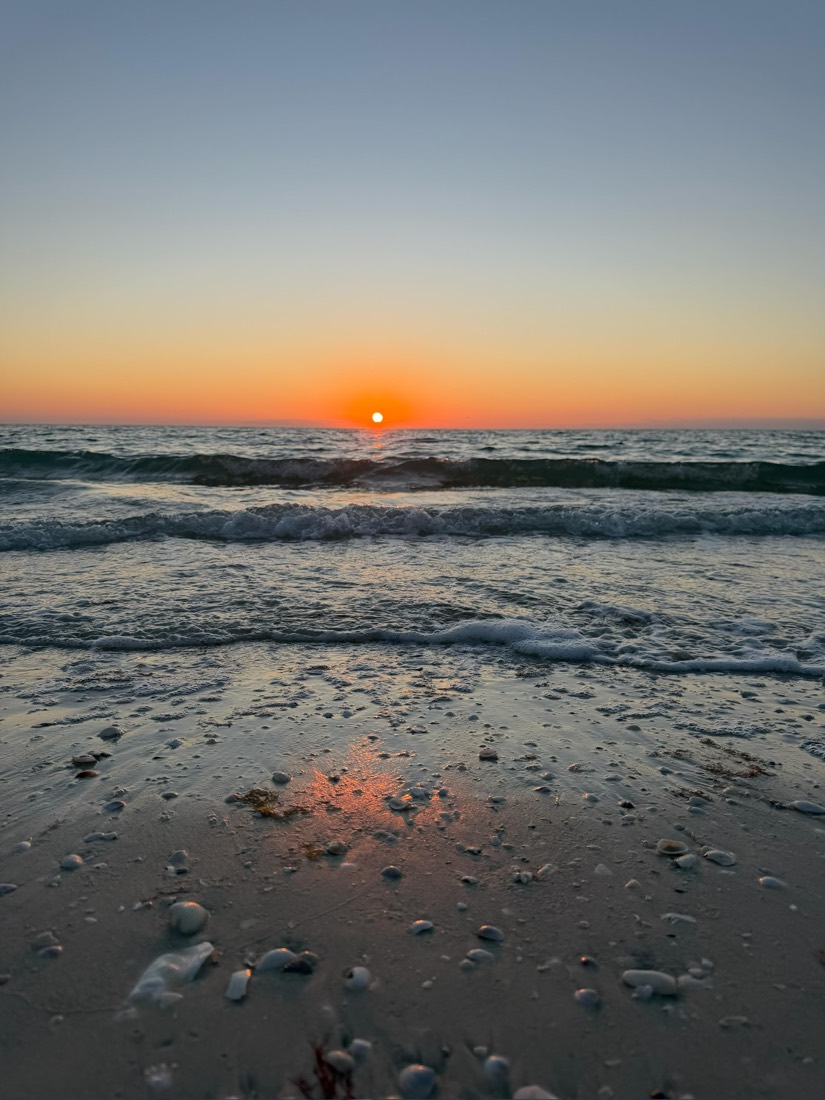
☀️ At a glance
- Gulf water
- Warmest of the year, upper 80s°F — comfortable for hours in the shallows
- Crowds
- Lightest of the year on Marco Island and Naples beaches and docks
- Weather
- Statistical peak of Atlantic hurricane season, around September 10
- Tides
- Afternoon and evening low tides, summer’s pattern still in effect
- Best find
- Storm-turned shell on boat-only barriers like Keewaydin and Kice
- Rule
- Empty shells only in Collier and Lee County, every month of the year
Is September a Good Time to Go Shelling on Marco Island?
Yes — with the honest asterisk that comes with any September question in Southwest Florida. This is the slow month. The snowbirds haven’t arrived yet, the summer families have gone back to school, and the marinas at Marco Island and Goodland sit noticeably quieter than they did in July. That quiet extends straight out to the barrier islands, and there’s a real chance you have a stretch of Keewaydin or Kice mostly to yourself on a weekday morning.
The Gulf itself is at its warmest all year — bathwater temperatures that make wading the shoals for an hour comfortable instead of bracing. Add in fewer boots on the sand competing for the same shell line, and September quietly becomes one of the better months to actually find things, not just look for them. The catch, and it’s a real one, is weather. September sits inside the heart of hurricane season, so the forecast matters more than the tide chart some weeks. We’ll get into exactly what that means below, but the short version is: come with a flexible week, not a single non-negotiable morning, and September tends to reward you for it.
Hurricane Season: What It Actually Means for Your Trip
September is the statistical peak of the Atlantic hurricane season — the date most storms cluster around falls right in the middle of the month. That’s not a scare tactic, it’s just the climatology, and it’s a big part of why September stays this quiet on the water. Most days are ordinary Gulf Coast summer: hot mornings, a build-up of clouds by early afternoon, maybe a pop-up thunderstorm that clears out by dinner. Some days, the tropics are doing something worth watching, and our USCG-licensed captains are watching it — wind, swell and radar, every morning before any boat leaves the dock.
What that means for you: plan a Marco Island or Naples trip in September with some slack built in. If you’re booking a single tight morning around a flight, you’re fighting the calendar. Give yourself a few mornings or an extra day, and our captains can usually find a genuinely good weather window that week — and when the Gulf lays down glassy after a system pushes through, it’s some of the best water of the whole year. This is exactly the kind of trip where a licensed, captain-led operation earns its keep: reading the marine forecast is our job, not a guess from a weather app the night before.
Why September Storm Surf Actually Improves Your Junonia Odds
Here’s the one real upside of hurricane season, and it’s worth explaining honestly because most sites won’t bother. The junonia — the speckled, cone-shaped shell every collector on this coast quietly hopes to find — doesn’t live on the beach. It lives 100 to 425 feet down on the Gulf floor, far past anywhere wading, snorkeling or an ordinary low tide will ever reach. The only way a junonia ends up on sand you can walk is a storm: enough wave energy and surge to reach the deep offshore bars and drag up something that goes undisturbed the other eleven months of the year.
That’s exactly what September specializes in. A tropical system doesn’t need to make landfall near Marco Island to help — swell and surge from a storm passing well offshore can still rework the barrier islands known for junonia finds. The days right after that kind of blow, once conditions are safe to run again, are genuinely the best statistical odds you’ll get all year. We want to be straight with you: it’s still a real find, not a guarantee, and most September trips still won’t turn one up. But if the junonia is specifically what you’re chasing, September through the fall storm season is when the sand actually gets turned over enough to give you a real shot.
Water, Weather and Wildlife in September
Beyond the shelling angle, September is a genuinely good wildlife month on the water. Bottlenose dolphins live in the Ten Thousand Islands year-round, and September’s calmer, glassier mornings between weather systems often make for some of the clearest sightings of the year. Manatees haven’t started gathering yet — they show up once the water drops below about 68°F, typically November into March, dispersed through the mangrove creeks around Rookery Bay — so September is still their off-season around here.
It’s also the tail end of loggerhead nesting season, which runs May through October along Southwest Florida’s beaches. By September you’re past the heaviest nesting activity and into hatchling season, when the last clutches of the year are emerging, usually after dark. You won’t see this from a boat tour, but it’s part of why our captains give certain stretches of sand a wide, quiet berth this time of year. Warm water, dispersed dolphins, and a beach that’s mostly done nesting for the year make September an easy, uncrowded month to spend on Ten Thousand Islands wildlife, well before you even factor in the shelling.
Best Tides and Beaches for September Shelling
Tide-wise, September is still running on summer’s script: the lowest water of the day tends to fall in the afternoon and evening rather than the crack-of-dawn negative lows you get once winter cold fronts arrive. That shift toward morning low tides doesn’t really kick in until later in the fall, so plan a September shell walk around a mid-to-late-day low instead of setting an alarm before sunrise.
The boat-only barrier islands do the heavy lifting this month. Keewaydin and Kice see the most regular traffic on our shelling tours and reliably turn up whelks, olives, cockles and the occasional standout after a blow. Cape Romano, further south, is worth the run for the scenery alone — the old dome-house ruins there have sat half-submerged in the Gulf since Hurricane Ian toppled them in 2022, and the shifting sand around them can turn up genuinely different material than the beaches closer to Marco. Wherever you land, remember the rule that doesn’t change with the season: Collier and Lee County require empty shells only, every month, no matter how good the storm surge was. For the fuller picture of what the month looks like beyond shelling, our September boat tours guide covers the whole trip, and the Seasonal Guide lines up every month side by side.
| Month | Gulf Water | Crowd Level | Storm / Rework Odds | Best Low-Tide Window |
|---|---|---|---|---|
| September | Warmest of the year, upper 80s°F | Lightest of the year | Highest — statistical hurricane peak | Afternoon / evening |
| October | Still warm, starting to cool | Light, building toward season | Good — storm season winding down | Shifting toward morning |
| November | Cooling into the 70s°F | Picking up with snowbirds | Lower, but cold fronts begin | Morning negative lows begin |