
☀️ At a Glance: Shelling in November
- Tide script
- Winter pattern returns — best lows fall in the morning, often negative, clustering near the new & full moons
- Weather
- Dry season begins; the year’s first real cold fronts start pushing through
- Gulf water temp
- Cooling from summer’s upper 80s into the upper 70s by month’s end
- Wildlife bonus
- White pelicans stage on Ten Thousand Islands sandbars for the winter
- Crowds
- Quiet pre-Thanksgiving lull, then the snowbird season begins
- Rule
- Empty shells only in Collier & Lee County
Is November a Good Month for Shelling on Marco Island?
Yes — November is one of the best-kept-secret shelling months around Marco Island and Naples, mostly because so few trip-planners realize the season has already flipped. Southwest Florida’s dry season starts in November, which means the humid, storm-prone stretch of summer and early fall is finally behind you, and the Gulf settles into calmer, clearer stretches between fronts. It’s also the month the tide pattern itself resets. All summer long, the lowest water of the day sits in the evening; by November, that low slides back into the morning, which is exactly the tide script our captains build shelling trips around from now through April. You get the benefit of that shift a full month before the snowbird season fills the mainland beaches and parking lots. Our shelling tours run daily to the boat-only barrier islands, and November is when we start watching the tide charts the way we do all winter. If you want the wider view of everything the month offers beyond shelling, the Seasonal Guide breaks it down trip by trip, or see the November boat tours guide for the full month on the water.
November’s Tides: The Winter Pattern Returns
November’s tides are the whole reason this month works. Southwest Florida runs on a mixed, mostly diurnal tide, and the lowest lows of the day cluster around the new and full moons, when the sun and moon line up and pull extra water off the flats. In summer that spring-tide low falls in the evening; November is the month it flips back to the morning, and that shift is what our captains have been waiting for since the last one wore off back in spring. A negative low tide — one that drops below the average low-water mark — exposes several extra feet of sandbar that stays underwater the rest of the year, and that freshly exposed real estate is exactly where shells tend to sit. Book a trip around a new or full moon morning in November and you’re stacking the odds in your favor before you even leave the dock. Our captains cross-check the tide tables against the wind forecast every night, so the run gets picked the morning of, not weeks in advance.
What the Season’s First Cold Fronts Do to the Beaches
November also brings the season’s first real cold fronts, and that matters more than people expect. A fall front here isn’t the same violent blow you’d get in January — it’s usually a milder push of wind out of the north or northwest that clears out the humidity and knocks the water temperature down a few degrees overnight. What it does underwater is the important part: it stirs the shallow flats around the barrier islands and redistributes months of undisturbed shell onto the outer bars. Because these are the first fronts of the season, the ground they’re working hasn’t been picked over by a winter’s worth of walkers yet, which is part of what makes November shelling feel different from a beach you’d hit in February or March. The pattern is simple: let the front blow through, then run to whichever island it hit hardest on the first calm morning after. That’s when our captains find the freshest lightning whelks and the biggest storm-tossed shells of the fall.
White Pelicans and the Ten Thousand Islands Backdrop
November is also when the Ten Thousand Islands pick up one of their best winter houseguests: American white pelicans. Unlike the brown pelicans that dive-bomb bait around here year-round, white pelicans are true winter visitors, arriving from northern breeding grounds to spend the cold months staging in big rafts on the sandbars and mudflats around the backcountry. They’re enormous, among the largest birds in North America, and they feed cooperatively, paddling in loose lines and scooping fish from the surface instead of plunge-diving. Spotting a raft of them lit up white against the mangroves on the run out to a shelling island is one of those November bonuses you don’t get most of the year, though like any wildlife sighting it’s never something we can promise. Bottlenose dolphins are around the islands year-round regardless of season, and as the water starts to cool you’ll also see more manatees staging in the calmer passes near Rookery Bay to wait out the chill.
The Pre-Thanksgiving Lull: Why November Beaches Stay Quiet
The other thing November has going for it is simple timing. Halloween is over, the summer humidity has broken, and the big holiday travel surge that fills every dock and beach parking lot doesn’t start until Thanksgiving week. That leaves a genuine lull in the first three weeks of the month — quieter boat ramps, shorter waits, and barrier islands that stay as empty as they’ll be all winter. Because spots like Keewaydin and Kice Island are boat-only to begin with, that quiet gets amplified even further, since there’s no walk-up crowd competing for the same stretch of sand. Once Thanksgiving week hits, the snowbird season effectively begins and the water gets busier straight through the winter. If your travel dates are flexible, the first three weeks of November are about as close as this coast gets to having the winter tide pattern and empty beaches at the same time.
What You’ll Find Shelling in November
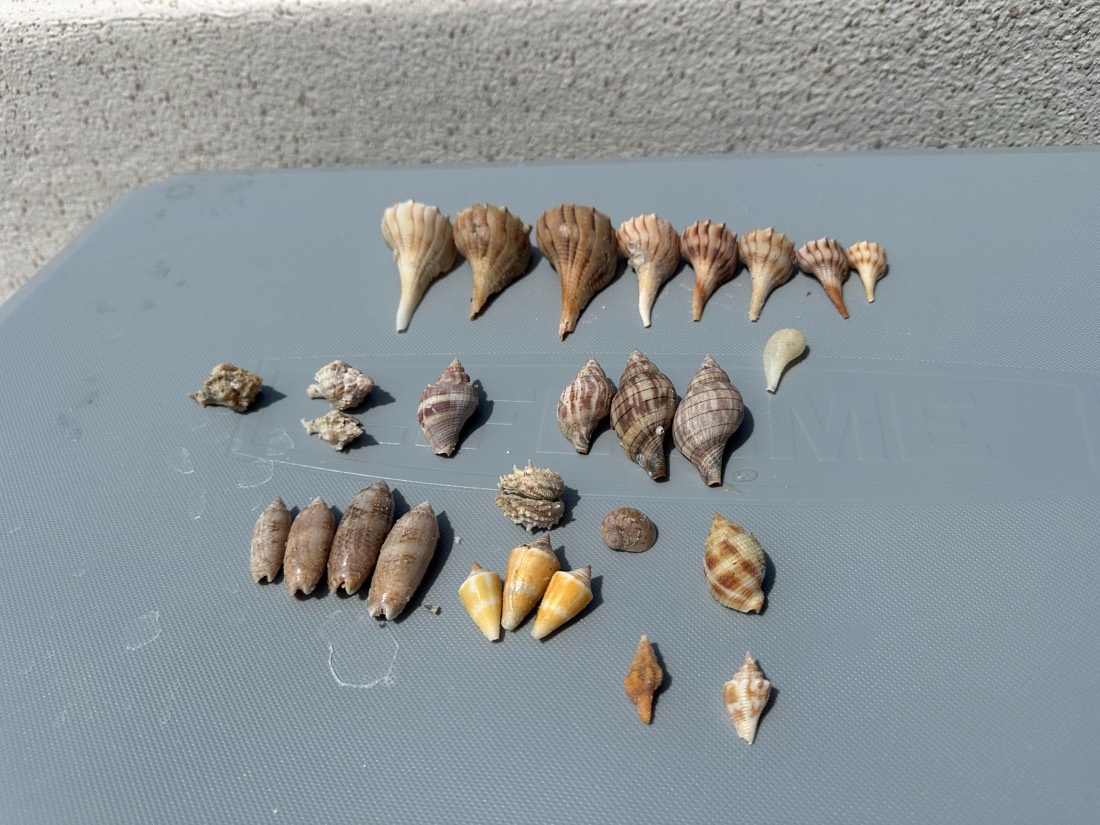
What you actually turn up on a November trip is never something anyone can guarantee, and we won’t pretend otherwise. But a good morning after the season’s first cold front regularly turns up lightning whelks, the big left-handed Gulf sea snails, along with fighting conchs, olive shells and plenty of keyhole urchins, the local sand dollar. Every so often a horse conch shows up too, Florida’s official state shell, unmistakable once you know to look for the burnt-orange color and the size. The true holy grail, a junonia, lives in 100 to 425 feet of water and only washes ashore after a real storm churns the deep Gulf, so treat any sighting as pure bonus, not a plan. Whatever ends up in your bag, remember the rule that keeps this coast worth visiting next November too: Collier and Lee County require empty shells only, so anything still alive, along with live sand dollars and starfish, has to stay right where the tide left it.
| Window | Tide Pattern | What You Get |
|---|---|---|
| New or full moon morning | The month’s deepest negative low | Maximum sandbar exposed — the top pick most years |
| First calm morning after a cold front | Falling to a morning low, often negative | Freshly stirred shell, whelks & storm-tossed finds |
| Early November, before Thanksgiving | Standard winter morning lows | Quietest beaches and boat ramps of the season |
| Thanksgiving week onward | Same winter tide script | Snowbird season begins — more company on the water |