
☀️ At a glance
- Water temp
- Upper 80s°F — warm as bathwater
- Low tide
- Evening, the summer tide pattern
- Weather
- Hot, humid, near-daily afternoon storms — mornings usually calm
- Crowds
- Thinning fast from July — quiet, private strands
- Best move
- Book early or late in the day and keep plans flexible
- Rule
- Empty shells only in Collier & Lee
What August shelling on Marco Island is really like
August is the honest middle child of the shelling calendar. It’s not the postcard version of winter, when a cold front stacks fresh shells on the sand overnight and everybody with a mesh bag shows up to pick through them. But it’s not a wash either. The Gulf is warm enough to wade in for hours, the wrack lines still fill back in every tide cycle, and the strands that felt shoulder-to-shoulder in July start opening back up as families head home before school starts. If you’re already committed to an August trip, the question isn’t whether to go — it’s how to time the day so the heat and the storms work for you instead of against you.
Our captains treat August like a scheduling puzzle more than a shelling problem. The shells haven’t gone anywhere; the challenge is getting to them in the calm window before the sky builds into something you don’t want to be caught out in. Get that part right and an August shelling tour can feel like a private beach walk with a boat parked a few yards away.
This month’s tide script: why low tide runs late
Every seasonal shelling page on this site starts with the same honest fact: shelling here is genuinely year-round, and the calendar just changes which part of the day the tide does the work for you. In winter, low tide tends to fall in the morning, which is why you hear so much about cold-front dawns. By August, that window has flipped — the lowest water of the day typically lands in the late afternoon and evening instead. That’s good news if you’re not a sunrise person, but it does mean your best exposed sandbar and the widest flats show up right as the day’s heat is starting to break, not before it.
That evening low is also why a sunset-adjacent shelling run makes a lot of sense in August: you’re walking a fresh flat as the light goes gold, the air finally cools a few degrees, and any afternoon storm cell has usually blown through and cleared out by then. It’s a different rhythm than a January dawn trip, but it’s not a lesser one — just a later one.
Because that low is later in the day, it stacks nicely with an evening tour anyway: you get the exposed flat, a cooling breeze off the Gulf, and often a sky worth watching on the ride back in. Ask about departure timing when you book, since the exact low-tide window shifts by a few minutes every day through the month.
Heat, afternoon storms & keeping honest eyes on the tropics
Let’s not sugarcoat it: August is hot. Mornings start warm and climb into the mid-90s by midday, and that heat is exactly what builds the towering afternoon thunderheads this coast is known for. Most days, the pattern is predictable — clear and glassy at first light, building clouds by late morning, and a real chance of a storm cell by mid-to-late afternoon. That’s why our captains lean on early departures or a late-day, tide-timed run rather than splitting the difference at high noon.
August also sits inside hurricane season, and we’d rather tell you that plainly than pretend it away. Most days a storm nowhere near Florida has zero effect on your trip. But when a system is actually working through the Gulf or the Atlantic, it can rework what’s sitting on the sand overnight or push our schedule around entirely. Our captains watch the radar and the tropics daily and would rather move your trip a few hours — or a day — than run you into weather. If your plans need to stay flexible in August, that’s not us being cautious for no reason; that’s just what an honest August on this water actually looks like.
None of this means you should skip August. It means you plan differently than you would in February. Build in a spare morning or evening if your schedule allows, book directly with us rather than a third-party stand, and trust that our captains would rather move your trip an hour than take you out under a building cell.
Where to go: Keewaydin and the boat-only islands
Keewaydin Island stays the anchor pick in August for the same reason it works every other month: no road, no bridge, no parking lot, so the only competition for a stretch of sand is whoever else came by boat. The difference in August is how much quieter it feels — the spring-break and Fourth-of-July crowds have thinned considerably, and a lot of visiting families have already headed home ahead of the school year. Kice Island, a little further south, sees even less foot traffic and holds up well as a second stop on the same run. If you’re weighing August against a different month, our seasonal guide lines up the tide and weather script for every month side by side.
Both islands sit inside the Rookery Bay reserve, backed by mangrove creeks rather than seawalls or condo towers, so an August run out there doubles as a break from the heat radiating off any paved beach access point on the mainland. Bring water, sun protection, and a bag for empty shells only, and you’re set for either stop.
Because these islands only open up to boats, an August low tide there is a genuinely different experience than fighting for parking at a drive-up beach in the same heat. Our captains time the run to that evening low, which also means you’re usually walking the flat as the worst of the afternoon heat is easing off.
What you might actually find in August
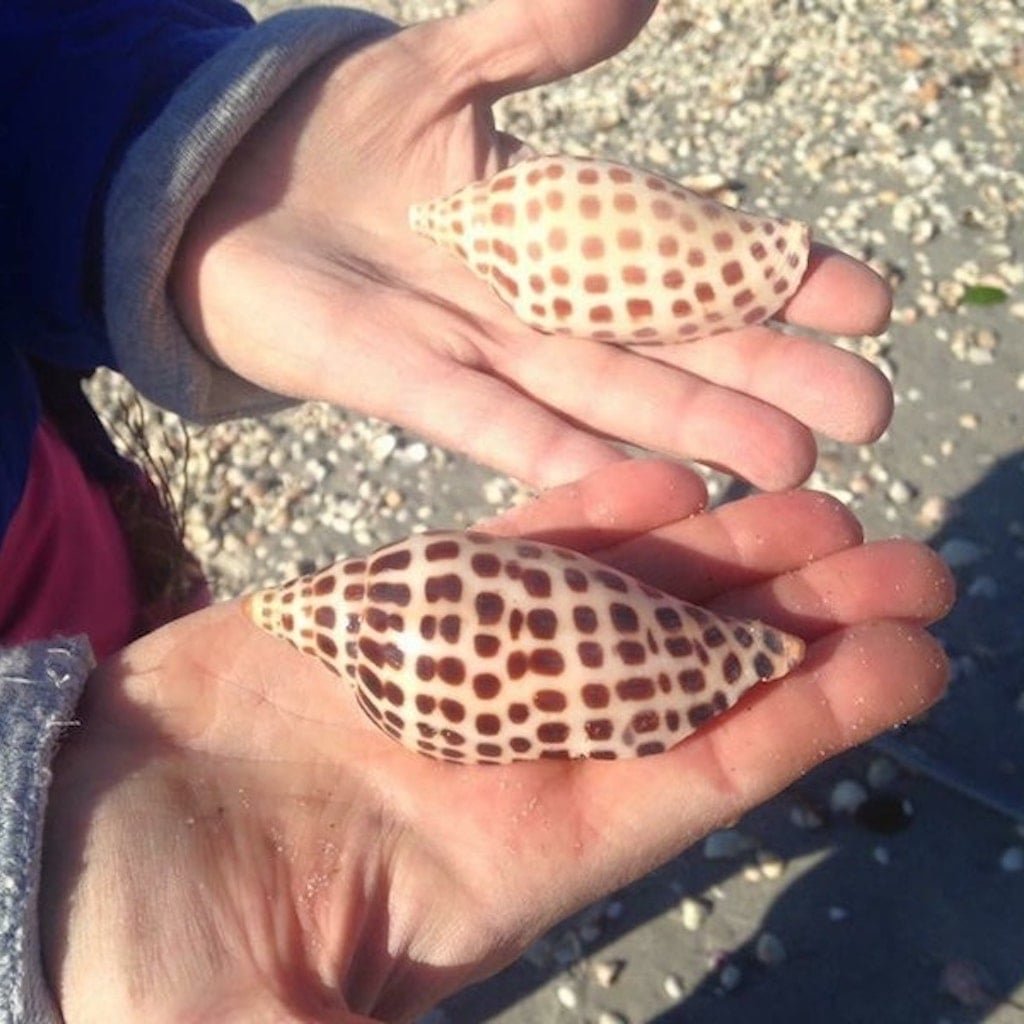
Nothing on a beach is ever guaranteed, and we’d rather tell you that straight than oversell an August trip. What our captains usually see on a good August low: lettered olives working just under the sand’s surface, fighting conchs, cockles, and a steady mix of lightning and knobbed whelks along the wrack line. Keyhole urchins — the sand dollar you’ll actually find here — turn up on the flats too. A deep-water rarity like a junonia is always possible after a storm churns the Gulf, but that’s a genuine long shot any month, August included. If you want help putting a name to whatever you bring back, our seashell guide covers the species you’re most likely to find on these beaches.
Whatever ends up in your bag, the rule doesn’t change with the season: Collier and Lee County protect live shells, sand dollars and starfish, so anything still occupied goes back in the water. Check each find before it leaves the beach — it’s a habit our captains build into every stop on a shelling tour, all year long.
| August | Winter (Dec–Mar) | |
|---|---|---|
| Low tide timing | Late afternoon & evening | Morning, often a deep negative low |
| Gulf water temp | Upper 80s°F — wade all day | Upper 60s to low 70s°F — bring a jacket |
| Crowds | Thin and dropping through the month | Snowbird season — busier docks |
| Weather risk | Near-daily afternoon storms; mornings calm | Mostly clear, occasional cold front |
| Fresh restock | Steady, tide-by-tide renewal | Big pushes after cold fronts |