
☀️ At a glance
- Sunset window
- About 7:55 pm early May to 8:15 pm by Memorial Day (EDT)
- Crowds
- Light — snowbird season has cleared out by May
- Weather pattern
- Dry season’s last stretch; first afternoon buildups possible late month
- Hurricane season
- Doesn’t start until June 1 — May stays storm-season-free
- Wildlife
- Bottlenose dolphins year-round; loggerhead nesting begins on outer beaches
- Best pick
- Standard Sunset Cruise or a Private Sunset Cruise — both book easily in May
Is May a Good Month for a Sunset Cruise on Marco Island?
If you’re weighing a May trip against the busier months on either side of it, here’s the honest read: May quietly rewards the traveler who books it. The snowbird crowds that pack Marco Island’s marinas and Gordon Pass from January through Easter have mostly cleared out by the time May rolls around, which means quieter water, easier parking at the docks and a lot more flexibility to land the sailing time you actually want. You’re not fighting for a spot in a channel packed with boat traffic on the way out, and you’re not booking six weeks ahead just to get a Saturday departure. At the same time, Southwest Florida’s dry season hasn’t fully broken yet, so early May in particular still delivers the kind of clear, low-humidity evenings that make for a genuinely great sunset — not the hazy, storm-building skies you start to see by July and August. Add in sunset times pushing toward 8 pm, and you get a longer window to be out on the water, watch the light change over the Ten Thousand Islands, and still be back at the dock at a reasonable hour. It’s the kind of month locals quietly prefer and visitors often overlook simply because it isn’t peak season — compare it across the calendar in our Seasonal Guide or see what a typical trip looks like in our May boat tours overview.
What a May Evening on the Water Feels Like
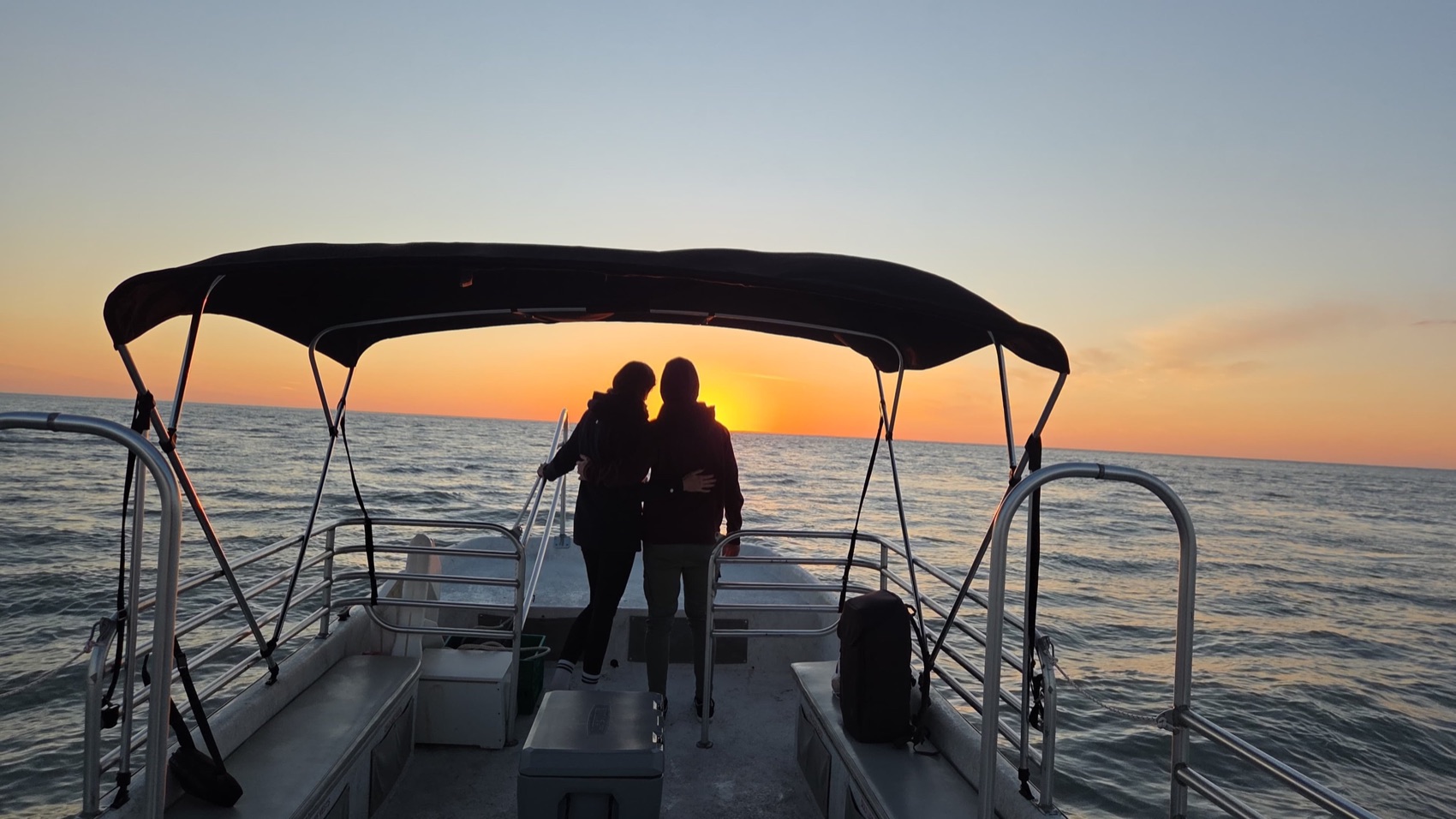
Step onto the boat for a sunset cruise in May and the first thing you’ll notice is how much room there is. The passes that felt crowded with boat traffic back in February run open and easy, and the backwaters around Rookery Bay and the Ten Thousand Islands settle into that late-spring stillness where the water goes glassy as the wind drops toward evening. The air is warm — genuinely summer-warm by late afternoon — but it hasn’t picked up the thick, sticky humidity that rolls in with the wet season. That combination makes for one of the more comfortable rides of the year: warm enough to stay in shorts and a t-shirt on deck, dry enough that you’re not wiping sweat off your sunglasses. As the sun drops, the light stretches long and gold across the mangrove islands, and because the water traffic is so light, you get long, uninterrupted stretches where it’s just your boat, the birds working the shallows, and the horizon. It’s a different mood than a packed February sunset run, and a lot of returning guests tell our captains they actually prefer it.
Sunset Times and the Best Boarding Window
Marco Island’s sunset creeps later through May, running from around 7:55 pm on May 1 to roughly 8:15 pm by Memorial Day weekend. That later clock changes how the evening feels compared to a winter cruise: instead of a 5 pm boarding time and being back at the dock before full dark, May departures typically board in the 6:30 to 7 pm range, giving you close to two hours on the water before the light fully fades. That’s enough time to run out past Marco’s barrier islands, watch the color build over open Gulf water, and still catch the last of the afterglow on the way back in. Because the days keep stretching through the month, a late-May cruise gets you noticeably more daylight than an early-May one — worth keeping in mind if you’re the type who wants dinner reservations after. If you’d rather have the boat to just your group, a Private Sunset Cruise is easy to book in May since the calendar isn’t as jammed as it runs in peak season. Whichever week you land, ask your captain for the current boarding time when you book; it shifts by roughly a minute a day as the month goes on, small enough to miss but real enough that a departure that felt right for the first week of May can be twenty minutes early by the end of it.
Weather to Watch as Wet Season Approaches
May sits in a genuine sweet spot on Southwest Florida’s weather calendar. The first half of the month usually still belongs to the dry season that runs November through April — expect mostly clear skies, low humidity and consistent sunsets with none of the pop-up storm cells that define a Gulf Coast summer. By the back half of May, though, the pattern starts to shift. You’ll start to see the season’s first isolated afternoon thunderstorms build over the mainland, the kind of quick, localized systems that can roll through and clear out within an hour. They rarely affect a sunset departure directly since they tend to fire up and fade before evening, but our captains keep an eye on the radar all the same and will adjust a departure time if a system is lingering nearby. The genuine upside: Atlantic hurricane season doesn’t officially start until June 1, so all of May sits before the tropical-system watch that becomes part of the summer forecast conversation. You get the storm-free calm of the dry season with the warmer air and later sunsets of early summer — without the June-through-October threat of a named system reshuffling your plans.
| Month | Sunset window | Crowds & boat traffic | Weather pattern |
|---|---|---|---|
| April | About 7:45 to 7:55 pm | Still busy — season’s last wave of visitors | Dry season, occasional breezy fronts |
| May | About 7:55 to 8:15 pm | Light — season has emptied out | Dry early, first storm buildups late month |
| June | About 8:15 to 8:25 pm | Light, picking up with early summer visitors | Wet season begins — regular afternoon storms |
Wildlife and Scenery on a May Sunset Run
Bottlenose dolphins live in the waters around Marco Island and Naples year-round, and a May evening run gives you a good shot at spotting a pod working the passes or riding the boat’s wake — though as with any wildlife, our captains will tell you honestly that a sighting is never guaranteed on any single trip. May also marks the start of loggerhead sea turtle nesting season on the outer, boat-only beaches, which runs May through October; you won’t see turtles nesting from the boat itself since that happens after dark on the sand, but it’s a nice piece of context as you cruise past the same beaches where a female loggerhead might come ashore that same night. Manatees, by contrast, are mostly done with Marco Island by May — they gather in the warmer, protected water around Rookery Bay when temperatures drop below about 68°F between November and March, then disperse back into open water as the Gulf warms, so May isn’t the month to expect them. What you will see plenty of is bird life: ospreys and pelicans working the mangrove edges, herons stalking the shallows at low light, and the kind of wide-open Ten Thousand Islands scenery that looks completely different painted gold at sunset than it does at midday. For a deeper look at what swims, flies and nests around Marco Island year-round, our wildlife guide breaks down the sightings you might cross paths with on any given trip. It’s a wildlife mix that rewards paying attention rather than one big headline sighting — which, if you ask our captains, is what makes it feel real instead of staged.