
🏝️ At a glance
- Reality check
- Florida is shells-first; sea glass is a bonus, not a haul
- Better odds
- Old piers, historic ports, Atlantic-side beaches
- Tougher
- Soft, sandy Gulf beaches (Naples, Marco)
- Why scarce
- Gentle surf & sand don't frost glass like rocky coasts
- Come for
- The shelling — that's our real strength
The honest reality about Florida sea glass
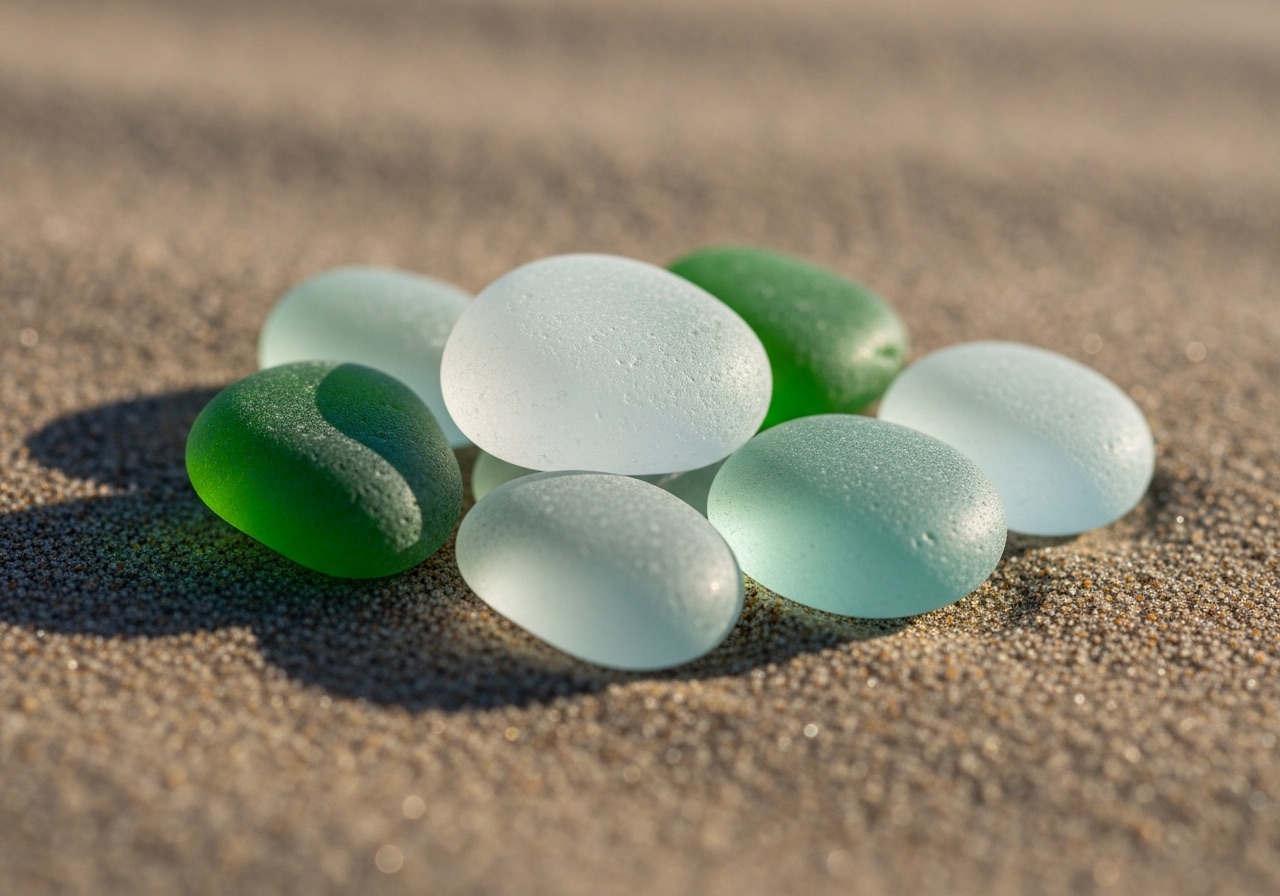
Sea glass forms when broken glass tumbles for years against sand, rock and surf until it frosts and rounds. The legendary sea-glass beaches — Fort Bragg in California, the coves of Maine — have two things our Gulf beaches don't: a long history of glass dumped into the water and rough, rocky surf to grind it. Florida's southwest coast is soft sand and gentle Gulf swell, which is heaven for shells but mediocre for frosting glass. So if a stranger online told you Naples is a sea-glass goldmine, they were being generous. We'd rather you arrive with the right expectations and be pleasantly surprised by a stray cobalt-blue piece than disappointed by a long, empty walk.
Where the glass actually hides
If hunting glass is the goal, follow the history. The best Florida sea glass turns up near old piers, historic ports and long-developed waterfronts, where bottles and dishes have been entering the water for a century. The Atlantic side generally beats the Gulf because the surf is rougher and frosts glass faster. Spots near old port cities, jetties and the bases of weathered piers are your best bet anywhere in the state. On the Gulf, you'll do better hunting near long-standing waterfront infrastructure than on a pristine, recently renourished beach — fresh trucked-in sand buries the good stuff. It's the opposite of shelling, where wild and untouched wins.
What to expect around Naples and Marco
Here at home, treat sea glass as a happy accident, not a plan. You'll find an occasional frosted white or green shard worked into the shell hash, and once in a blue moon a true cobalt or amber piece that's worth pocketing. But our beaches earn their reputation on shells, not glass. The same wrack line that's thin on glass is thick with whelks, conchs, scallops and sand dollars — see our Marco Island shelling guide and the broader Southwest Florida roundup for where those pile up. If you do find sea glass, our beach-finds note on sea glass covers how to read its age and color.
| Setting | Sea glass odds | Why |
|---|---|---|
| Old piers & historic ports | Best | Decades of glass plus structure to trap it |
| Atlantic-side beaches | Good | Rougher surf frosts glass faster |
| Gulf sandy beaches (Naples/Marco) | Slim | Soft sand, gentle swell — great for shells |
| Freshly renourished beaches | Poor | Trucked-in sand buries finds |
Play to the coast's real strength
The smartest move on a Southwest Florida trip is to lean into what this water does best. Don't burn a morning chasing glass that mostly isn't here; spend it shelling, where the Gulf genuinely over-delivers. On our shelling tours out of Marco and Goodland we run to boat-only island flats where the wrack line is fresh and the finds are real. You might pocket a stray piece of frosted glass along the way — but you'll definitely come home with shells worth framing.
From the Helm: Sea glass odds behind Goodland’s old net houses on a slow tide
When someone asks about sea glass, our captains give them the same honest answer the rest of this page gives you, then usually add one thing worth trying anyway: the shoreline tucked behind Goodland’s old net houses, where fish camps operated for the better part of a century before anyone thought about what they were tossing over the side. It’s not a promise, and we say that plainly before anyone gets excited — it’s a five-minute detour we’ll work into a trip already headed that direction, not a destination worth planning a whole charter around.
Getting there means running up the Marco River past the working docks rather than out toward open Gulf water, and we time it for slack or a slow-moving tide so the boat can sit close to the bank without fighting current the whole time. Fast-moving water there tends to keep glass buried under shifting silt instead of letting it settle where a hand can reach it. Our captains ease the bow parallel to the bank and let guests work the exposed edge rather than anchoring out and wading, since the bottom drops off faster than it looks.
What actually turns up is usually small and frosted rather than the thick, colorful chunks people picture from northern beaches — a dull green or amber piece about the size of a fingernail, worn soft enough that it doesn’t catch on skin. We tell guests to run a thumb over any glassy-looking piece before getting excited, because sharp edges mean it hasn’t tumbled long enough to be safe glass yet. Most mornings back there turn up nothing at all, and we don’t dress that up as anything other than what it is.
When the bank’s given up nothing after a reasonable look — which is most mornings, if we’re being straight with you — our captains don’t linger. We’d rather point the bow back toward the shelling ground the rest of your trip is actually built around than stretch a five-minute detour into a disappointment nobody signed up for. That pivot happens quietly, usually with a captain already narrating what’s coming next on the run before anyone’s had time to notice we’ve moved on from the glass hunt and back onto water that actually rewards the time spent looking.
Sea glass here is a bonus we’re happy to chase for a few minutes, never the headline. If shells are what actually brought you out, that’s the water we know best and the water our shelling tours are built around; the shelling beaches guide covers every stretch of shoreline that reliably delivers instead of just occasionally surprising us.