
🐚 At a glance
- What it is
- Glass tumbled smooth & frosted by surf and sand
- Common colors
- White, green, brown; blue & red are rare
- Tell-tale
- Frosted, satiny surface with rounded, pitted edges
- Where
- Near old piers, inlets & busier shores; best after a storm
- Honest note
- The calm Gulf yields far less than the Atlantic coast
How to identify real sea glass
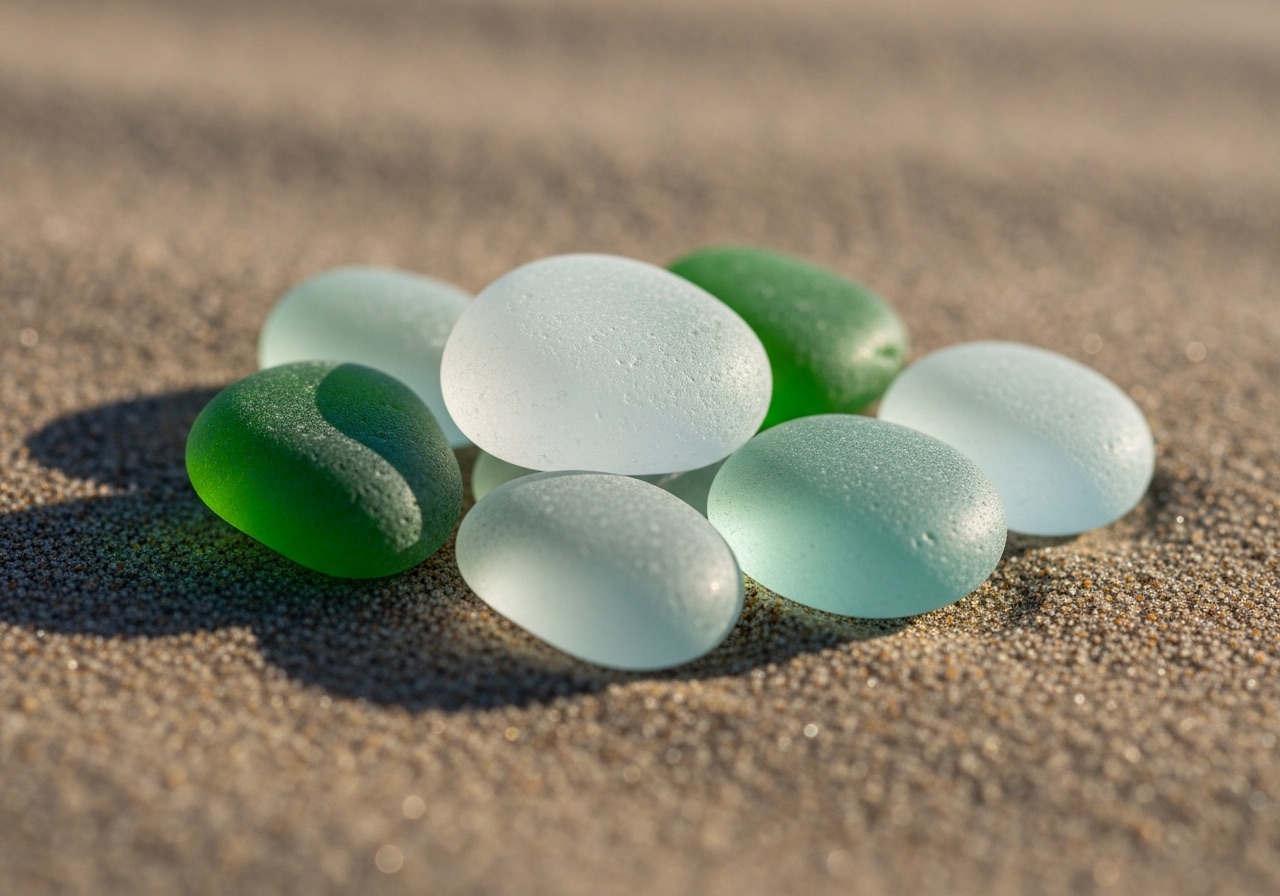
Genuine sea glass has a look you can’t fake easily. The surface is frosted — satiny and slightly cloudy, never shiny — from years of tumbling against sand. The edges are rounded and softened, with a faint pitting like tiny craters. Hold a piece up to the light: if it’s glossy and sharp, it’s a fresh shard, not true sea glass. White (clear), kelly green and brown are the everyday colors out here. Cobalt blue, soft aqua and red are the prizes — you’ll go a long time between those.
Where sea glass collects here
Glass rides the same currents and tides as shells, so it piles up in the same places: the wrack line at the top of the beach, the pockets of coarse sand and shell hash, and especially near old piers, passes and shores with a long history of foot traffic. Around Naples and Marco that means checking near structures and inlets, and walking the high tide line slowly. It often turns up mixed in with the shark-tooth shell gravel, so a good gravel pocket is worth a careful look.
The honest Gulf truth
Here’s where we keep it real. Sea glass needs energy — pounding surf and rocky, churning shorelines — to grind glass smooth and frosted. Our Gulf is the opposite: calm, shallow and gentle, which is exactly why it’s such great shelling water but only modest sea-glass water. Florida’s Atlantic coast, with its harder surf, simply produces more. So set your expectations: Gulf-side sea glass is a delightful bonus, not the main event. Your best odds come right after a storm or a strong cold front stirs the bottom — the same conditions we chase on a post-front trip.
| Factor | SW Florida Gulf | FL Atlantic coast |
|---|---|---|
| Surf energy | Calm & gentle | Rougher, harder surf |
| Sea glass yield | Modest, a lucky bonus | Generally higher |
| What it’s great for | World-class shelling | More frosted glass |
The upside? You came for the shells anyway. On our shelling tours to Keewaydin and the Ten Thousand Islands, a frosted piece of blue glass is the surprise that makes a great day even better.
From the Helm: Working the Pilings Behind Goodland for Sea Glass
We like to work the mud flat tucked behind the old pilings on the Marco River side of Goodland, a stretch most beachcombers never see because you can only reach it by water. On a falling tide after a front, the current strips sand off the base of those pilings and leaves a hard apron studded with glass that decades of boat traffic and old dock debris left behind. We idle in, cut the engine, and let you step down onto that firm strip rather than the open shoreline, since the pilings pull years of glass into one small, walkable footprint.
The gear we carry for this stop is small on purpose. A wet mesh bag clipped to the console beats a bucket every time — it drains on the ride back instead of sloshing brine across the deck, and it lets you feel for the telltale roundness of a piece without digging through murky water. We hand guests a bag, not a scoop, because sea glass here rewards fingers more than tools; you're feeling for a soft, frosted edge with no sharp bite left in it, the sign the Gulf has actually finished its work on that piece.
A freshly tumbled piece still carries a faint shine at its center even under the frost, and it sits heavy for its size, dense glass that hasn't pitted all the way through yet. The pieces we tell you to leave are the ones still sharp along one edge or bright and clear underneath the haze — not finished, and honestly not worth the pocket space. We're upfront that the calm Gulf side works slower than a rough ocean beach, so a handful of true frosted glass from one pass here counts as a good morning, not a disappointment.
When the tide's too high to expose the apron, we shift to the fill line along the seawall closer to the marina, where storm surge over the years has buried glass in coarser sand that a falling tide uncovers faster than the flats do. It's a smaller stretch and a rougher pick, but it keeps the stop worth making on a morning when the main spot is still underwater. Either way we time the visit around the tide, not the clock, since the pilings simply don't give anything up until the water actually drops off them.
This stop usually rides along on one of our shelling tours, worked in alongside the barrier-island beaches, since Goodland sits right on the way out to open water. If sea glass is the main draw for your group, tell your captain before you leave the dock — we'll build extra time at the pilings into the run and still get you out to the shelling beaches for the rest of the trip.