
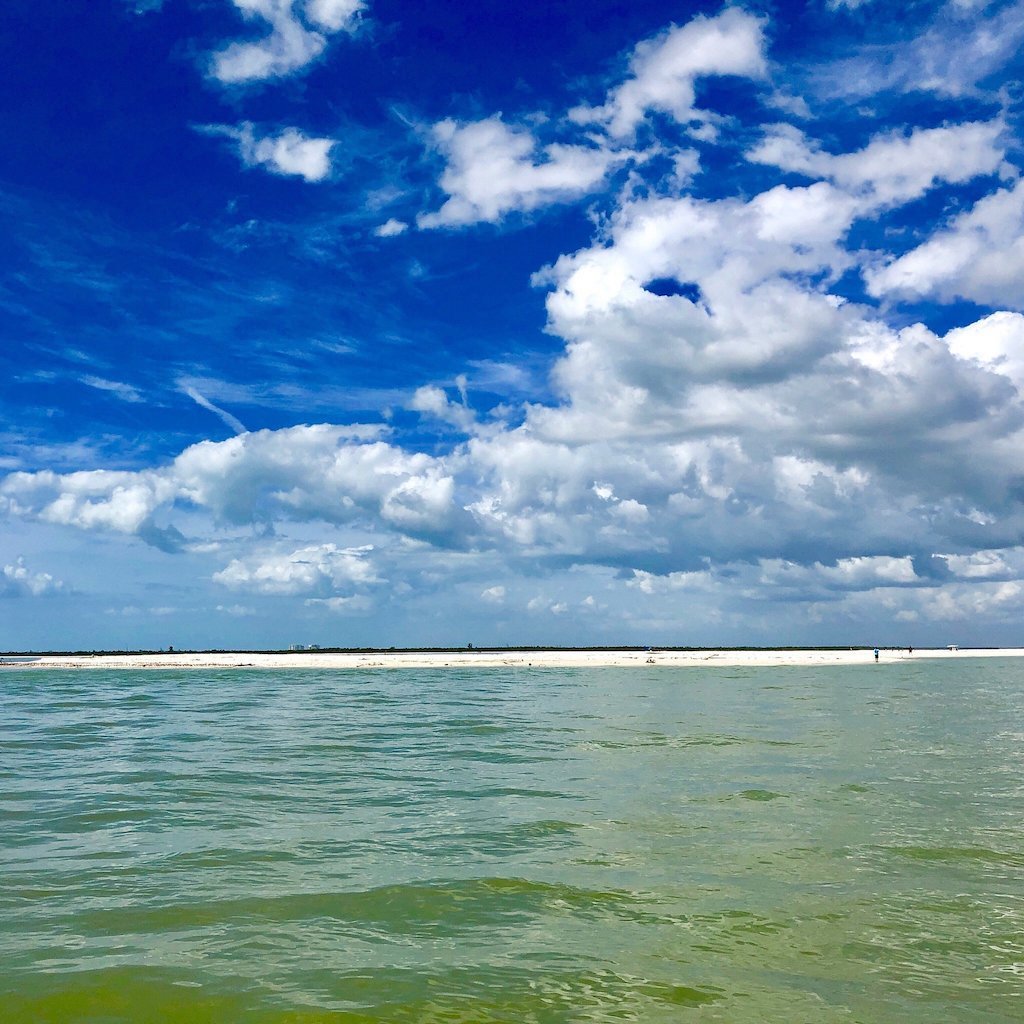
The falling tide at Round Key does not look like much from the boat at first — just a hump of oyster shell and a few gulls circling over it — until you are standing on it with the water still draining off the bar. This is not one of the islands that shows up on a postcard, and that is exactly the point. After a cold front pushes through and drops the water lower than a normal low tide, a spot like this back-bay oyster bar can out-produce the bigger, better-known beaches simply because fewer boats bother stopping at something this unglamorous.
We rotate through a mental list of these smaller spots depending on what the tide and the recent weather have done. A lagoon mouth where two currents meet tends to sort and pile shells along its edges the way a strainer would. A shoal edge exposed only on the lowest tides of the month turns up things a shallower beach never will. A wrack line left by an overnight tide often holds more than the open sand around it, because that is exactly where the water dropped its load as it retreated. None of these spots work every day, which is why we keep several in rotation.
Wind direction decides almost as much as tide does. A north wind after a front pushes extra water and debris onto certain shorelines while leaving others untouched, so the island that produced on Tuesday can sit empty on Thursday if the wind swung around overnight. We check which way the wind has been blowing for the past day or two, not just that morning, because shells pushed up onto a beach two days ago are often still sitting there waiting, undisturbed by anyone who was not looking for them.
Every stop we make is still an empty-shells-only stop, no matter how good the pile looks — that rule holds on every boat-only island and every back-bay bar we run to. We carry mesh bags rather than buckets for exactly this reason: they drain and rinse on the ride back, and they force you to actually look at what you are picking up rather than scooping sand along with it. A good mesh bag full of empty shells beats a heavy bucket every time we compare notes at the dock.
None of this guarantees a haul on any single stop, because the Gulf resets itself with every tide and every front that comes through. What we can promise is a rotation built from actually walking these bars after fronts, not a guess made from a map. Pair this page with our shell identification guide for what you are likely to find once you are standing on the sand, or book a shelling tour and let us pick the day’s spot for you.