
🏝️ At a glance
- Drive-up
- Tigertail Beach & lagoon, South Marco Beach
- Wade-out
- Sand Dollar Spit (Sand Dollar Island)
- Boat-only
- Keewaydin, Kice, Cape Romano
- We leave from
- Goodland & Naples Bay
- Rule
- Empty shells only — Collier County
Tigertail Beach & the lagoon
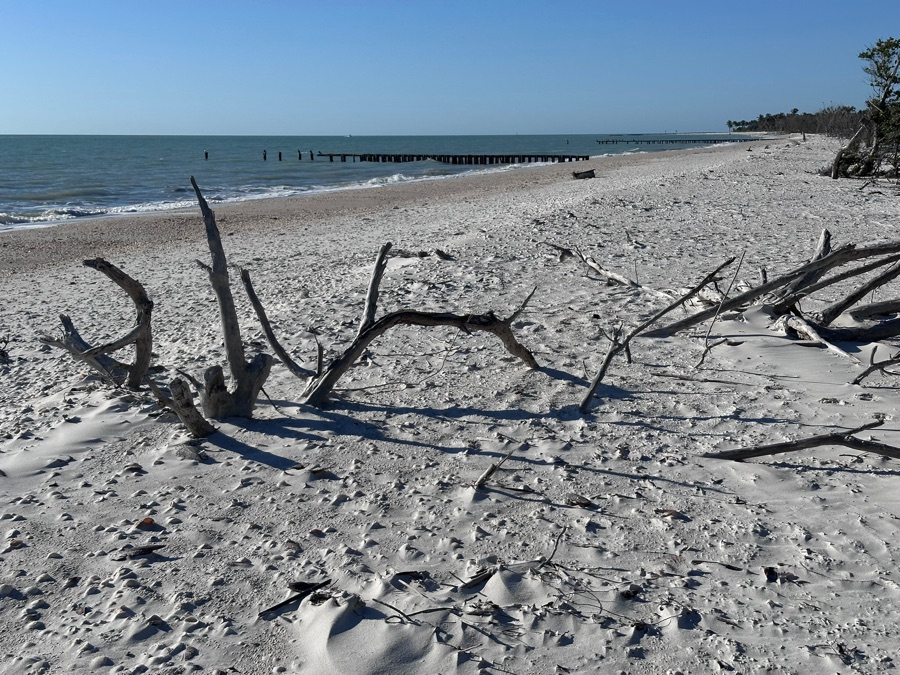
Start with Tigertail Beach, the local favorite on Marco's northwest end. Most visitors stop at the lagoon, a shallow, protected basin that's gentle for kids and full of small finds — coquinas, cockles, baby conchs. But the real shelling is on the far side: wade or walk the tidal flat across the lagoon to reach the open Gulf beach, where the wrack line runs longer and the whelks turn up. Go at low tide and the crossing is easy. For the deeper story, see our Tigertail Beach lagoon guide.
Sand Dollar Spit
Just off Tigertail's tip lies Sand Dollar Island — really a long, shifting sandbar that grows and moves with the tides. At low water it's one of the most famous spots near Marco for keyhole sand dollars (technically a keyhole urchin) and a clean, wide flat to comb. Remember the rule, though: living sand dollars stay put. A live one is fuzzy and brown-green and slowly moving; only the bleached-white, papery empties are yours to keep. Read more on telling a live sand dollar from an empty test.
The boat-only islands south of Marco
Now the good stuff. South and west of Marco lie the islands you can only reach by water, and they out-shell every drive-up beach because almost nobody walks them. Our Marco Island shelling tours run to Keewaydin Island — eight wild miles of Gulf beach — tiny remote Kice Island, and the shifting shoals of Cape Romano, where you might also glimpse the storm-toppled dome-house ruins offshore. This is where whole lightning whelks and the occasional junonia still wait in the drift.
| Spot | Access | Best for |
|---|---|---|
| Tigertail lagoon | Drive-up | Kids, small shells |
| Tigertail Gulf side | Wade across lagoon | Whelks, longer wrack line |
| Sand Dollar Spit | Wade / boat | Sand dollars, wide flats |
| Keewaydin | Boat-only | Whole shells, no crowds |
| Kice & Cape Romano | Boat-only | The fullest drift lines |
Empty shells only on Marco
Marco Island is in Collier County, which means one firm rule everywhere you shell: empty shells only. No live shells, no live sand dollars, no starfish. Flip everything over before it goes in the bag, and if there's life inside, set it gently back. The full details live in our Collier County shelling rules.
From the Helm: Working the outside bar at Kice on the last of a falling tide, out of Goodland
The outside bar at Kice is where we end up more mornings than anywhere else on this stretch, not because it’s a secret — it isn’t, not to anyone who runs a boat here — but because the drop-off there holds a shell line longer than almost any other spot within an easy run of Marco. We leave the dock in Goodland while the tide’s still dropping, run down the Marco River, and time the last stretch so we’re stepping onto that bar right as the water goes slack at dead low.
Getting there means passing Coon Key and reading the color change where the river opens into open water — a darker green channel against the paler shoal water on either side. We stay in that channel until we’re close enough to see the bar itself, then idle in slow, because the sand builds up differently out there every season and running it on memory alone is how a boat finds a sandbar the hard way.
At the transom we run through the same quick briefing before anyone steps off the ladder: land on the hard-packed sand near the waterline, not the soft dry ridge above it, and give the bar a minute to firm up underfoot before wandering far. Around a new or full moon the tide pulls back further than usual, opening up a wider stretch of Kice than a normal dead low ever shows, and that’s often when our best mornings out here happen — simply because there’s more exposed bar to cover before the water turns and starts pushing back in.
If a stiff southwest wind has the outside water stacked up and uncomfortable, we tuck around to Cape Romano’s leeward side instead, where the chop lays down even when Kice is getting worked over. It’s a different beach with a different feel — less open shell line, more scattered pockets tucked against the point — but on a rough day it beats bouncing guests across open water for a beach we’d have to fight to enjoy anyway.
A whelk still holding its animal at Kice has a faint weight and a slow, deliberate pull if you try to lift it, completely different from the dead-empty ones scattered around it — and that’s always the one we slide back into the sand, no exceptions in Collier County. We check every good-looking shell before it goes in anyone’s bag.
That last-two-hours window is the whole game on this stretch, which is why we build our shelling tours around it rather than a fixed clock. Guests weighing Marco against the beaches further north can compare notes in the southwest Florida rundown.