
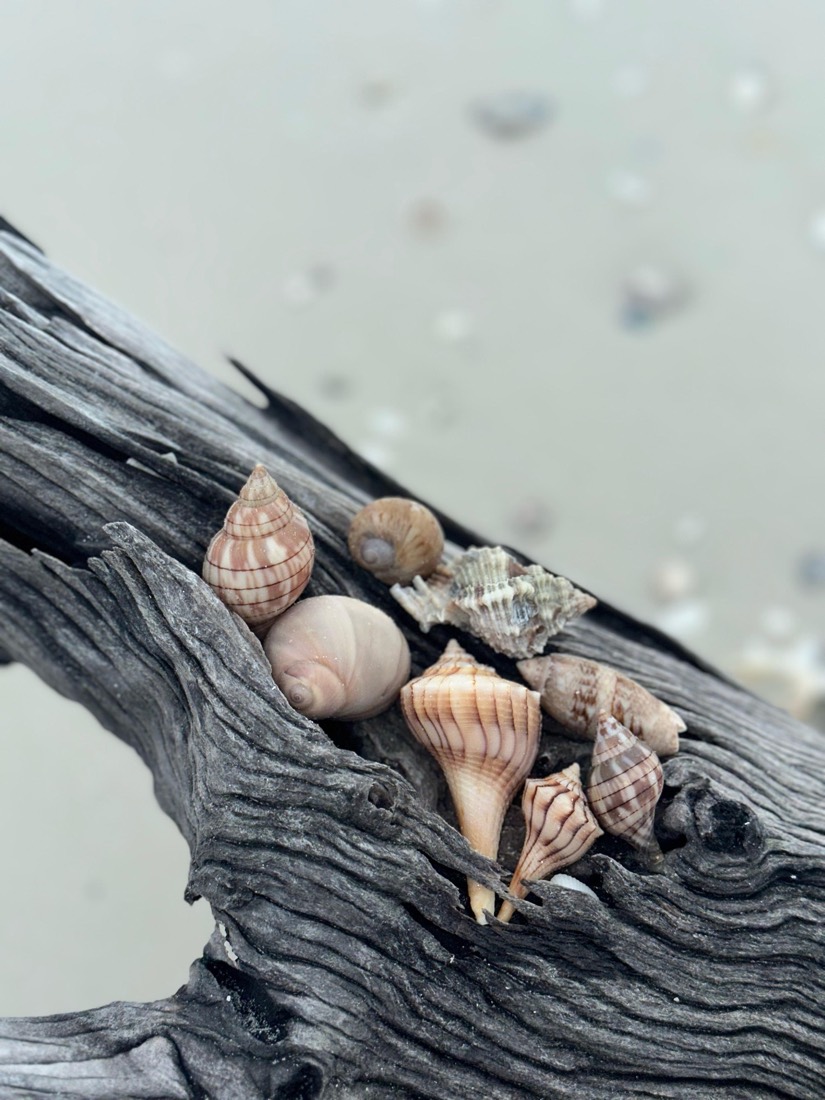
🐚 At a glance
- Species
- Striate bubble, Bulla occidentalis
- Animal inside
- A headshield slug too large to fully retract
- Shape
- Inflated oval, glossy, brown-mottled, sunken spire
- Tell-tale
- Aperture runs nearly the full length of the shell
- Where & when
- Tigertail Lagoon & the bay sides of Keewaydin, Kice & Cape Romano; calm water, low tide
- Rule
- Empty shells only in Collier & Lee
What is a bubble shell, exactly?
Pick one up and it does not look like it belongs to any snail you already know. A bubble shell is smooth, lightweight, almost translucent in places, and shaped like a swollen little egg with the top pinched flat. That shape belongs to the striate bubble, Bulla occidentalis, a small marine gastropod in the group known as headshield slugs. Unlike a whelk or a moon snail, the animal that builds this shell cannot pull all the way back inside it — its body is simply too big for the house it grows. The shell works more like a saddle the slug carries while it plows through soft sand and mud hunting algae and detritus, which is part of why the shells you find are almost always empty. The slug was never tucked in there full-time to begin with, so an empty bubble shell on the sand is not evidence of anything sad happening — it is just how the animal lives.
You will often find them sharing the same quiet flats with other overlooked backwater specialists, like the mangrove periwinkle working the mangrove roots at the tideline and the nassa mud snails patrolling the mud for scraps. None of them get the attention a horse conch or a lightning whelk gets, but they are some of the most interesting shells to actually understand once you know what you are looking at.
How to identify a bubble shell
Once you know the shape, you will not mistake it for anything else on the beach. Hold one in your palm and check for four things. First, an inflated, rounded-oval body with almost no taper at either end, more egg than spiral. Second, a glossy surface mottled in tan, olive-brown or gray, occasionally showing faint spiral striping, which is where the striate in the name comes from. Third, a spire so sunken it reads as a shallow dimple instead of a point, the detail the whole bubble-shell family is named for. Fourth, an aperture, the opening, that runs nearly the entire length of the shell rather than stopping partway up the way it does on a whelk or a conch.
There is no operculum, the small trapdoor many snails use to seal themselves inside, because a bubble shell never had one to begin with. Most run under an inch and a half, small enough to miss if you are scanning for something showier. The freshest finds still carry a faint sheen, almost like wet paper, before sun and sand bleach them to a chalky, matte white.
Where to find bubble shells near Marco Island
Bubble shells are creatures of quiet water, and that is the key to finding one intact. Skip the open Gulf beach and head for the backwater sand and mud flats where the current barely moves. Tigertail Lagoon, on the bay side of Marco Island, is the classic local spot, along with the protected bay shorelines of the boat-only barrier islands like Keewaydin and Kice. The gentler stretches around Cape Romano and the Caxambas spits hold them too, especially in the skinny pockets tucked behind a point where wind and boat wake cannot reach.
Low tide is when the flats expose themselves and the shells sit right on top of the sand instead of buried under it, so a slow walk at the bottom of the tide beats an hour of digging. These are exactly the kind of skinny, boat-only backwaters our shelling tours are built to reach — you are not driving to them on a public road, you are idling in on a shallow-draft boat while the captain reads the water for you.
Why bubble shells are so fragile
Everything about a bubble shell trades armor for a fast, cheap build. The shell wall is thin enough to see light through in spots, and because the spire is sunken rather than stacked up in sturdy whorls, there is no reinforced peak protecting the rest of the structure the way a lightning whelk’s tall spire does for that shell. That construction works fine in the calm sand and mud where the slug actually lives. It falls apart the moment real surf gets involved.
That is the real reason you will almost never find a mint bubble shell on an open Gulf beach — not because they are rare animals, but because the same wave energy that scatters heartier shells like the ones catalogued across our full Seashell Guide simply crushes this one before it ever gets that far. Wind-protected water is not a bonus for a bubble shell. It is the only place one can survive long enough to be found whole.
Bubble shell vs. other small, round shells
New shellers often lump every smooth, rounded shell into one bucket, but a few side-by-side details sort them out fast once you know what to check: the spire, the aperture, and how heavy the shell feels for its size.
| Shell | Shape | Spire | Aperture |
|---|---|---|---|
| Striate bubble | Inflated oval, glossy, thin-walled | Sunken, almost flat | Runs nearly the full length |
| Moon snail | Rounder, heavier, thick-walled | Low but raised, a distinct point | Half-moon shaped, shorter |
| Olive shell | Cylindrical, high-gloss, sturdy | Pointed, notched | Narrow slit along one side |
| Baby’s ear | Flat, ear-shaped, wide | Barely visible, set off to one side | Wide and shallow |
Collecting bubble shells the right way
Because the slug that builds a bubble shell rarely stays inside it, most of what you will pick up is already empty — but it is still worth a glance before you pocket one, especially the fresher, glossier finds. Collier and Lee County both protect live shells, sand dollars and starfish, so anything with the animal still inside goes straight back into the water exactly where you found it. Empty ones are fair game and make some of the most interesting additions to a shell box, precisely because so few beachcombers know what they are looking at when they see one.
If you want more of the small, strange species sharing these same quiet flats, our guide to where to find shells in Southwest Florida rounds up the backwater spots worth checking on foot, and the full Seashell Guide covers everything from the showy whelks down to the shells like this one that most people walk right past without a second look.