
📖 At a glance
- Open Gulf flats
- Whelks, fighting conchs, sand dollars, scallops
- Mangroves & oyster bars
- Crown conch, oysters, ark shells
- Best islands
- Keewaydin, Kice, Cape Romano, Ten Thousand Islands
- Best conditions
- Low tide after a winter front or storm
- Rule
- Empty shells only in Collier & Lee
Match the shell to its water
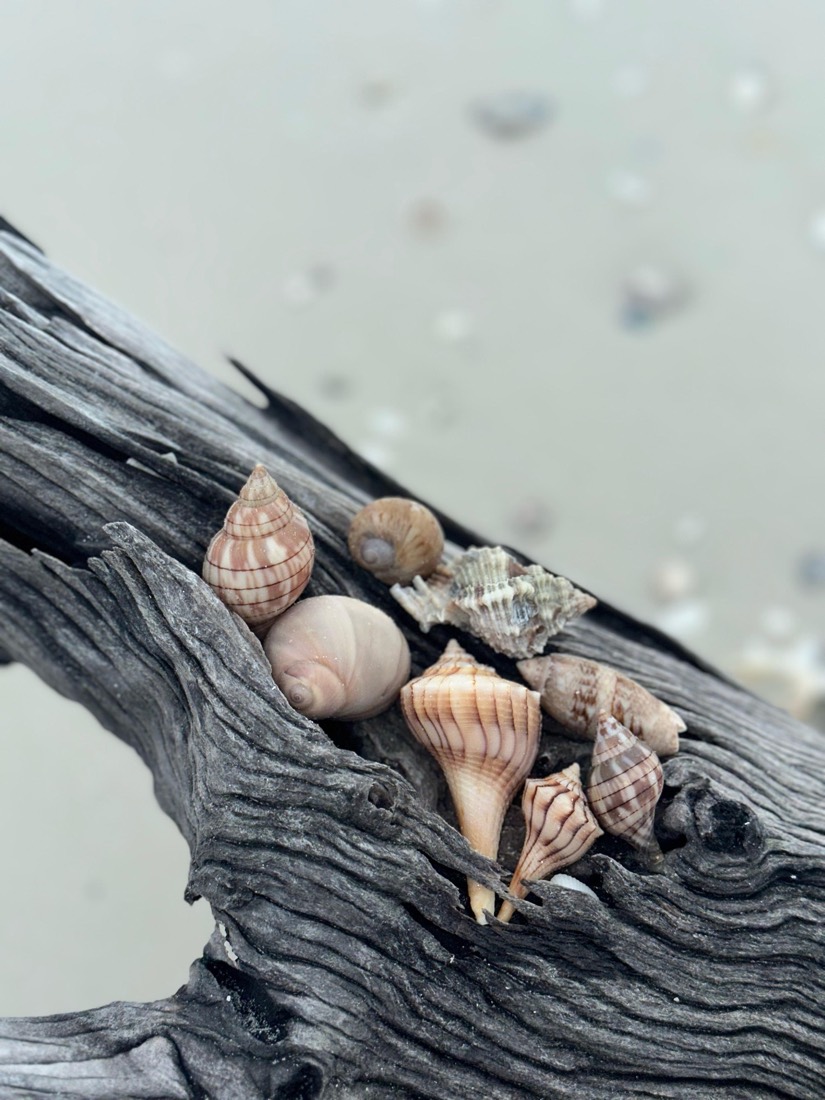
Every shell tells you where its animal lived. Whelks — lightning, knobbed, pear — hunt on sandy Gulf bottom, so they wash onto the open beaches and flats of the barrier islands. The Florida fighting conch likes the same surf-washed sand. The crown conch, on the other hand, is a mangrove-and-oyster-bar creature; you’ll find its spiky shells back in the quiet creeks of the Ten Thousand Islands, not out on the Gulf front. Sand dollars (really keyhole urchins) lie just under the sand on the shallow flats and bars. Scallops and cockles tumble up where there’s clean sand and current. Read the habitat and you’ll know which beach to work.
| Shell | Where it lives | Best spots |
|---|---|---|
| Lightning & knobbed whelk | Open Gulf sand | Keewaydin, Kice, Cape Romano |
| Florida fighting conch | Surf-washed sand flats | Kice, Cape Romano shoals |
| Crown conch | Mangroves & oyster bars | Ten Thousand Islands creeks |
| Sand dollar (keyhole urchin) | Under sand on shallow bars | Sandbars off Marco & Keewaydin |
| Scallops, cockles, coquina | Clean sand & current | Gulf-front beaches |
Island by island
Keewaydin Island is the classic boat-only Gulf strand — miles of open sand for whelks, conchs and the odd surprise, and far quieter than any beach you can drive to. Kice Island, just south, sees even fewer feet and rewards it with fighting conchs and whelks. Cape Romano and its shoals catch shells funneling out of the passes; it’s wild, lonely and shelly (the famous dome houses out there are half-submerged ruins now, toppled by Hurricane Ian, but the shelling around them is excellent). Back inside, the Ten Thousand Islands trade open beach for mangrove creeks where crown conchs and oyster shells rule. We rank the options in best boat-access shelling beaches.
The conditions that fill the beach
Location gets you to the right sand; timing fills it. Two things drive the biggest wash-ups here. First, low tide on a spring tide exposes the most flat — the why is in our tides 101 guide. Second, and even more powerful, is weather: a winter cold front or a passing storm churns the bottom and shoves fresh shells onto the beach overnight, which is why the morning after a blow is gold (see shelling after a storm). Stack a post-front morning onto a spring low tide on a boat-only island, and you’ve hit the jackpot.
That stack is exactly what our captains chase. A shelling tour puts you on the right island for the shell you want, at the bottom of the tide, on water you simply can’t reach on foot.
From the Helm: Choosing Gulf Flats or Dismal Key’s Oyster Bars Before We Leave the Dock
Before we leave the dock, one of the calls we make every morning is which kind of water we’re running to, not just which island. A Gulf-side outside bar and a backcountry oyster bar around somewhere like Dismal Key reward completely different shells, and guessing wrong means guests walk a mile of the wrong kind of sand. Wind direction usually settles it: a stiff onshore breeze churns the open Gulf flats nicely, while a calm morning is wasted out there and better spent working the quiet mangrove creeks instead. Guests booking ahead rarely know to ask which water we’ll pick, so we make that call the same morning, once we actually know what the wind is doing.
What we load onto the boat shifts with that call. For an oyster-bar run we hand out water shoes or old sneakers, not bare feet, because a broken oyster cluster underfoot is sharp enough to open a heel in a second, and the footing is soft mud instead of firm sand. For the open Gulf bars we skip the shoes entirely — guests do better barefoot on a firm, sun-warmed flat, and half the fun of a spring low is feeling a shell under your foot before you see it.
We give a different brief depending on which we picked. On the oyster bars, the rule is: step where we step, since the safe channels through that mud shift year to year and we walk them first. On the open flats, the rule is: spread out, since there’s more ground and less risk, and a wide line of people covers three times the beach in the same ten minutes. Both briefs end the same way — empty shells only — but how we say it changes with the terrain.
The mistake we correct most is guests searching a mangrove oyster bar the same way they’d search an open Gulf flat — scanning wide instead of checking tight against structure. Shells around an oyster bar cluster right at the base of the cluster itself and along the mud line at its edge, not scattered evenly across open ground. We point people toward the structure first, and the pace of finding something usually doubles within a few minutes.
Which water wins on a given morning depends on wind and tide together far more than either one alone, and that call changes almost weekly through the season. Pair this with our tide-timing guide before you book so you know why we might swap the plan, or skip the guesswork entirely and let us make the call for you on a shelling tour — we’ll pick whichever run fits the morning we’re actually given.