
🐚 At a glance
- Scientific name
- Littoraria angulifera
- Size
- Up to about 1 in. — small, sculptured spiral shell
- Color
- Gray-tan to orange, sometimes faintly banded
- Habitat
- Red mangrove trunks & prop roots, above the waterline
- Behavior
- Climbs with the tide; grazes algae & biofilm off bark
- Rule
- Living snails stay on the tree; empty shells only in Collier & Lee
What Is a Mangrove Periwinkle?
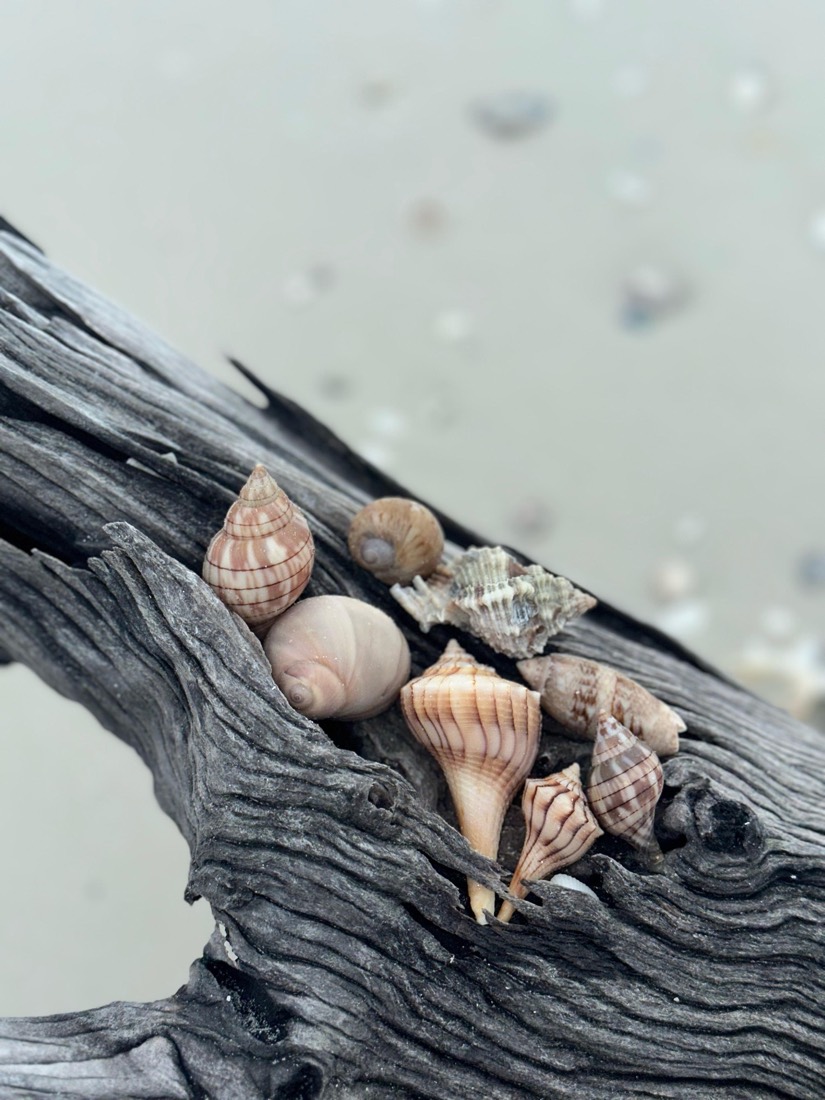
The mangrove periwinkle (Littoraria angulifera) is a small marine snail with an outsized personality for something you can hold between two fingers. Its shell rarely tops an inch, spun into a tight, elongated cone with a low spire and fine sculptured ribs running around each whorl. Color is where it gets fun — you’ll find them in gray-tan, buff, orange and occasional yellow, sometimes with faint darker spiral lines threading through the ridges, and no two mangrove tunnels seem to produce the exact same shade. It belongs to the periwinkle family, Littorinidae, a group of small marine snails built to handle life half in, half out of salt water. What sets this one apart from almost every other shell in our Seashell Guide is where you’ll actually find it: not tumbling in the surf or buried at the tideline, but clinging to bark, high and dry, a good arm’s length above the waterline on a red mangrove trunk. It’s an easy shell to mistake for a small nerite at a glance, but flip it over — a mangrove periwinkle seals its shell with a thin, horn-like trapdoor called an operculum, clamping shut to trap moisture whenever the tide, and the humidity, drop too low.
Why It Lives Above the Water
Most Gulf snails spend their whole lives submerged or getting rolled around in the wash. The mangrove periwinkle does the opposite. It’s a marine animal that has essentially moved onto dry land, breathing air through a lung-like mantle cavity instead of gills, and grazing quietly on the thin film of algae, lichen and fungus that coats mangrove bark and leaves. Watch one long enough and you’ll see the real trick: as the tide floods in around the prop roots, the snail climbs higher on the trunk to stay clear of the water, then eases back down as the tide falls and the grazing grounds re-open lower on the bark. It’s essentially a living tide gauge glued to a tree.
That habit is also where the old dockside folklore comes from — the idea that a wall of periwinkles bunched up high on the mangroves means a storm or a big blow is coming. It’s a fun bit of local color, but it’s honest to call it what it is: the snails aren’t forecasting weather, they’re reacting to water that’s already higher than usual, whether that’s a spring tide, an onshore wind, or the leading edge of a storm surge. They’re tracking the tide in real time, not predicting it.
Where to Spot Them Near Marco Island
You won’t need to go looking on a beach for this one — you need mangroves. The Ten Thousand Islands are laced with mangrove creeks and tunnels where red mangrove prop roots crowd right down to the waterline, and that’s exactly the habitat this snail needs. Rookery Bay National Estuarine Research Reserve, the backwaters around Goodland, and the quiet cuts near Caxambas Pass are all thick with them. Idle a boat slowly into a mangrove tunnel and look at the trunks and prop roots a foot or two above the current waterline — you’ll usually spot small clusters of gray-tan and orange dots dotting the bark, sometimes dozens on a single root system, thinning out the higher you look as the newest arrivals settle in behind the retreating tide.
This is exactly the kind of backwater scenery our dolphin-watching routes wind through on the way out to open water, so keep an eye on the mangrove edges as we idle past — the periwinkles are part of the same quiet ecosystem that draws the dolphins, wading birds and the occasional manatee into these protected creeks. It’s one of the small, easy-to-miss details that makes the Ten Thousand Islands feel more alive the slower you look, and one more reason to bring binoculars along with your camera.
Mangrove vs. Marsh Periwinkle
Mangrove periwinkles have a close cousin you’ll meet in a different setting: the marsh periwinkle (Littorina irrorata), which trades mangrove bark for the blades of smooth cordgrass and black needlerush in Gulf salt marshes. Both climb with the tide for the same reason — staying out of the water while they graze — but they’re sculpted for different perches. The marsh periwinkle has a slightly rounder, more ribbed shell built to grip a swaying grass blade, while the mangrove periwinkle’s shell is a touch more elongated, suited to a flat run of bark. If you’re paddling a marsh creek near the mainland and see snails riding grass stems instead of tree trunks, you’re most likely looking at the marsh species, not this one.
There’s also the coffee bean snail, another mangrove specialist that takes the same climbing strategy even further — it lives in the leaf litter well above the highest tides and barely gets wet at all. Between the three, you’ve got a whole vertical neighborhood of tide-tracking snails stacked up a single mangrove shoreline, each one dialed into a slightly different slice of the tide.
| Feature | Mangrove Periwinkle | Marsh Periwinkle |
|---|---|---|
| Scientific name | Littoraria angulifera | Littorina irrorata |
| Habitat | Red mangrove trunks & prop roots | Cordgrass & needlerush in salt marsh |
| Shell shape | Elongated, low spire, fine ribs | Rounder, more heavily ribbed |
| Where near Marco Island | Rookery Bay & Ten Thousand Islands mangrove tunnels | Mainland salt marsh creeks |
Can You Collect One?
Here’s the honest answer: most of the periwinkles you’ll see clinging to mangrove bark are alive and actively grazing, which means they’re off-limits to collect. Collier and Lee County protect live shells, and that includes small mangrove snails doing exactly what they’re built to do — leave them right where you found them, clinging to the tree. Picking a living periwinkle off the bark also pulls one more grazer out of a root system that depends on that grazing to keep algae in check.
If you want an empty mangrove periwinkle shell for your collection, look instead in the wrack line on nearby beaches, where tide and wind eventually wash empty shells out of the mangrove creeks and up onto sand at places like the Caxambas spits or the edges of Keewaydin. Those are the same boat-only stretches of sand our shelling tours land on, where empty periwinkles turn up mixed in with whelks, olives and the rest of a morning’s find. That’s the same empty-shells-only ethic that covers every find on the boat — our shelling etiquette guide walks through exactly what’s fair game and what isn’t, whether you’re eyeing a periwinkle, a whelk, or anything in between.