
📖 At a glance
- Empty shells
- Legal to collect on Florida beaches
- Live shells
- Banned in Collier & Lee Counties
- Sand dollars & starfish
- No live take, period
- Lee exceptions
- A few live clams/oysters with a license
- Collier (Marco/Naples)
- Empty-only, no live exceptions
Empty shells: collect away
Here's the part that puts visitors at ease — an empty seashell is just vacated calcium, and picking it up off the sand to take home is perfectly legal across Florida. The whelks, conchs, olives, cones and scallops you'll find on the wrack line are yours to keep, clean and display, as long as nothing's living inside. That's the whole point of our shelling tours: we run to the boat-only islands where empties pile up faster than anyone can pick them, so you fill a bag legally and easily.
Live shells, sand dollars and starfish
The hard rule is about life. In Collier and Lee Counties — which cover Marco Island, Naples, Sanibel and Fort Myers — it is illegal to collect live shells. The same protection extends to live sand dollars and live sea stars, which simply may not be taken. The reason is conservation: these waters were getting stripped of living animals, so local ordinances drew a clear line. That's why our captains teach the live-versus-empty check on every trip — an operculum, a clamped clam, or any movement means it goes back.
| Item | Empty | Live |
|---|---|---|
| Seashells (whelk, conch, etc.) | Legal to collect | Banned in Collier & Lee |
| Sand dollars | Legal if already dead/bleached | Banned — leave them |
| Starfish / sea stars | Generally leave them | Banned — leave them |
| Coquina, clams, oysters (Lee) | — | Limited live take with a license |
Collier vs. Lee: the local difference
The two counties aren't identical. Lee County, home of famously shell-rich Sanibel, allows a small set of live exceptions — species like coquina, oysters, hard clams and sunray venus may be harvested in limited numbers if you hold a Florida saltwater fishing license. Collier County, where Marco Island and Naples sit, is stricter: it's empty-only with no live-shelling carve-outs. We won't quote you specific bag numbers because those can change and vary by species — the safe, honest default is to treat every living thing as off-limits and check current FWC and county guidance for any live harvest.
How to stay legal and feel good about it
The simplest rule covers you everywhere: take empties only. Do the quick check, leave anything alive, and you'll never accidentally break a law or pocket a smelly future problem. It's also why the islands we visit stay so productive — every live snail returned is tomorrow's empty shell. Want the no-stress version where someone reads the water and the rules for you? That's exactly what a guided shelling tour is for.
From the Helm: The empty-only rule we run before anyone steps onto Kice
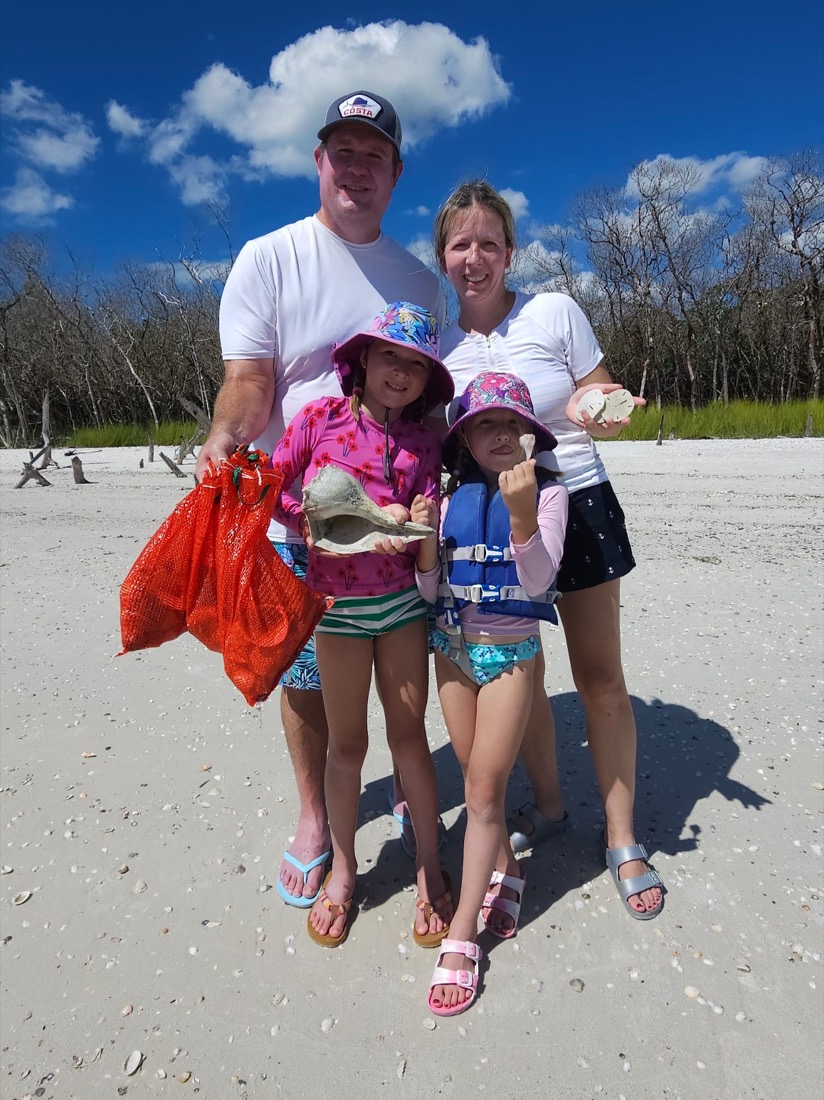
Before we ever nose the bow onto Kice Island, one of our mates has already handed out the shelling mesh bags and laid down the rule that matters out here — empty shells only, and anything still lived-in goes straight back over the rail. That one rule is the whole trick. It means nobody has to guess mid-hunt whether something belongs in a pocket or back in the water; if it's alive, it goes back over the rail, full stop, no debate on the sand.
We keep the dockside briefing to under a minute, because a long lecture on a rocking boat never sticks the way a quick, physical rule does. The mistake we correct most out there isn't malice, it's momentum: a guest bends for a fat lightning whelk half-buried at dead low, feels how heavy it is, and assumes weight just means "full of sand." We ask them to tip it opening-down first, right there before it clears the rail.
If a trapdoor-like operculum is sealed across the mouth, that whelk is somebody's house, and we walk it back to the wrack line together instead of dropping it in a bag. Out at Kice's south sandbar we'll often crouch down with a guest over something wriggling in the shallows so we can look it over together, without fingers getting pinched or the animal getting stressed for no reason.
Crouching down like that doubles as a fast way to show a kid what "still occupied" looks like from a few feet off, which teaches the habit quicker than any sign at the dock ever could. Collier and Lee draw slightly different lines on a handful of live species, and we get asked about the difference constantly once someone's spotted a sign on the way in. Our answer at the rail stays simple on purpose.
Empty only, every time, no county-by-county list anyone has to memorize mid-hunt. It's an easier rule to hand a nine-year-old than a legal footnote, and it's the one habit that keeps our shelling grounds worth coming back to season after season rather than picked thin. For the deeper version of the trapdoor test, our live shell vs. empty guide walks through it species by species.
Before anyone climbs back aboard at the end of a stop, we run that same check in reverse. Bags get emptied out together on the deck, and anything still carrying a shred of doubt gets one more look before it's called good. It isn't about catching someone doing wrong — guests are almost always thrilled to keep the whole haul. It's just the loop closing itself, because the easiest way to keep a rule simple is to check it at both ends of a stop, not just the one at the start.
Out on one of our shelling tours, though, you get the short version live, at the rail, with an actual whelk in your hand — which is the version that actually sticks once you're home.
🧭 Captain’s call
- Our rule
- Empty shells only — anything still lived-in goes straight back over the rail
- The check
- Tip it opening-down before it ever clears the rail
- Briefed
- At the bow, before anyone steps off onto Kice