
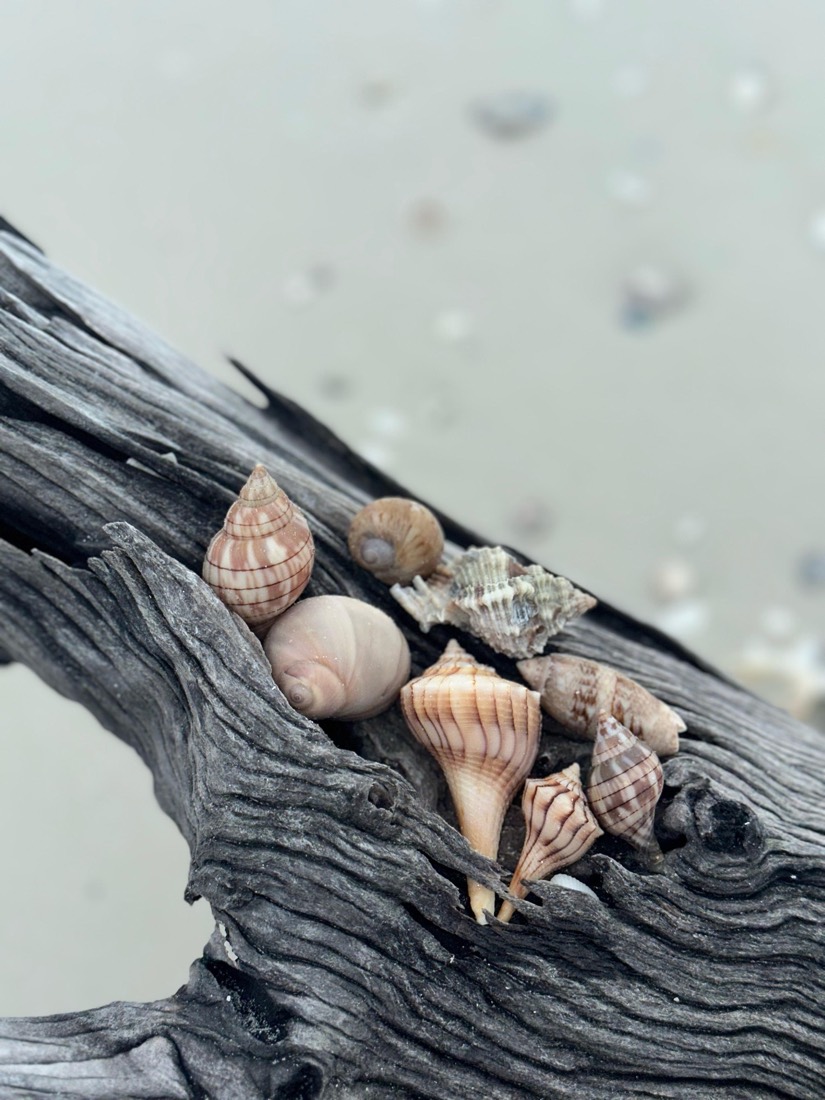
🐚 At a glance
- What it is
- A trapdoor grown from the top of a sea snail’s foot
- Material
- Corneous (horny, flexible) in whelks & conchs; calcified (hard, polished) in turbans
- The “cat’s eye”
- The chestnut turban’s calcified operculum, often found loose in the drift
- Occupied test
- Door sealed shut over the opening means a live animal — put it back
- Who has one
- Gastropods (snails) only — bivalves like scallops have none
- Where to look
- Wrack lines on Keewaydin, Kice & the Caxambas spits
What exactly is an operculum?
Every sea snail hauls its own front door wherever it goes. The operculum is a plate of shell material grown right out of the top of the snail’s foot — the fleshy part it uses to crawl. When the animal senses trouble, a hungry blue crab, a dropping tide, the beat of a boat prop overhead, it draws itself all the way back inside its shell and pulls that plate flush against the opening like a hatch closing behind a diver. The fit is close enough to keep out most small predators and to slow the shell from drying out when the tide leaves it stranded on a Keewaydin sandbar at noon. It’s a small piece of anatomy, but it does a lot of quiet work, and it’s one of the first things our captains teach kids to check for once they’ve got a handful of shells on deck.
The operculum is not a separate creature or a random scrap — it grows in rings as the snail grows, the same way the shell itself does, so a bigger whelk carries a bigger door. If you want the full rundown of every part of a snail’s shell, from the aperture to the columella, our seashell anatomy glossary covers the whole animal. This page is just about the trapdoor, because it’s one of the questions we get asked most on the boat.
Horny vs. hard: two kinds of trapdoors
Not every operculum is built the same, and the material tells you a lot about the snail that grew it. Whelks and conchs — think lightning whelk, horse conch, fighting conch — carry a corneous operculum: thin, leathery, amber to brown, almost like a fingernail. It flexes, it’s lightweight, and on a fresh find it’s often smaller than the opening it’s meant to guard, since these snails rely more on speed and a heavy shell than an airtight seal. The fighting conch takes it a step further: its operculum comes to a sharp, sickle-shaped point that the animal uses less as a door and more as a tool, digging into the sand to flip itself upright or lever along the bottom.
Turban shells play a different game. Their operculum is calcareous — hard, thick, and stone-like, built from the same calcium carbonate as the shell itself. It’s heavier, rounder, and polished almost like a river stone. That difference in material is exactly why one type of shell hash you find in the wrack line is full of loose calcified opercula long after every trace of the shell that made them is gone.
The chestnut turban's prized cat’s eye
This is the operculum every collector on our boat asks about by name, even if they don’t know the word “operculum” yet. The chestnut turban grows a round, glassy, calcified door with a creamy white face swirled through with a brown spiral — and out of the shell, sitting loose in your palm, it looks uncannily like an eye. Collectors and jewelry makers call it a cat’s eye (sometimes a shiva eye), and it’s one of the only “shells” plenty of casual beachcombers pick up without ever finding the turban that made it.
The reason cat’s eyes turn up loose so often comes down to that same hard material. A turban’s actual shell is relatively thin for its size and gets ground down or eaten fast once the animal inside dies. The calcified operculum is denser and tougher, so it keeps rolling through the surf and drift long after its shell is sand. Most of what you’ll find on a beach walk isn’t attached to anything — it’s a lone cat’s eye that separated from its turban months or years earlier.
Is the shell empty? The operculum test
Here’s the part that matters most if you’re collecting on a Sand Dollar tour: a shell with its operculum pulled shut is occupied. That’s not a maybe. If you pick up a whelk, conch, or turban and the door is sealed tight against the opening, there’s a living animal inside, and Collier and Lee County law requires you to put it back exactly where you found it. We cover the full rundown of what “empty” really means, including shells that look empty but aren’t, in our live shell vs. empty shell guide — the operculum check is step one.
One mix-up worth knowing: a missing operculum doesn’t automatically mean empty. The plate can fall off and drift away on its own after the animal dies, so always look and, honestly, give it a sniff before you decide a shell is fair game. And watch for hermit crabs, which move into empty gastropod shells and use an oversized claw to plug the opening. That claw can look like an operculum from a few feet away, but it belongs to a very different animal, and it’ll scurry off rather than stay sealed shut.
Which local shells leave findable opercula
Only gastropods — single-shelled snails — grow an operculum at all. Bivalves like scallops, cockles, and lucines build two hinged valves instead and never needed a separate door. That single fact explains a lot of what you’ll notice in the drift on a shelling tour out to Keewaydin, Kice, and the Caxambas spits: opercula show up mixed in with whelk shells, conch shells, and turban shells, and never with the clams and scallops piled around them. Once you start looking for them on purpose, you’ll notice how often a lone operculum outnumbers the whole shells nearby, a small reminder of how much more life has passed through a beach than what’s sitting on top of the sand that morning.
| Shell | Operculum type | What to look for |
|---|---|---|
| Lightning whelk & horse conch | Corneous (horny) | Thin, oval, amber-brown; flexible and lightweight |
| Fighting conch | Corneous, claw-shaped | Sharp sickle point, used for digging and flipping |
| Chestnut turban | Calcified (hard) | Round, glossy, cream face with a brown spiral — the “cat’s eye” |
| Moon snail | Corneous, thin | Small, tan, paper-thin disc; easy to miss |
| Clams, scallops, cockles (bivalves) | None | Two hinged valves instead — no trapdoor to find |
That’s part of what makes a morning of shelling with us more than a walk on the sand. Once you know to check for the operculum, you’re not just collecting shells, you’re reading which ones are still somebody’s home and which ones are fair to pocket. Our Seashell Guide covers the rest of the identification questions shellers bring us, from spiral counts to color patterns, so you can walk the wrack line knowing exactly what you’re looking at.