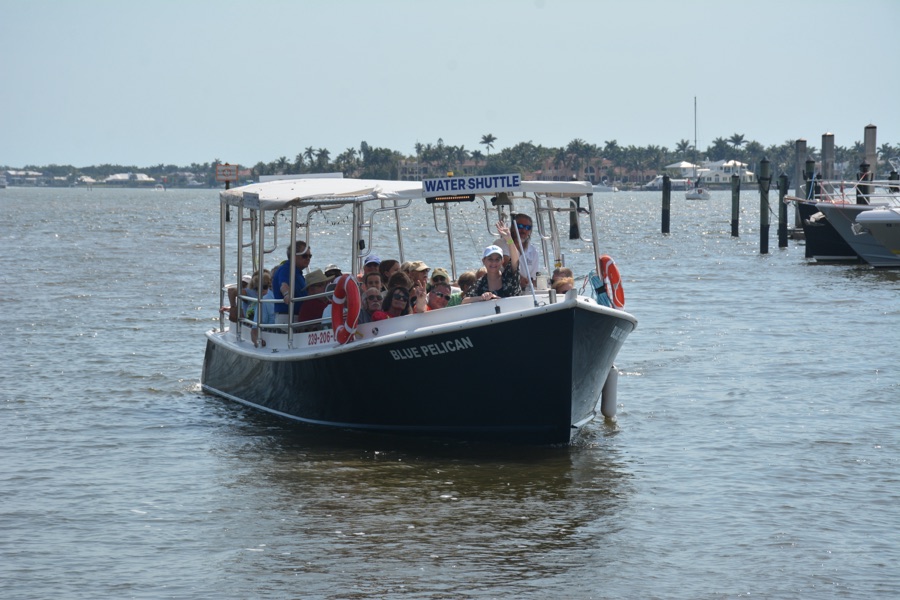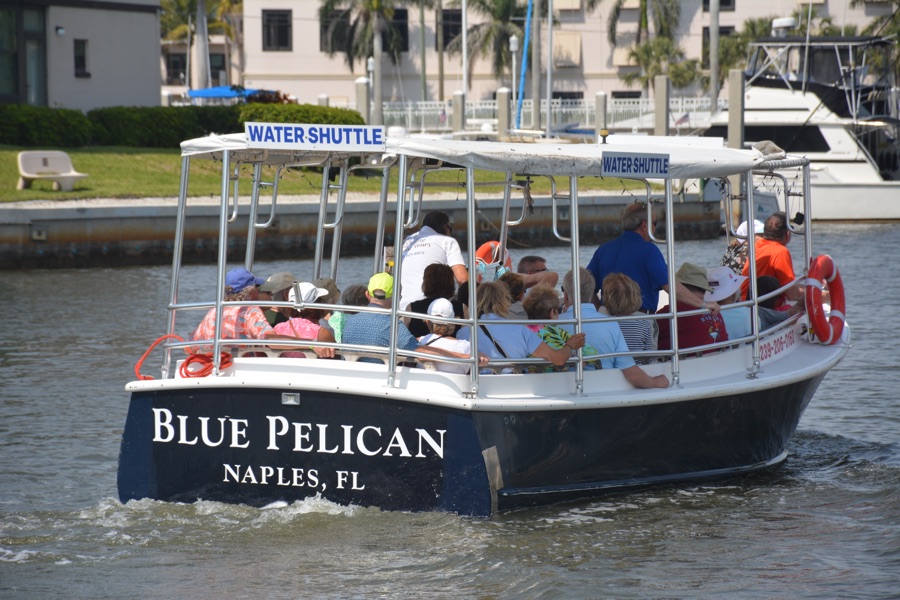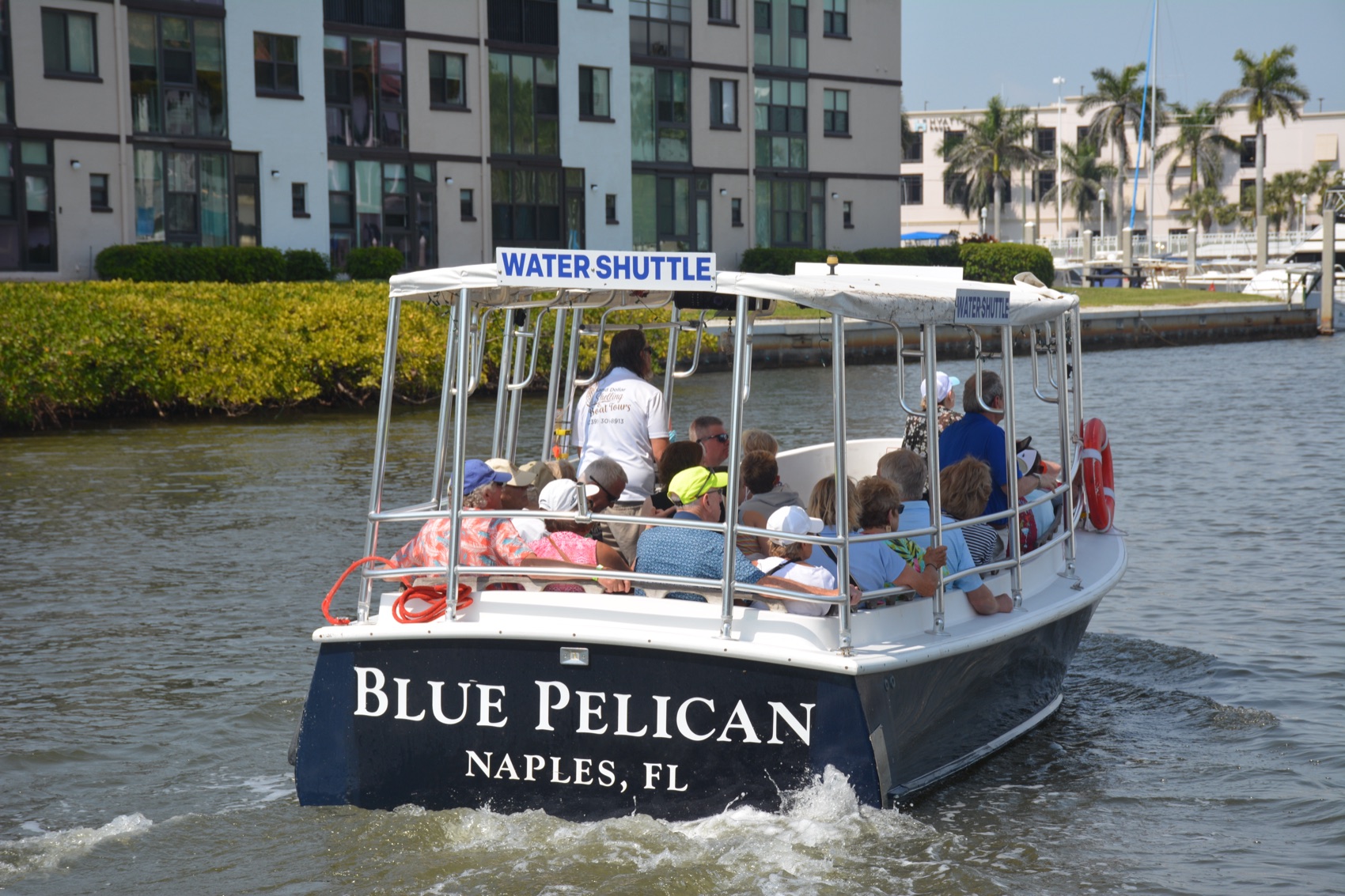
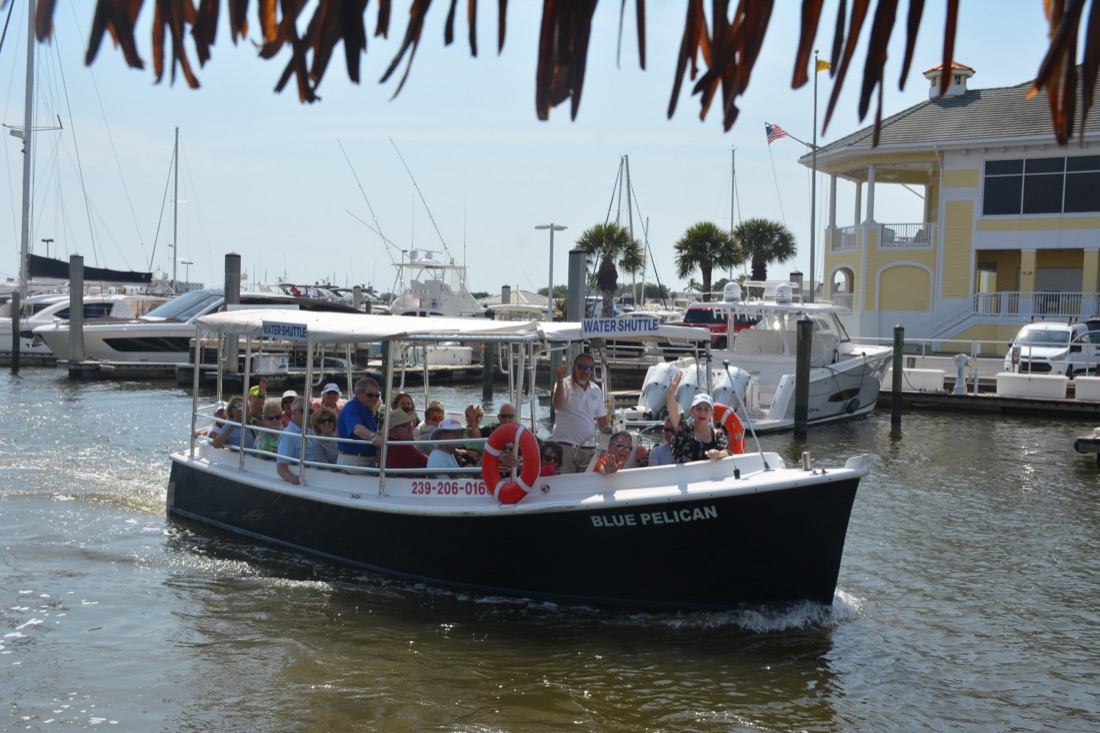
Before every Naples Bay run, our captains check which stretch of the bay is holding a posted manatee zone that morning, since the idle-speed water shifts here more than people expect and isn’t marked the same way twice a year. Running the shuttle at a walking pace through those reaches costs us a few extra minutes on every crossing, and we build that time into the route from the start rather than trying to make it up once we’re back in open water. It’s the one rule that never bends, whatever else the wind or the tide is doing that day.
Outside the idle zones, the route through Naples Bay is really a string of short crossings between one dock and the next, and each one gets read a little differently. The stretch past Naples City Dock stays sheltered enough that we can hold a good clip, while the open water across the bay’s wider stretch picks up a chop of its own once the afternoon sea breeze fills in, usually by early-to-mid afternoon. We’ll shift a crossing earlier in the day for guests who’d rather skip that bump than time it around lunch.
From the helm, the tell that a crossing is about to get bumpy isn’t the wind on your face so much as the color of the water ahead — a flat bay turns a darker, ruffled grey a few minutes before the chop actually reaches you, and that’s the cue we use to decide whether to push through or hold at the dock a little longer. Guests rarely see it coming; we’re usually already easing the throttle back by the time anyone at the rail notices the boat’s found some motion.
Docking itself changes with the tide more than most guests realize, since several of the bay’s stops sit on fixed docks rather than floats, and a low tide can put a good step down from the gunwale instead of a level one. We’ll call that out before anyone stands up, and on the lowest tides we’ll swap a stop to a floating dock nearby rather than ask someone in dress shoes to manage a big step down. It’s a small adjustment, but it’s the kind that keeps a shuttle ride feeling as easy as it looks from the dock.
Naples Bay is small enough to know well, but the tide, the wind and the day’s dock list still change the crossing every time we run it. We treat every shuttle with the same care we’d give a private charter out toward the islands — check conditions, then set the route — just compressed into a ride that’s over almost as soon as it starts.