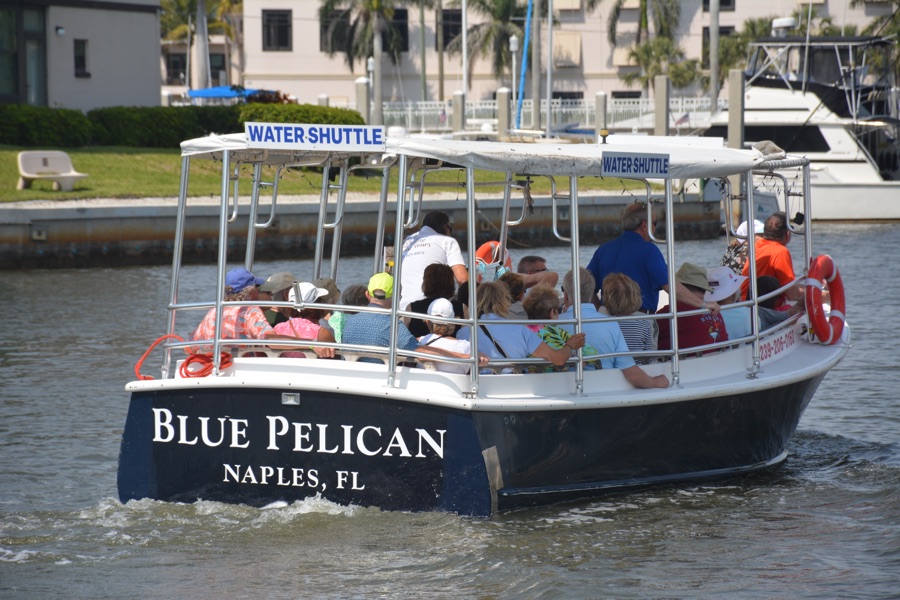
The trickiest leg of a restaurant run usually isn’t the ride over, it’s the ride back, once dinner’s run long and the light’s gone and the tide’s dropped an hour or two from where it sat at pickup. We’ll walk the dock before anyone sits down to eat and take a mental note of the water level against the pilings, so there’s no guessing later whether a float that was level at six is going to sit lower against the gunwale by nine. Guests rarely think about the tide over dinner; we do it for them.
Running after dark changes the read, too. Channel markers that are obvious in daylight take more attention to pick out at night, and a boat that felt plenty fast on the way over usually comes back at a gentler pace once we’ve lost the light. We’ll idle a little longer past the docks and marinas on a night return, not because the water’s any different, just because judging distance to a piling is harder by running lights than by daylight, and there’s no reason to rush the last few hundred feet of anyone’s evening.
Landing at a restaurant’s dock has its own quirks depending on whether it floats or sits fixed to pilings, and we’ll check that before we ever leave our own dock so there’s no surprise pulling in with a table of guests dressed for dinner. A floating dock forgives a changing tide; a fixed one can leave a step of a foot or more by the time you’re heading back, and that’s the kind of detail that decides whether we tie up bow-first or stern-to before anyone’s even ordered a drink.
Wind matters more on the return than the way over, since a lot of groups linger until the evening breeze has had time to build, and a beam wind crossing open water can turn a calm ride out into a choppier one heading back. We’ll swap sides of the boat for the return crossing if it means keeping spray off the rail, and we’d rather guests notice we asked them to move than notice the spray landing on a nice shirt.
A restaurant run is really two trips disguised as one — the easy crossing out while the light’s still good, and a return that takes more reading once the tide’s dropped and the wind’s shifted. We give the return the same attention we’d put into a sunset cruise, because a good dinner deserves a ride home that matches it. For a bigger table heading out together, our group transportation works the same way, just with more people to land safely.