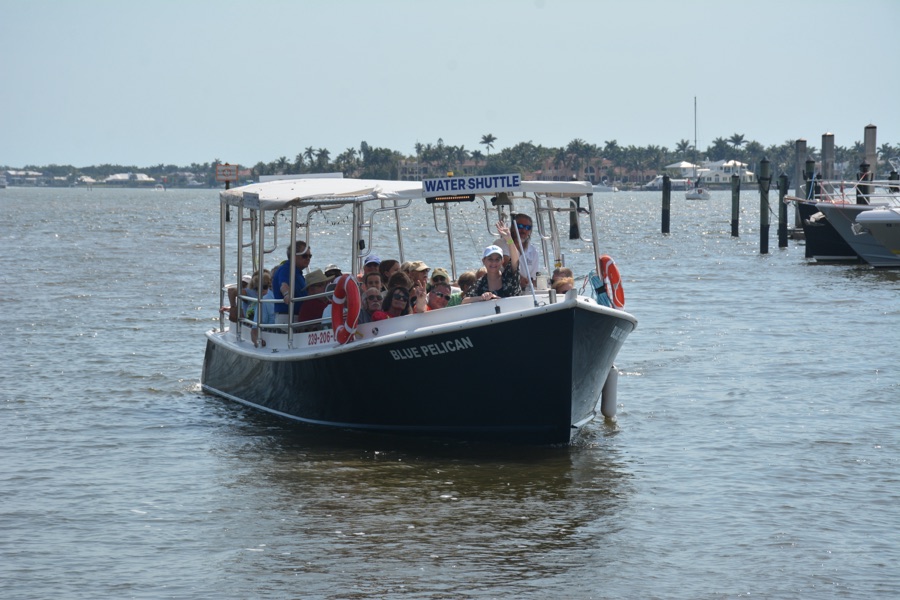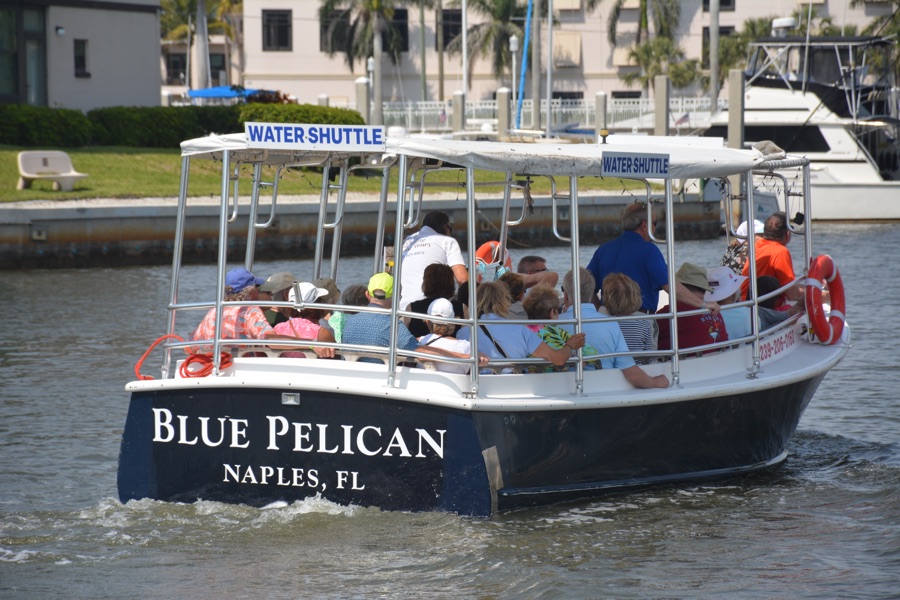
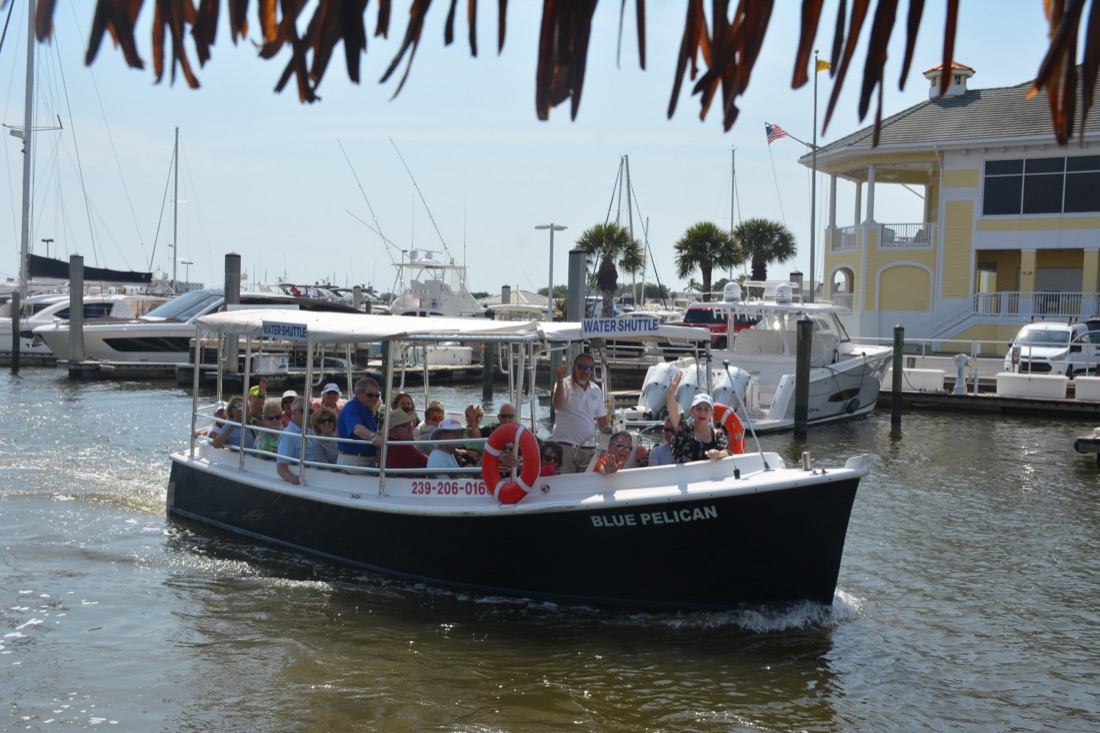
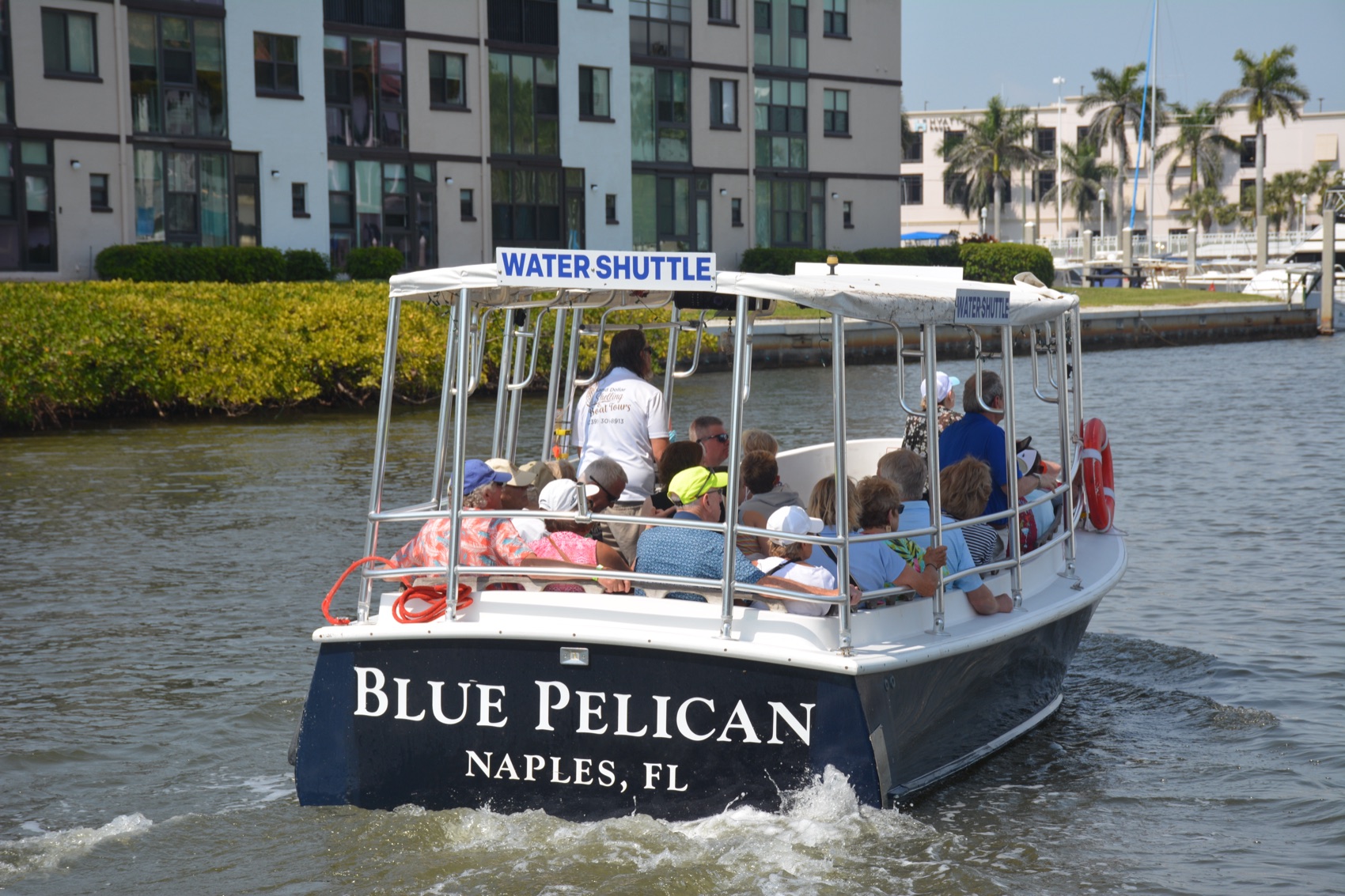
Before we take a dock-to-dock booking, our captains check the tide chart before the calendar. The fixed bridge downtown doesn’t open for anyone, so the water level under it is the one variable that decides whether a run is a straight shot or a wait. We favor the lower half of the tide for that stretch, when the extra clearance lets us hold a steady pace through instead of throttling back and timing the swell that builds under a low span. That call gets made an hour before pickup, and it’s the reason a fifteen-minute hop across the bay stays fifteen minutes instead of stretching to thirty under a bridge that won’t budge for anyone.
Once we’re through, the run opens up along the bay’s marked channel, past the docks and seawalls that line the eastern shore, and we hold that lane rather than cut corners across the flats that flank it on both sides. Those flats look like open water at a glance, but they thin out fast outside the markers, and a shortcut that saves two minutes isn’t worth putting a hull on sand. We’d rather run the long way at a good clip than the short way at a crawl.
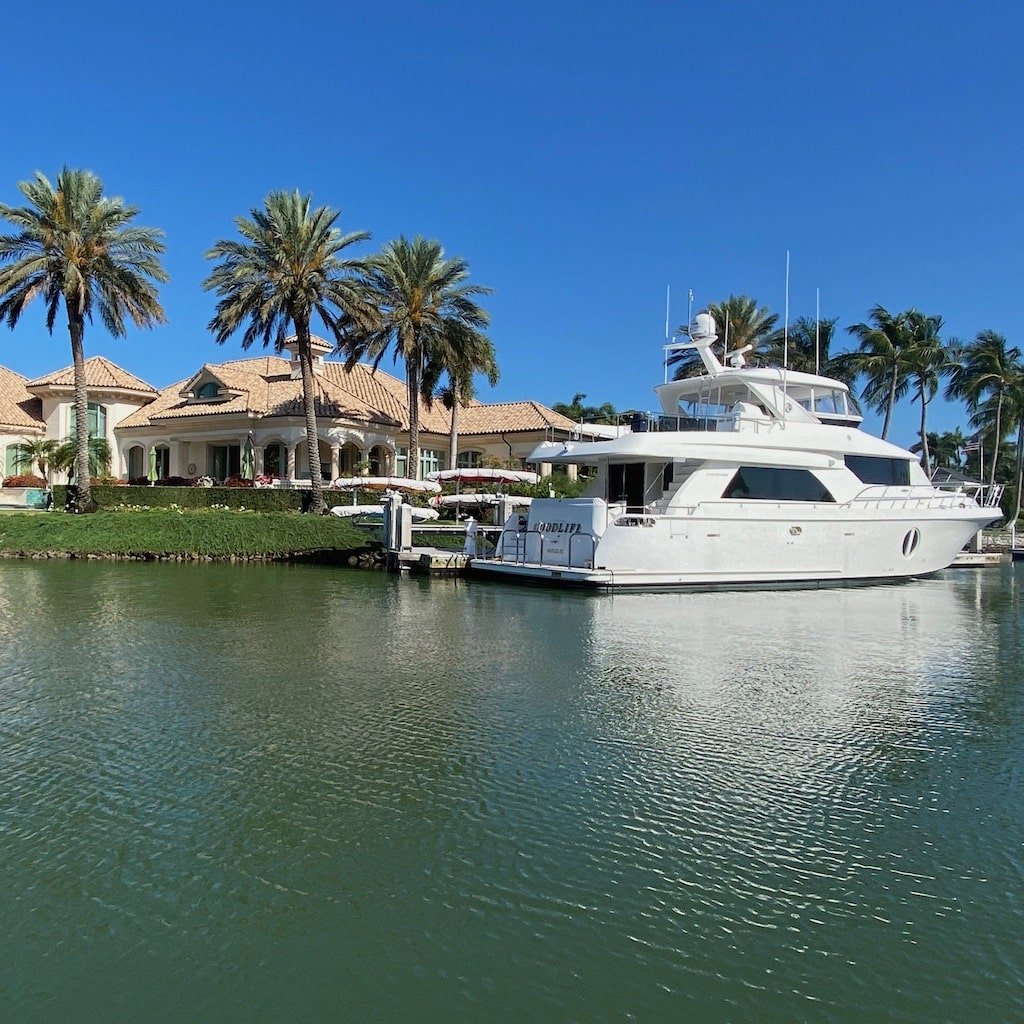
Multiple-stop runs change the math again. Dropping one party at a restaurant dock and another at a marina slip means timing each landing against how that particular dock sits — floating docks forgive a swinging tide, fixed docks don’t, and we’ll idle longer at a fixed dock on a falling tide than we would tying up to a float. Guests rarely clock the extra minute we spend lining up a landing — they just notice whether they stepped off clean or had to time a jump against a moving deck.
A crosswind across the bay’s widest open reach is the other read we do on the fly, since a beam wind there can push the bow off the marked lane faster than it looks from the dock. We’ll crab the bow up into it rather than fight it broadside, which keeps the ride flat for anyone standing at the rail with a drink instead of braced against it. It’s the same read we’d give a private water shuttle run, just repeated every time a new set of docks is on the list.
A dock-to-dock ride is short by design, but the routing behind it isn’t casual — tide, bridge clearance, wind and the dock itself all get read before the lines come off the cleat. That’s what keeps a quick hop across the bay feeling quick, instead of turning into a boat ride you have to think about, and it’s the standard we hold for every water shuttle run out of Naples Bay.