
🌊 At a glance
- Why it's green
- Shallow shelf water scatters green light off suspended sand & plankton
- Why not blue
- True blue needs deep, clear, low-sediment water — that starts many miles offshore
- Where to watch it change
- Running Gordon Pass toward Keewaydin: brown backwater → green nearshore → bluer offshore
- The brown water
- A separate tannin effect from mangrove leaf runoff, not the same process as the green Gulf
- Best viewing conditions
- Calm, sunny days without recent heavy rain or a plankton bloom
Why the Gulf Reads Green Here, Not Caribbean Blue
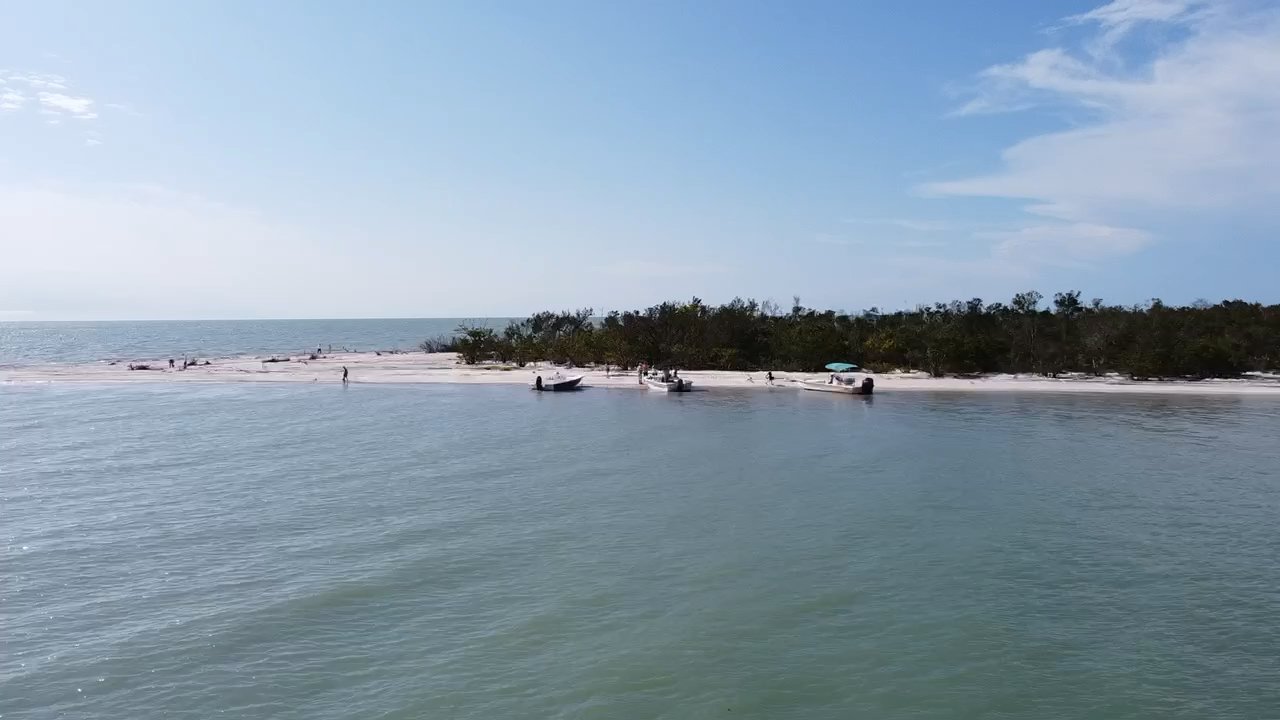
Ask anyone who's only seen postcards of the Bahamas and they'll tell you the Gulf of Mexico is supposed to look like that impossible turquoise-blue. Run out from Marco Island on a clear afternoon, though, and you'll see something different: a deep, living emerald-green that holds most of the way to the horizon. That's not a bad day for water clarity — that's just what healthy Gulf water over the West Florida Shelf looks like. The shelf is a wide, shallow shoulder of seafloor running for miles off Southwest Florida before the bottom finally drops away, and shallow water over a sandy bottom is a green-water recipe almost everywhere it happens, not some local quirk. The Bahamas and the far Caribbean get their blue precisely because they don't have a shelf like ours — deep water sits close to shore there, while here you can run for a long while and still be riding shallow, sandy bottom the whole time.
How Water Actually Gets Its Color
Clear water on its own has almost no color — it's what's suspended and dissolved in it that decides what you actually see from the boat. Sunlight carries every color at once, and when it hits the Gulf, the water and everything floating in it absorb some wavelengths and scatter others back up to your eye. Deep, nutrient-poor ocean water absorbs red and green light quickly with depth and scatters blue back toward the surface, which is why the open Atlantic and the far Caribbean read blue. Our water over the shelf carries three things that push the color toward green instead of blue: fine suspended sand kicked up off a shallow bottom, everyday phytoplankton (the tiny plant plankton that forms the base of the whole food chain out here, not an algae bloom), and dissolved organic matter leaching off the mangroves. All three scatter green wavelengths back at you before sunlight ever gets deep enough for the water to read blue. It's the same reason a shallow, sandy swimming pool looks Caribbean-turquoise near the steps and darker toward the deep end — just at the scale of an entire coastline instead of forty feet of concrete.
Watching the Color Change Through Gordon Pass
The best seat for this whole lesson is the bow rail. Idle out of the backwater through Gordon Pass toward Keewaydin Island on one of our shelling tours and you can watch the color shift in real time. The backwater behind you runs tannin-brown, tea-dark from mangrove leaves steeping in still, shallow water for months at a stretch. Cross under the bridge and out through the pass, and within a few hundred yards that brown gives way to a lighter, brighter green as sandy Gulf water mixes in and the tannins dilute. Keep running and the green holds — past Sand Dollar Island, along Kice, out toward the barrier islands — because you're still riding the same shallow shelf the entire way. It isn't until you're well offshore, past where a typical day trip needs to go, that the bottom finally drops out from under you and the water goes that deep, glassy blue people picture when they hear "Gulf of Mexico." Most days, you never need to chase that line to have a great trip — the green water close in is exactly where the shelling, the dolphin sightings and the fishing happen.
Green Gulf vs. Brown Backwater: What's the Difference?
It's easy to lump all the "not blue" water into one complaint, but the green Gulf and the brown backwater are two completely different processes, and mixing them up is one of the most common water-color questions we hear on the boat. The brown, tea-colored water in the mangrove creeks and bays behind Marco Island and Goodland is a tannin stain — the same basic chemistry that turns a cup of tea brown, just from mangrove and cypress leaves steeping in still, shallow backwater instead of a teapot. We break that process down in full over on our page about why the backwater looks brown. The green Gulf, on the other hand, is a light-scattering effect from suspended sand and plankton in shallow, moving water — nothing is staining it, the water is simply bouncing green wavelengths back at your eye. Here's the side-by-side so the difference is easy to keep straight:
| Zone | Typical color | What causes it | Where you'll see it |
|---|---|---|---|
| Mangrove backwater | Tea-brown | Tannins from decaying mangrove leaves | Ten Thousand Islands creeks, Rookery Bay |
| Nearshore Gulf | Emerald-green | Shallow shelf: suspended sand & plankton scatter green light | Marco Island beaches out several miles |
| Shelf edge | Green-blue | Water deepens, sediment thins out | Well offshore, past typical day-trip range |
| Deep Gulf | True blue | Deep, clear, low-nutrient water absorbs red & green, reflects blue | Far offshore, beyond the shelf |
When (and Where) Does It Actually Turn Blue?
Color isn't static day to day, either. A stretch of calm, sunny weather with no fresh rain runoff gives you the clearest, most vivid green-to-blue gradient, because there's less loose sediment stirred up and less tannin water sliding out of the backwater to mute things. A few days of onshore wind and chop stirs the sandy bottom back into the water column and dulls the green toward a milkier jade. Heavy rain flushes tannin water and nutrients out of the Ten Thousand Islands and can push a brownish tinge farther out into water that's normally green. And every so often a bloom of a different kind of plankton takes over and tints the water rusty or reddish instead — a separate event entirely from the everyday green you're asking about here. We track the fuller seasonal rhythm of these swings, including which stretches usually run clearest, on water clarity by season. And if you're curious why this whole shelf stays shallow and green instead of dropping into deep blue close to shore the way some coastlines do, that comes down to the geology we cover on why the Gulf here runs warm and shallow.
Does the Green Water Actually Matter for Your Trip?
It does, in small, useful ways. Green, sandy-bottom water is usually easier to sight fish and spot rays, turtles and dolphin fins moving under the surface than the tannin-dark backwater, simply because more light bounces back up instead of getting absorbed by tannins on the way down. It's also exactly the water color that makes shelling grounds like Keewaydin and Kice photograph so well — that saturated green against white sand and blue sky is the postcard shot, not a sign anything's off. And if you've ever wondered whether murkier or clearer water changes what you'll actually find shelling on a given morning, the honest answer is that it changes visibility, not what's washed up — a slightly less clear morning isn't a reason to expect fewer shells on the sand.
None of this is trivia you need to memorize before you come see us — it's just good to know why the photos you take out here look the way they do. If you want to watch the whole color story unfold in one trip, a sunset run is the best classroom on the water: the green of the day gives way to gold, then rose, then the deep blue-black of night settling over the Ten Thousand Islands, and our sunset cruises exist for exactly that transition. For the rest of the tides-and-weather questions that come with planning a trip out here, our full Water & Weather hub covers everything from tide timing to wind and rain.