
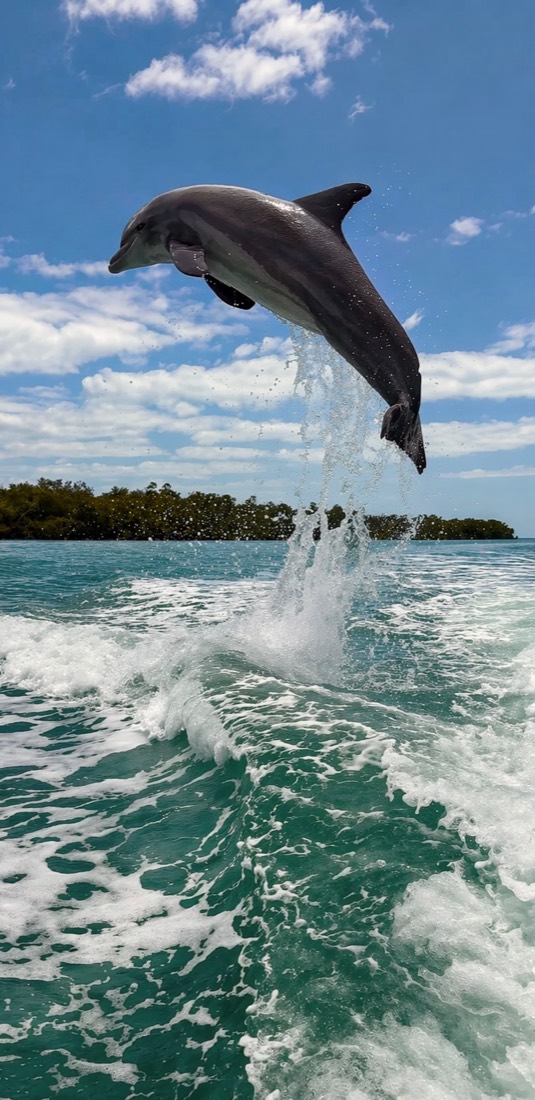
🐬 At a glance
- Species
- American alligator (Alligator mississippiensis)
- Where
- Freshwater ponds, canals & upper tidal creeks behind Marco & Goodland; the freshwater edge of the Ten Thousand Islands
- Why not the beach
- No functioning salt glands — they cannot handle the Gulf’s salty passes & open water the way dolphins do
- Best odds
- Brackish creek mouths & freshwater backwater ponds, especially on calm mornings
- On the water
- Never guaranteed; dolphins are the realistic daily sighting on our Ten Thousand Islands trips
Will you see an alligator on your Marco Island boat tour?
Honestly? Probably not on a straight dolphin or shelling run. Those tours work the Gulf side, the barrier islands and the open passes, where the water runs full salt and the wildlife you can realistically expect is bottlenose dolphins, not gators. If an alligator sighting is genuinely on your bucket list, your better bet is a trip that pushes farther back into the freshwater seam, like our Ten Thousand Islands charters, which work the brackish creek mouths behind Goodland where fresh water and salt water actually meet. Even there, we treat a gator sighting as a bonus — never a promise. Our captains have run this water long enough to know these animals move on their own schedule, not ours.
It is also worth knowing before you go: American alligators are shy around boats and people by nature, and no reputable captain is going to idle in close for a better photo. For the full rundown of what actually lives out here, from dolphins to wading birds, browse our Wildlife Guide before you book.
Where alligators actually live here
American alligators are a freshwater animal at heart, and Marco Island’s geography sorts them out neatly. You will find them in the residential lakes and golf-course lagoons tucked behind the island, in the freshwater canals off Collier Boulevard, and, more to the point for a boat tour, in the upper tidal creeks and interior ponds where the Ten Thousand Islands back up into the freshwater drainage of the greater Everglades system. Inland freshwater communities like Port of the Islands, along the Tamiami Trail edge toward Everglades City, are well known locally as reliable alligator country for exactly this reason: full-time fresh water, quiet canals and almost no salt influence at all.
That freshwater edge, well inland of the barrier islands, is real alligator territory. Adult alligators can grow past ten feet, and spring is when you are most likely to hear one bellow from a marsh edge as mating season gets underway, followed by females building low mound nests of mud and vegetation along quiet freshwater banks through early summer. The closer you get to Goodland and the open Gulf, the saltier the water gets, and the fewer gators you will find, full stop. That is not us being coy about a bad-luck species — it is just where the fresh water runs out.
Why alligators skip the salty Gulf
Here’s the piece of biology that explains everything: alligators do not have functioning salt glands. Crocodiles do — a pair of glands near the tongue that let them excrete excess salt and tolerate brackish and full-strength salt water for extended stretches. An alligator can cross a brackish creek or ride out a short stint in salty water, but it cannot live there the way it lives in a freshwater pond, and prolonged exposure to salt water is genuinely hard on it.
That is exactly why the barrier islands, the open passes and the beaches out front belong to dolphins, not gators — the water out there is simply too salty, too often, for an alligator to call home. It is also why a rare gator seen swimming near a dock or a beach access tends to make local news: it is an animal that has wandered out of its element for a little while, not a resident that lives there. It is a good reminder to give any wild alligator plenty of room, keep pets leashed near freshwater canals, and never feed one, on the water or off.
Alligator or crocodile? A fast field check
Southwest Florida is genuinely unusual on this point: the greater Ten Thousand Islands and Everglades region is one of the only places on Earth where American alligators and American crocodiles share the same general water. Alligators dominate the freshwater side, crocodiles the brackish and salty mangrove coast farther south toward Everglades City, and there is overlap right where the two zones blur, which is part of why a confident, fast field check matters more here than almost anywhere else. Snout shape is the quickest tell: alligators carry a broad, rounded snout, while crocodiles run narrower and more tapered to a point. Color helps too — alligators read nearly black, crocodiles a lighter olive-gray. If you want the full breakdown, including the visible-tooth trick that works even from a moving boat, our alligator vs. crocodile guide covers every difference feature by feature, and our American crocodile page digs into that rarer, more salt-tolerant cousin on its own.
| Water type | What’s actually there | Why |
|---|---|---|
| Freshwater ponds, lakes & canals | American alligators | Alligators are a true freshwater species and thrive here full-time |
| Upper tidal creeks & brackish backwaters | Alligators regularly; crocodiles rarely, farther south | The freshwater-to-saltwater seam; alligators can tolerate it briefly |
| Mangrove-lined salt creeks near the Everglades boundary | American crocodiles (uncommon) | Crocodiles have salt glands and prefer this brackish-to-salty zone |
| Open Gulf passes & barrier-island beaches | Bottlenose dolphins, not gators or crocs | Full-strength salt water is outside what either reptile tolerates long-term |
Best odds for an actual sighting
If you want the best realistic shot, book a trip that actually reaches the freshwater seam instead of hoping for a lucky pass on the open Gulf. Our captains usually work the upper creek mouths and backwater ponds on the way into the Ten Thousand Islands during our Ten Thousand Islands charters, especially on calm, quieter mornings when the water lies flat and a basking gator is easier to pick out along a mangrove bank.
Even then, we frame it exactly the way we would want it framed for us: a possible bonus, never a promise, and never a reason to build a whole trip around one animal. What you can count on, water and season allowing, is dolphins working the passes on nearly every dolphin tour we run. They are the realistic daily show out here, while the alligators stay tucked into their own freshwater corner of the map, waiting for the rare, patient visitor curious enough to go looking for them. Either way, the honest version of this trip beats the brochure version every time.