
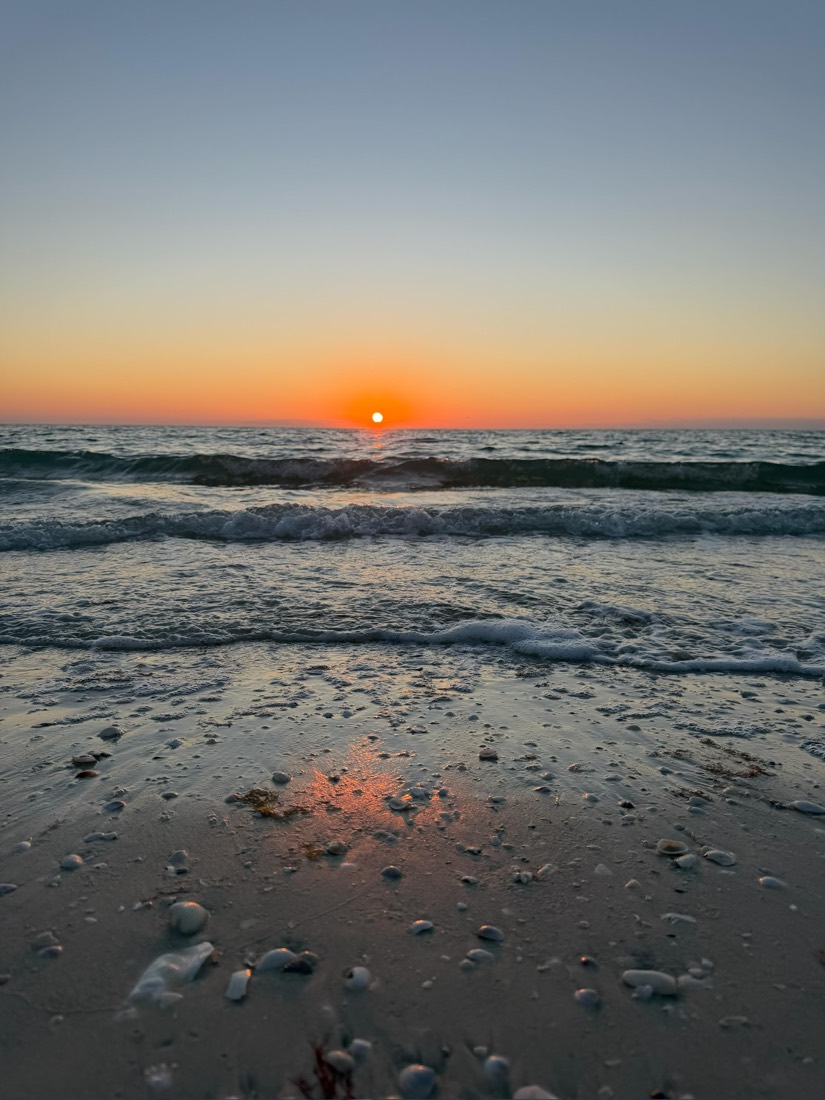
Why the best shelling beaches are boat-only
Shelling math is simple: the harder a beach is to reach, the better the shells. A beach with a parking lot gets walked over by 9 a.m., and whatever the tide delivered overnight is already in someone’s bucket. The barrier islands off Naples have no parking lot — no road, no bridge — so the only people on them arrived by boat. That means the tide gets to restock the sand before the next set of footprints shows up.
It’s the same reason our shelling tours skip the mainland entirely. We’d rather run you ten minutes further to a beach that’s actually loaded.
The top shelling beaches near Naples
| Beach | How to reach it | Known for | Best for |
|---|---|---|---|
| Keewaydin Island | Boat only; ~10 min through Gordon Pass from Naples | An 8-mile roadless island; whelks, conchs, scallops, sand dollars | All-day shelling close to downtown Naples |
| Kice Island | Boat only; near Marco Island / Goodland | Remote and rarely crowded; whelks, conchs, sand dollars | Crowd-free hunting |
| Shell Island | Boat only; short run from Goodland | Lives up to its name, especially after a winter front | Variety right after a blow |
| Cape Romano & 10,000 Islands sandbars | Boat only; deep in the islands | Low-tide sandbars with untouched finds and the best junonia odds | Adventurous, wild shelling |
Keewaydin Island
The crown jewel of Naples shelling. Keewaydin is a roadless, roughly eight-mile barrier island guarding Gordon Pass, reachable only by boat. The Gulf-side tide line piles up whelks, conchs, scallops and sand dollars, and because almost nobody walks it, the picking stays good all day. It’s our most popular Naples destination — see our Keewaydin shelling tour.
Kice Island
South toward Marco, Kice Island is remote and rarely crowded — a local secret piled with whelks, conchs and sand dollars. It’s a favorite stop on our Marco Island shelling trips.
Shell Island
The name is not an accident. A quick run from Goodland drops you on beaches that live up to the legend, especially after a winter front pushes fresh shells ashore.
Cape Romano & the Ten Thousand Islands sandbars
Deep in the Ten Thousand Islands, low-tide sandbars surface from nowhere, scattered with treasure no one has touched. This is also dolphin country, near the storm-toppled Cape Romano ruins, so the scenery matches the shelling.
What about the mainland beaches?
Tigertail, Vanderbilt, Lowdermilk and the rest are lovely for a beach day, and you’ll find the occasional shell. But they’re heavily walked, so the good stuff is gone early and the variety is thin. If shelling is the goal — not just a stroll — the boat-only islands are a different league entirely.
How to reach the best shelling beaches
You need a boat, and ideally a captain who knows which beach is producing on the day’s wind and tide. From Naples, the run to Keewaydin through Gordon Pass takes minutes (and the dolphins usually come along). From our Goodland dock near Marco Island, you’re closest to the wild Ten Thousand Islands beaches. Trips are timed to low tide, when the most beach — and the most shells — are exposed. (New to the area? See Naples vs. Marco Island.)
From the Helm: Working the wrack line off the Cape Romano shoals at a falling tide
Pull up to the shoals off Cape Romano on a falling tide and you’ll see a thin ribbon of debris strung along the waterline — the wrack line — where the retreating water has just finished sorting shell from sand. That’s where our captains walk guests first, not the wide dry stretch of beach behind it, because the freshest material is sitting right at the edge the tide only just uncovered. The shoals themselves shift with nearly every strong front that pushes through, so the exact stretch that’s productive this month may be buried or rebuilt differently by the next one.
We hand out mesh bags rather than rakes or scoops, because the best technique out here is slow and visual, not mechanical — walking the wrack line at an angle to the sun so the shell shapes catch the light instead of blending into the sand. A rake tends to bruise or crack anything worth keeping and stirs up cloudy water that makes the next few feet harder to read. Guests who slow down and scan rather than dig usually end up with the better bag by the end of the stop.
A fresh-dead shell still has some shine and color left in it, and it feels slightly heavier in the hand than one that’s been tumbling in the surf for months, which usually shows up chalky, thin at the lip, and bleached almost white. We’ll turn one of each over for guests so the difference is obvious rather than theoretical — it’s a quick way to teach an eye for quality in about thirty seconds, right there at the rail before anyone even steps off.
Whatever comes up in that bag has to be empty before it goes in a pocket, and we say so plainly before anyone steps off — Collier County’s rule on live shells applies out here the same as it does on the mainland beaches, sand dollars and starfish included. Most guests are relieved to hear it stated clearly rather than left as fine print, and it doesn’t slow anyone down; there’s always enough already-empty material along the line to fill a bag without touching anything alive.
If another boat’s already working the windward edge of the shoal when we arrive, we’ll shift to the leeward side instead, where the wrack line runs a little different but stays untouched. It’s a small adjustment that keeps everyone working fresh material instead of picked-over ground. For the fuller picture of which islands we favor and why, our shelling tours page walks through the seasonal side of it, and the seashell guide is worth a look before you go so you know what you’re holding once you find it.