
🌊 At a glance
- Bottom type
- Sand, seagrass and mangrove — no coral reef anywhere near Naples
- Visibility
- Varies with tide and wind; often tea-tinted nearshore, clearer over open sandbars
- What you’ll see
- Seagrass life, small baitfish, hermit crabs, the occasional ray — not reef fish
- Best conditions
- Calm wind, an incoming tide, and a stop away from the passes
- Better bet
- Shelling the barrier islands or a clear-water sandbar swim stop
- Rule
- Empty shells only — Collier County prohibits taking live shells or sand dollars
Why Naples Doesn’t Have Reef Snorkeling
Here’s the honest geology: Naples sits on Florida’s Gulf coast, tucked against the Ten Thousand Islands, and there’s no living coral reef anywhere near this stretch of water. The Florida Keys have that famous reef tract a few miles offshore — a hard limestone structure built by millions of years of coral growth. Naples doesn’t have one. Our nearshore Gulf bottom is soft: sand flats, seagrass meadows and miles of mangrove-lined backwater winding through the Ten Thousand Islands toward Rookery Bay. It’s a completely different ecosystem, built for wading birds, juvenile fish and shellfish — not for the kind of reef snorkeling people picture when they book a Florida trip.
Visibility follows the same story. Tannin-stained water drains out of the mangroves and the Everglades system, tinting the nearshore Gulf a soft tea color on plenty of days, and wind or an outgoing tide can stir up sediment fast. It’s not dirty water — it’s estuary water, and estuaries run murkier by nature than a reef flat in the Keys or the Caribbean. We break down exactly what drives that day to day in our guide to water clarity in Naples, but the short version is: some days you’ll see your feet in three feet of water, other days you won’t.
What’s Actually Under the Water Here
Put a mask on in the shallows off Naples and you’ll find a seagrass meadow, not a coral garden — turtle grass and manatee grass swaying over a sandy bottom, dotted with the empty shells that make this coastline famous. That grass is a nursery: pinfish, juvenile snapper, small sea stars, blue crabs and the occasional small ray all use it as cover. Along the mangrove edges you might spot a snook or a stingray tucked against the roots. It’s genuinely interesting water — just not colorful reef-fish water. If you’re expecting parrotfish and sea fans, you’ll be disappointed. If you’re expecting a living nursery for half the Gulf’s fish population, you’re in the right spot.
This is also exactly why our shelling tours outperform snorkeling here. The shells that wash up empty onto Keewaydin and Kice started their lives in this same seagrass and sand — you don’t need a mask and fins to find them, just a falling tide and a good eye. Collier County requires empty shells only, so anything alive stays right where it landed.
Where You Can Still Wade, Look and Snorkel
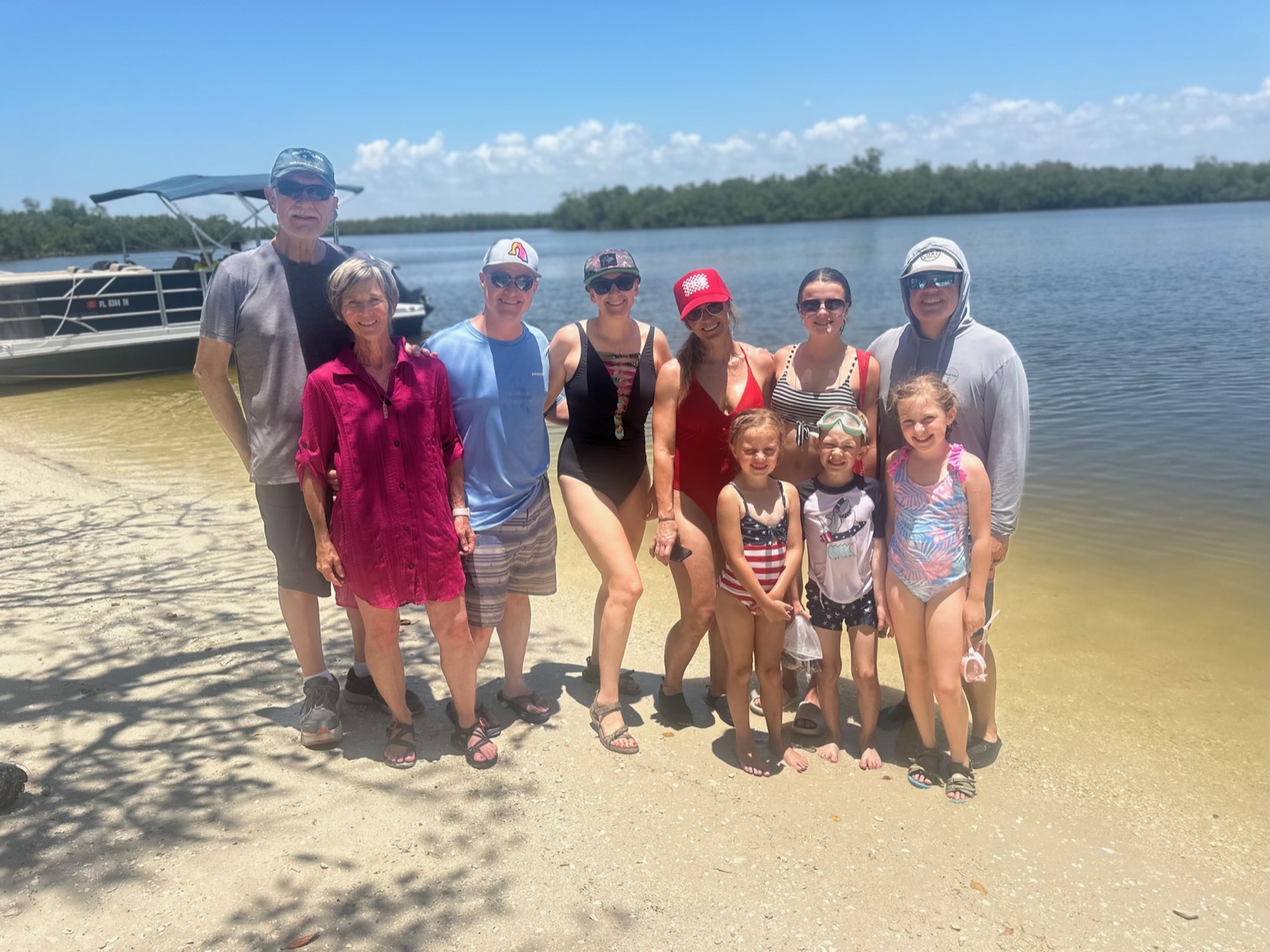
You’re not completely out of luck. The shallow shoreline along Keewaydin Island is one of the better spots near Naples to wade out, put your face in the water and look around — the bottom there is sandy and shelly rather than muddy, and the water sitting over it often runs clearer than what you’ll find tight against the mainland beaches. If snorkeling is on your list, that’s the play: bring your own mask and fins — we don’t carry gear aboard — and build it into your island time on a beach & island excursion or a private charter. Open-Gulf sandbars that build up near the passes and around Cape Romano can run genuinely clear on a calm day with an incoming tide, especially compared to the water inside Gordon Pass or Goodland’s backwater channels, where boat traffic and current keep things stirred up.
The catch is access. Keewaydin, Kice and the sandbars worth a look are barrier islands and open-water spots you reach by boat, not a public beach parking lot. That’s the whole reason our captains run there — it’s water most visitors never see on their own. If you’re planning to get in the water on a tour, read our guide to swimming off the boat first so you know what to expect and what each tour allows.
Naples Snorkeling vs. the Florida Keys
If you’ve snorkeled the Keys or the Caribbean and you’re wondering whether Naples will scratch the same itch, the honest answer is no — and it’s worth seeing why side by side before you pack a mask you won’t use much.
| Naples / Ten Thousand Islands | Florida Keys |
|---|---|
| Sand, seagrass and mangrove bottom | Living coral reef tract |
| Visibility varies with tide, wind and rain | Generally clearer, reef-side water |
| Seagrass life: pinfish, crabs, rays, small snook | Reef fish: parrotfish, angelfish, sea fans |
| Best access is by boat to barrier islands | Reef sites reached by a short run offshore |
| Star activity: shelling, dolphin-watching, sandbars | Star activity: reef snorkeling and diving |
Neither coastline is better across the board — they’re just built for different water sports. The Keys are the place to book a reef trip. Naples and Marco Island are the place to fill a mesh bag with shells, watch dolphins work a shoreline, and stand on a sandbar in water clear enough to see your toes.
What to Do Instead: Shelling, Wildlife and Clear-Water Sandbars
Once you let go of the reef-snorkel expectation, Naples opens up. Our shelling tours run out to the barrier islands on a falling tide, when the Gulf gives up the best empty shells — whelks, conchs, sand dollars and, on a lucky day, a junonia that washed ashore after a storm. It’s a treasure hunt that doesn’t require a mask, just a low tide and a good eye, and every find you keep has to be empty, per Collier County rule.
Bottlenose dolphins live in these waters year-round, and our dolphin tours put you close to them working the shorelines and passes — a wildlife encounter that beats anything you’d see through a snorkel mask on a seagrass flat. Winter visitors sometimes spot manatees gathered in warmer pockets near Rookery Bay when the water drops below about 68°F. If you want to browse everything that swims, walks or flies through the Ten Thousand Islands before you book, our wildlife guide is the place to start, and our destinations guide covers every barrier island worth the boat ride, Keewaydin included.
And if it’s clear water you’re after more than shells or wildlife, ask about a sandbar swim stop when you book — on the right tide and wind, those open-Gulf sandbars are about as close as this coastline gets to Keys-style clarity, minus the reef.