
📖 At a glance
- Typical color
- Green to clear, sometimes blue-green offshore
- Why
- Plankton & chlorophyll in a rich Gulf, not pollution
- Clearest
- Calm late-spring & early-summer days
- Murkiest
- After wind, storms, or in stirred-up back bays
- Best clarity spots
- Offshore islands: Keewaydin, Kice, the outer Gulf
Why our water is green, not turquoise
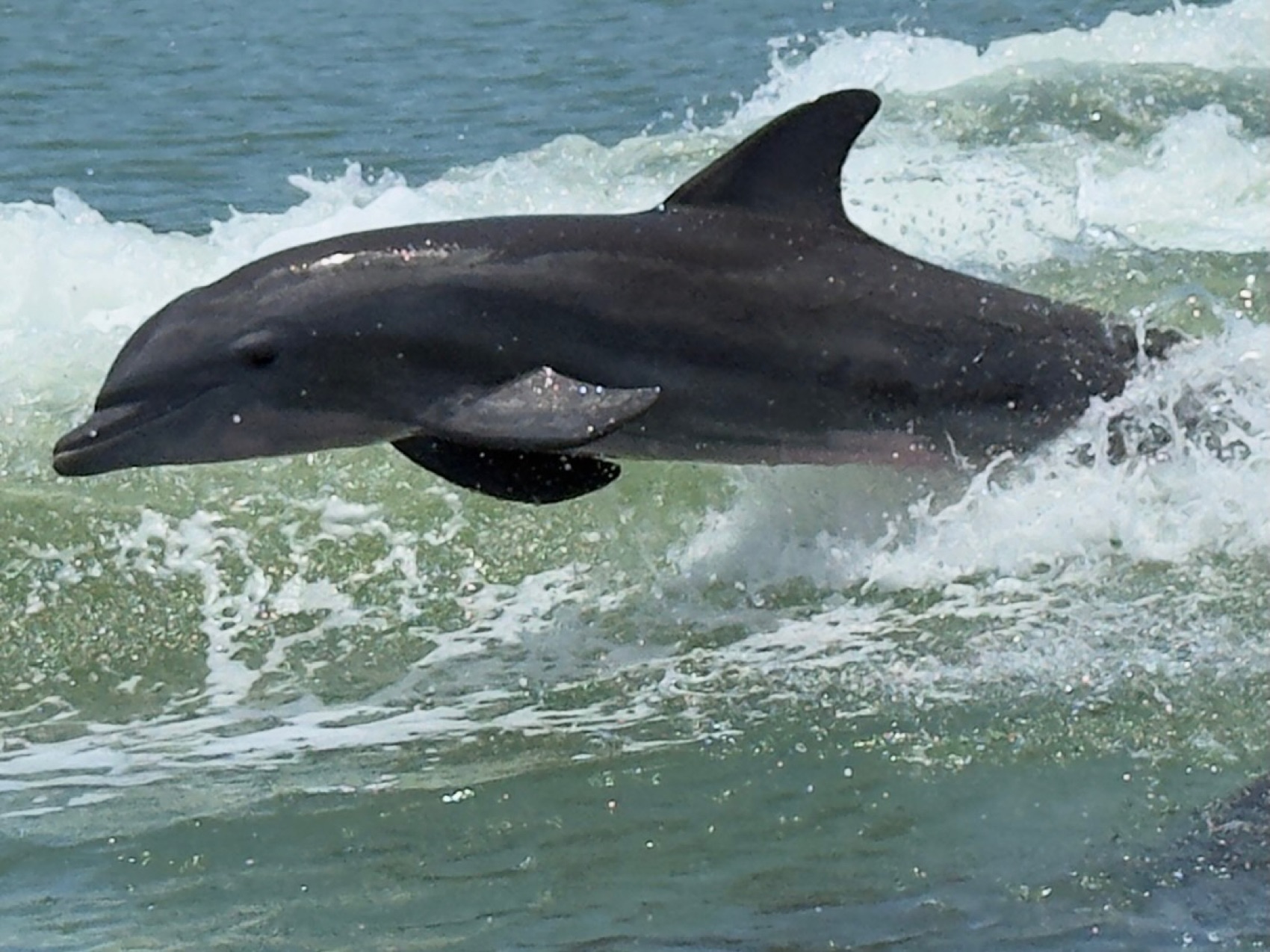
That green tint is a sign of a living, productive Gulf. Our water is rich in plankton and the chlorophyll they carry, and that's exactly what feeds the baitfish, which feed the snook and tarpon, which feed the dolphins. The Caribbean looks impossibly blue partly because it's a comparative desert — clear water with less life in it. Add in our gentle, sandy seabed that scatters light, and you get that signature emerald color. It is not muddy river runoff and it is not pollution; it's the engine that makes this one of the great wildlife and fishing coasts in Florida.
When the water is clearest
Clarity here is mostly about wind. Wind makes waves, waves stir sand off the bottom, and the water goes cloudy. So the clearest water shows up on calm, settled stretches — often late spring into early summer before the afternoon storms kick up, and again on those glassy winter mornings after a front passes and the wind lays down. A flat, windless day can turn the shallows almost gin-clear over white sand. After a blow, give it a day or two to settle. If you're chasing the prettiest water for photos, our guide to the best time of day for a boat tour lines up with the calmest, cleanest conditions.
| Condition | Clarity | Why |
|---|---|---|
| Calm, windless day | Best | Nothing stirring the sand |
| Offshore islands | Clearer | Away from stirred-up bays |
| Back bays & passes | Murkier | Tidal current carries sediment |
| After wind or storm | Cloudy | Waves lift bottom sand |
Where to find the clearest water
The farther you get from the murky back bays, the clearer it runs. The Gulf-facing beaches of the boat-only barrier islands — Keewaydin and Kice — sit on clean sand with open Gulf in front of them, so on a calm day they're the prettiest water around, and the best shelling too. That's a big part of why our captains run out there instead of staying in the bay. If your heart is set on swimming over clear sand, a calm-day sandbar trip is your best bet, and a sunset cruise turns even green water into a sheet of gold.
From the Helm: Why the water off Doctors Pass clears on the last of an incoming tide
Our captains judge the water off Naples less by season and more by which way the tide is moving through Doctors Pass at that exact hour. The last stretch of an incoming tide pulls cleaner Gulf water into the pass and pushes the tannin-stained bay water back where it came from, and that swap can change visibility more in two hours than an entire month of calendar dates does, which is why we’ll sometimes push a departure back thirty minutes just to catch that turn.
A north wind is the one we watch for, because even a mild one stacks a short, choppy swell against the beaches and stirs the top few feet of water into a milky green before you’ve even left the dock. Compare that to a calm morning with an offshore easterly breeze, and the same stretch of Gulf can look almost glassy by seven a.m., hours before the afternoon sea breeze has a chance to build anything up.
On the clearest mornings you can actually spot the seam where two different bodies of water meet — a thin, wavy line of foam and debris marking where the incoming Gulf hasn’t yet mixed with the darker water pushing out behind it. We’ll often idle right along that seam rather than picking one side or the other, since baitfish tend to stack up along it, and whatever’s hunting them usually isn’t far behind.
When we’re picking a run for the morning and clarity matters — guests hoping for a good look at dolphins or an easy view down onto the flats — we’ll usually route toward the pass while that band of cleaner water is still pushing through, rather than fighting an outgoing tide thick with bay runoff. That single routing call is what separates an average look over the rail from one where you can watch a ray glide under the boat.
Guests sometimes worry the green tint they’re seeing means something’s off, and we’re quick to point out the flip side — that same tint usually means baitfish are stacked up somewhere nearby, and wherever bait stacks, we start watching harder for the animals working it. We’d rather run a tinted stretch thick with life than a clear one that’s quiet, and after enough mornings out here, most guests come around to the same trade.
If seeing the Gulf at its clearest is the goal, we’ll always suggest booking a little flexibility into your dates rather than locking in one morning months out. A run through the Port Royal canals on a calm day shows a totally different side of that clarity, and our destinations guide can help match the right stretch of water to what you’re hoping to see.