🗺️ At a glance
- Majority owner
- State of Florida conservation land within the Rookery Bay National Estuarine Research Reserve
- Private parcels
- A handful remain from the island’s old lodge-and-club era, mostly on the north end
- Structures
- A small cluster of rustic cabins — no subdivisions, resorts or docks
- Bridge or road
- None — boat access only, then and now
- Public access
- Day-use beach access is open to boaters despite the mixed ownership
- Collecting rule
- Empty shells only — Keewaydin sits in Collier County
Who owns Keewaydin Island?
Here’s the short version: Keewaydin Island is not owned by any single person, company or resort developer, and that’s the whole reason it still looks the way it did decades ago. The largest share of the island — its mangrove-lined bay side, most of its southern acreage and long stretches of the interior — is state conservation land, folded into the Rookery Bay National Estuarine Research Reserve and protected against exactly the kind of dredge-and-fill development that turned nearby Marco Island into a bridged, canal-cut city. Layered in around that public land is a small patchwork of private holdings, mostly concentrated near the island’s north end, left over from the decades when Keewaydin ran as a boat-access fishing and shelling lodge rather than a nature preserve. So the honest answer to “who owns Keewaydin Island” is really two answers at once: mostly the public, through conservation ownership, with a handful of private landowners still holding on to a much older piece of the story.
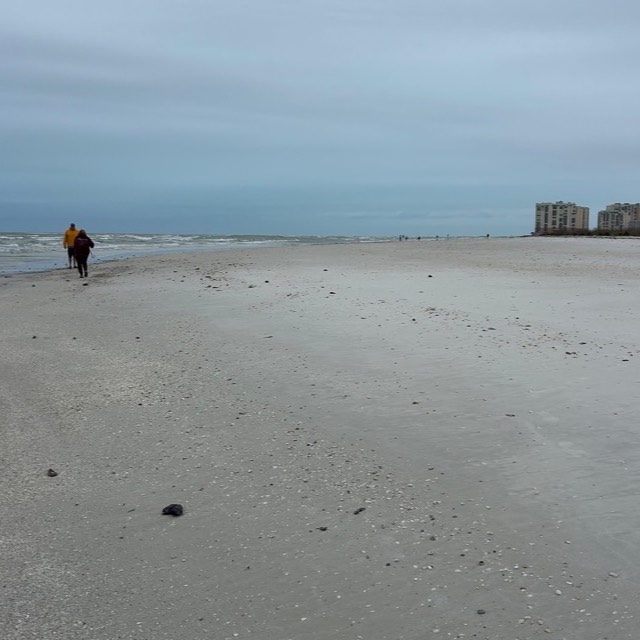
That mixed status matters more than it might sound like on paper, because it explains everything about how the island feels once you step off the boat. There’s no marina, no beach club, no gated community and no rental cottages waiting behind the dune line — because there’s no single owner with the incentive or the assembled acreage to build any of that. Our Keewaydin Island guide covers what you’ll actually find once you’re standing on the sand; this page is about why it’s allowed to stay that empty in the first place.
How much of Keewaydin sits inside the Rookery Bay reserve?
A large share of Keewaydin — particularly the soundside mangroves, the southern reaches toward Little Marco Pass, and much of the interior wetland behind the beach — falls within the boundaries of the Rookery Bay National Estuarine Research Reserve, one of the largest protected estuaries on Florida’s Gulf coast. Land inside that reserve isn’t simply undeveloped by chance; it’s conservation land, acquired and set aside specifically to protect nesting shorebirds, loggerhead sea turtles that dig nests in the dune line from May through October, and the mangrove creeks that filter water flowing out into the Ten Thousand Islands. That designation is also the biggest single reason Keewaydin has never seen a causeway, a marina or a subdivision — you can’t bridge or bulldoze land the state has already committed to protecting.
It’s worth being precise about what this doesn’t mean, too. Reserve status doesn’t make Keewaydin off-limits — day-use beach access has always been part of the deal, which is exactly how our captains and thousands of other boaters get to walk its shell-rich points every week. What it does mean is that no future landowner can quietly build a resort on that acreage, no matter how the rest of the coast changes around it.
Are there still private landowners on Keewaydin?
Yes — and this is the part of Keewaydin’s ownership story that surprises people who assume the whole island is a park. Before conservation agencies and land trusts began consolidating acreage into what’s now the Rookery Bay reserve, Keewaydin spent decades as a working, boat-access fishing and shelling lodge, known to old-timers simply as Key Island. That lodge-and-club era left behind individual landowners who held small tracts for seasonal use, and a handful of those private parcels — along with a small cluster of rustic cabins still standing near the island’s north end — survive today. They’re easy to miss from the water: no docks lined with boats, no manicured lawns, nothing that reads as a neighborhood. Just a few weathered structures tucked back from the beach, the closest physical link left to the island’s pre-reserve past.
That private slice has never grown into anything resembling a development, and there’s no indication it’s headed that direction. Ownership on Keewaydin stayed fragmented across old club interests, individual families and, increasingly, conservation buyers, rather than consolidating under one company the way it did on Marco Island a few miles south. A scattered handful of small private tracts simply doesn’t assemble into the kind of contiguous parcel a developer needs to justify running utilities, a road or a bridge out to a barrier island — which is a big part of why those old cabins are still the exception, not the beginning of something bigger.
Why has Keewaydin never been bridged or developed?
Ownership is really the whole answer here. Back in the 1950s and ’60s, when a bridge to Keewaydin was seriously proposed, local residents pushed back and the project never went forward — and even if it had found support, there was no single landowner positioned to consolidate the island the way developers did on Marco Island, where one company bought up scattered tracts, dredged canals and built a causeway almost overnight. Keewaydin never had that moment. Its ownership stayed split between old lodge interests, individual families holding small parcels, and, over time, the conservation agencies and land trusts that folded more and more acreage into protected reserve land.
By the time anyone might have floated a bridge proposal again, the momentum had already shifted the opposite direction: toward buying land for conservation, not consolidating it for development. That combination — fragmented private holdings on one side, an expanding protected reserve on the other — has made Keewaydin close to bridge-proof for the better part of a century. If you want the practical side of what that boat-only status means for getting there yourself, our guide to getting to Keewaydin Island walks through the passes our captains use most.
What Keewaydin’s ownership means for your visit
None of this ownership complexity actually gets in your way as a visitor. The reserve land is open for day-use beach access, the private parcels sit well back from the shoreline you’ll be walking, and nobody’s going to ask to see a deed before you step off the boat. What it does mean, practically, is that Keewaydin will keep looking the way it looks now — roadless, undeveloped, and quiet in a way that drive-up beaches on Naples and nearby barrier islands rarely manage anymore. That’s exactly why our captains keep coming back to its Gulf-side points: fewer feet on the sand generally means better shelling, and a mix of state protection and low-key private ownership is what keeps that ratio in your favor.
It also means the collecting rules still apply everywhere you walk, public or private stretch alike — Keewaydin sits in Collier County, where taking live shells, sand dollars or starfish is prohibited, so anything you keep needs to be empty. If you’d rather let someone else handle the tides, the passes and the ownership boundaries, our shelling tours run out to Keewaydin regularly, timed to the negative low tides that expose its best shell flats. Either way, the island’s patchwork of public and private ownership is precisely why it’s stayed this wild — and precisely why it’s still worth the trip.
| Lodge & Club Era | Today | |
|---|---|---|
| Primary landowner | Private sportsmen’s club | State conservation land (Rookery Bay reserve) + scattered private parcels |
| Development | Rustic lodge & outbuildings | None — no subdivisions, resorts or docks |
| Private tracts | Held by club members & individual families | A handful remain, mostly on the north end |
| Bridge or road | None | Still none |
| Public access | Members & guests only | Open day-use beach access for boaters |