
📖 At a glance
- Easiest finds
- Coquina, jingle & scallop shells
- Best timing
- Low tide, plus snacks and sun protection
- The game
- A simple shell scavenger hunt by color or shape
- The lesson
- Empty shells only — return every live find
- Rule
- No live shells, sand dollars or starfish in Collier
The easy shells kids love
Set kids up to win and they’ll be hooked for life. The easiest, most abundant finds are also some of the prettiest. Coquina are the tiny, candy-colored clams that tumble in the swash by the hundreds — rainbow confetti a toddler can scoop by the handful. Jingle shells are thin, translucent and gold or pearly; thread a few and they actually jingle. Scallop shells with their classic fan shape are everywhere and instantly recognizable. None are rare, all are gorgeous, and every kid fills a bag fast.
Make it a game
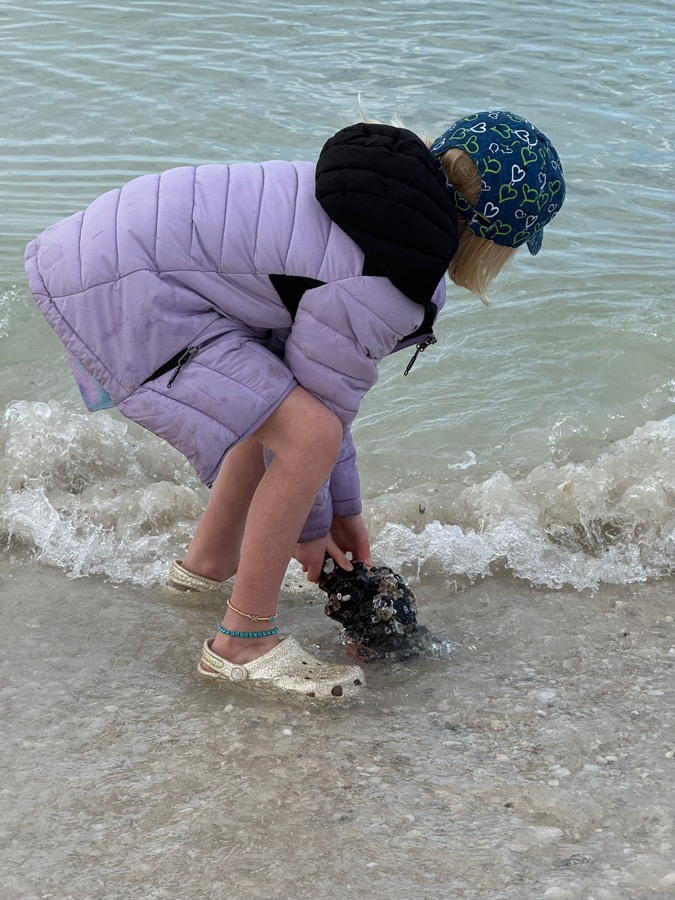
A little structure turns a beach walk into an adventure. Try a scavenger hunt: a shell of every color, the smallest shell you can find, a shell with a hole worn through (a moon snail’s handiwork), a fan-shaped shell, a curly one. Give each kid a mesh bag so the sand drains and they feel official. Older kids love an ID challenge — bring our shell ID guide and let them name their finds. For little ones, simply racing to the next pretty thing in the wrack line is the whole game.
Timing, snacks and safety
| Plan for | Why it matters |
|---|---|
| Low tide | More exposed sand, more shells, shallow safe water |
| Snacks & water | Hungry kids end the hunt early |
| Hat, sunscreen, water shoes | Sun and sharp shells are the real hazards |
| A morning start | Cooler, calmer, fewer crowds |
| The empty-only rule | Keeps the beach healthy and the trip legal |
Aim for a falling-to-low tide (see our tide guide), go early when it’s cool, and pack more snacks than you think you need. Water shoes save little feet from sharp shell edges.
The one rule that sticks
Teach kids the leave-live-ones rule and you’ve given them something bigger than a souvenir. In Collier and Lee Counties it’s empty shells only — no live shells, no live sand dollars, no starfish. Make it a fun check: flip every shell and ask “is anybody home?” If something’s living inside, the kid gets to be the hero who carries it back to the water. They remember it, they feel good about it, and they learn that the beach stays magic because people give back. Our boats run gentle, kid-friendly shelling trips to shallow, safe sandbars — see our family shelling tours.
From the Helm: Working the Falling Tide at the Dollar Bay Sandbar With Kids Aboard
The moment the ladder touches sand at the shallow, protected bar inside Dollar Bay, kids stop walking and start running, and we’ve learned to let that happen instead of calling everyone back to line up. The water there stays skinny and calm even on a breezy day, which means a six-year-old can wade knee-deep without anyone hovering, and there’s usually a fresh scatter of coquina and jingle shells close enough to the water’s edge that nobody has to wander far to find something in the first two minutes. We pick that spot for families specifically over a windier outside bar, since a calm, shallow shoreline lets us keep an eye on every kid at once without raising our voice over surf noise.
We hand every kid a small mesh bag and, if they want one, a plastic strainer scoop instead of a shovel — it’s easier for small hands, and scooping a patch of wet sand and shaking it out over the water teaches the sorting motion faster than digging ever does. Parents get the job of holding the bigger bucket back at the ladder, which keeps small hands free to actually search instead of lugging a half-full pail up and down the beach.
Our kid version of the safety brief is shorter and more physical than the adult one: we crouch down to their height, hold up a shell, and ask them to guess if it’s still someone’s home before it goes in the bag. That question does more work than any rule we could recite, because kids remember a game better than an instruction, and most of them start asking each other the same question within a few minutes, checking each other’s finds before we ever have to.
The mistake we correct most isn’t a safety one — it’s expectation-setting. Parents sometimes promise a big rare find before we’ve even left the dock, and a kid who’s been told to look for one legendary shell tends to walk right past a perfectly good scallop or auger without seeing it. We steer the goal toward quantity and variety instead — five different shapes beats one imaginary trophy — and the mood on the beach changes almost instantly once we do.
Timing still matters more than any of this: we favor the falling half of the tide for kid trips specifically, since a widening flat keeps giving small legs somewhere new to explore instead of one static patch to pick clean in ten minutes. Book it as a family shelling tour and we’ll build the whole run around the kids aboard, not just the tide.