
🐬 At a glance
- Primary prey
- Mullet, pinfish, ladyfish, pigfish & mojarra — small schooling fish
- Occasional prey
- Squid and other soft-bodied cephalopods
- Hunting grounds
- Passes, grass flats & oyster bars around Marco Island, Goodland & Naples
- Hunting style
- Cooperative — herding bait against oyster bars and shorelines
- Daily intake
- Several percent of body weight, spread across many small feedings
- Rule
- Never feed a wild dolphin — it’s illegal and harmful to them
What Do Wild Bottlenose Dolphins Eat?
The bottlenose dolphins (Tursiops truncatus) you’ll spot working the water around Marco Island and Naples are fish specialists first. Their bread-and-butter meal is mullet — the silvery, schooling fish that run thick along our shorelines and up into the backwaters most of the year. Add in pinfish and pigfish picked off the grass flats, ladyfish chased down in the open passes, and the occasional mojarra rooted out of the sand, and you’ve got the core of a wild dolphin’s diet here in the Ten Thousand Islands.
A single adult dolphin eats a wide variety of small fish species rather than keying in on just one, which is smart biology — it means a bad mullet season doesn’t leave them going hungry. Squid shows up on the menu too, especially near the deeper edges of the passes, though fish still make up the overwhelming majority of what they catch. You won’t see a wild dolphin around here going after anything as big as a redfish or a snook; their prey is almost always small enough to swallow whole, headfirst, usually in a single gulp. Around here, that means you’re more likely to watch a dolphin working a nervous school of finger mullet than chasing anything flashy or exotic — the diet is built entirely around whatever is actually schooling in these waters that week.
How Dolphins Hunt the Passes, Flats & Oyster Bars
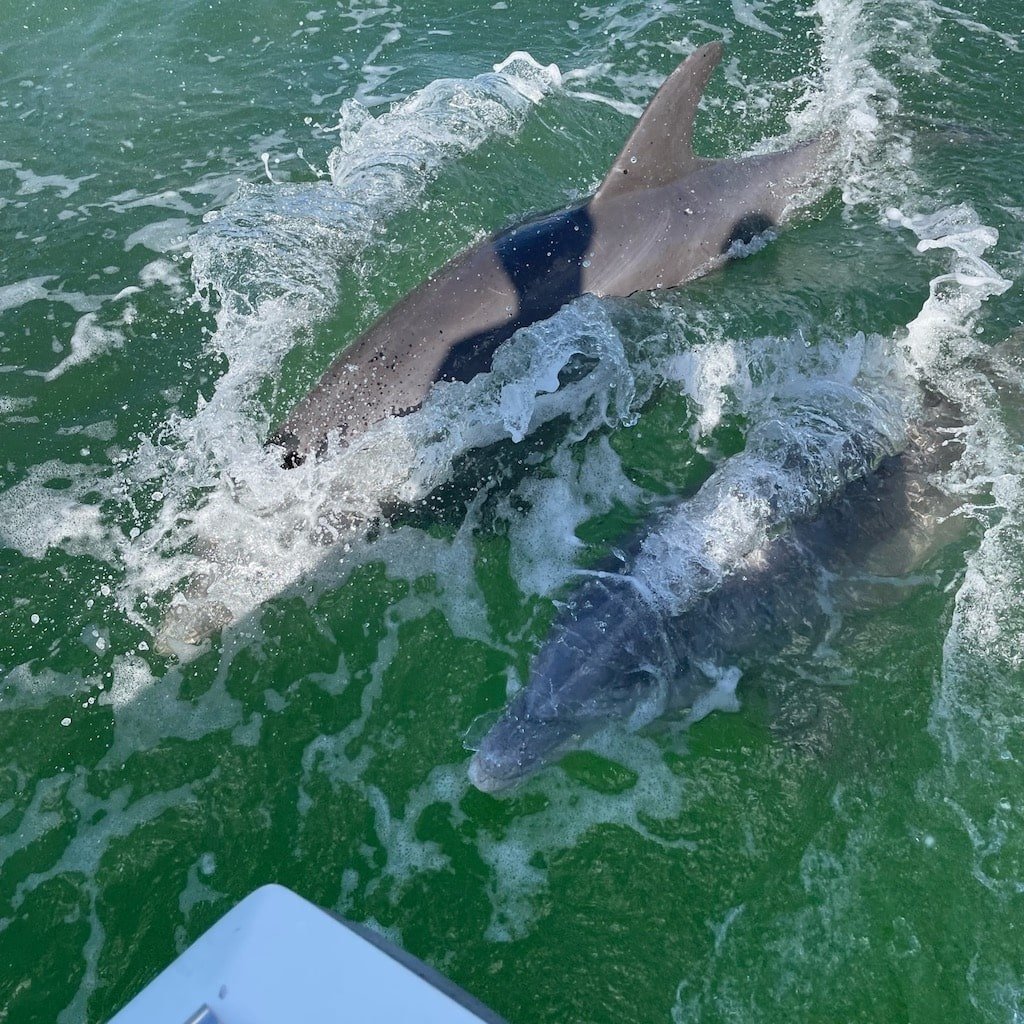
Watching dolphins feed is one of the best parts of any dolphin tour, and once you know what to look for, you’ll start spotting it everywhere. Our captains watch for diving birds, nervous bait skipping on the surface, and that telltale swirl where a pod has pinned a school of mullet against an oyster bar. That’s cooperative hunting in action — two or three dolphins working together to herd fish into a corner they can’t escape, then taking turns lunging through the school. Keep an eye on the seabirds too — laughing gulls and pelicans often show up over the same push of bait, working the same meal from the air while the dolphins work it from below.
The passes are prime real estate for this because moving tide concentrates bait. As water funnels through cuts like Gordon Pass or Capri Pass on an outgoing tide, mullet, ladyfish and pinfish get swept into tight, exposed schools — easy pickings for a dolphin that already knows the terrain better than most captains do. In the grass flats and backwater creeks around Goodland and the edges of Rookery Bay, dolphins use echolocation to find fish hiding in murky, tannin-stained water, then close in fast. You can read more about the mechanics of it on our dolphin feeding behavior guide.
Do Dolphins Eat Squid, Crabs or Shrimp?
Fish dominate the diet, but wild dolphins are opportunists, not purists. Squid turns up on the menu when it’s available, particularly around the deeper water near passes and Gulf-facing beaches. Crustaceans like crabs and shrimp are a much smaller part of the picture — dolphins aren’t built to dig through mud for them the way, say, a redfish is, so they’ll take one if it’s an easy grab but won’t go hunting for it specifically.
You might also spot dolphins trailing a working boat — a net-caster or a commercial mullet skiff — snapping up fish that spill loose or get pushed out of position. It’s the same instinct that has them shadowing our tours when a shelling group is anchored near a productive flat: an easy meal is an easy meal, and a smart dolphin knows exactly where the water gets stirred up. That’s opportunistic, not lazy — a dolphin snapping up an easy meal near a boat is being efficient, the same way it’s being efficient when it runs down a tight ball of ladyfish entirely on its own.
Why You Should Never Feed a Wild Dolphin
It’s tempting when a dolphin surfaces a few feet off the boat — but feeding or trying to touch a wild dolphin is illegal under the federal Marine Mammal Protection Act, and for good reason. Dolphins that learn to associate boats with a free handout start hanging around docks and fishing lines instead of hunting naturally, which puts them at real risk of boat strikes, hook injuries and tangled line. It also teaches calves the wrong lesson before they’ve learned to hunt mullet and pinfish on their own.
Our captains keep a respectful distance and never chum, feed or bait dolphins in to get a closer look — the good sightings come from reading the water, not from handouts. If you want the full rundown on the bottlenose dolphins that call these waters home, our wildlife guide covers their behavior, family pods and why they stick around the Ten Thousand Islands year-round.
When & Where You’re Most Likely to See Dolphins Feeding
Bottlenose dolphins live here year-round, so there’s no strict season for spotting them feed — but a moving tide beats a slack one every time. Outgoing water through the passes, or a mullet school pushing along the Marco River against an oyster bar, is when you’re most likely to catch a pod actively working bait rather than just cruising. Sightings are never guaranteed — these are wild animals following the fish, not a schedule — but our captains know the flats, cuts and backwaters around Marco Island, Goodland and Naples well enough to put you in the right spot more often than not.
Almost every trip we run passes through water dolphins use, from the wildlife you’ll spot on a sunset cruise to the deeper cuts a fishing charter works. If watching dolphins hunt is the whole point of your trip, though, a dedicated dolphin tour is built around exactly that — slow, patient runs through the passes and flats where the bait (and the dolphins that eat it) actually are.
| Prey | Typical habitat | How dolphins catch it |
|---|---|---|
| Mullet | Shorelines, backwaters & the Marco River | Cooperative herding against oyster bars |
| Pinfish & pigfish | Seagrass flats | Individual chasing & echolocation |
| Ladyfish | Passes & open bay on moving tide | Group herding as bait funnels through cuts |
| Mojarra | Sandy flats & shallow backwaters | Rooting along the bottom |
| Squid | Deeper pass edges & nearshore Gulf | Opportunistic chase |